
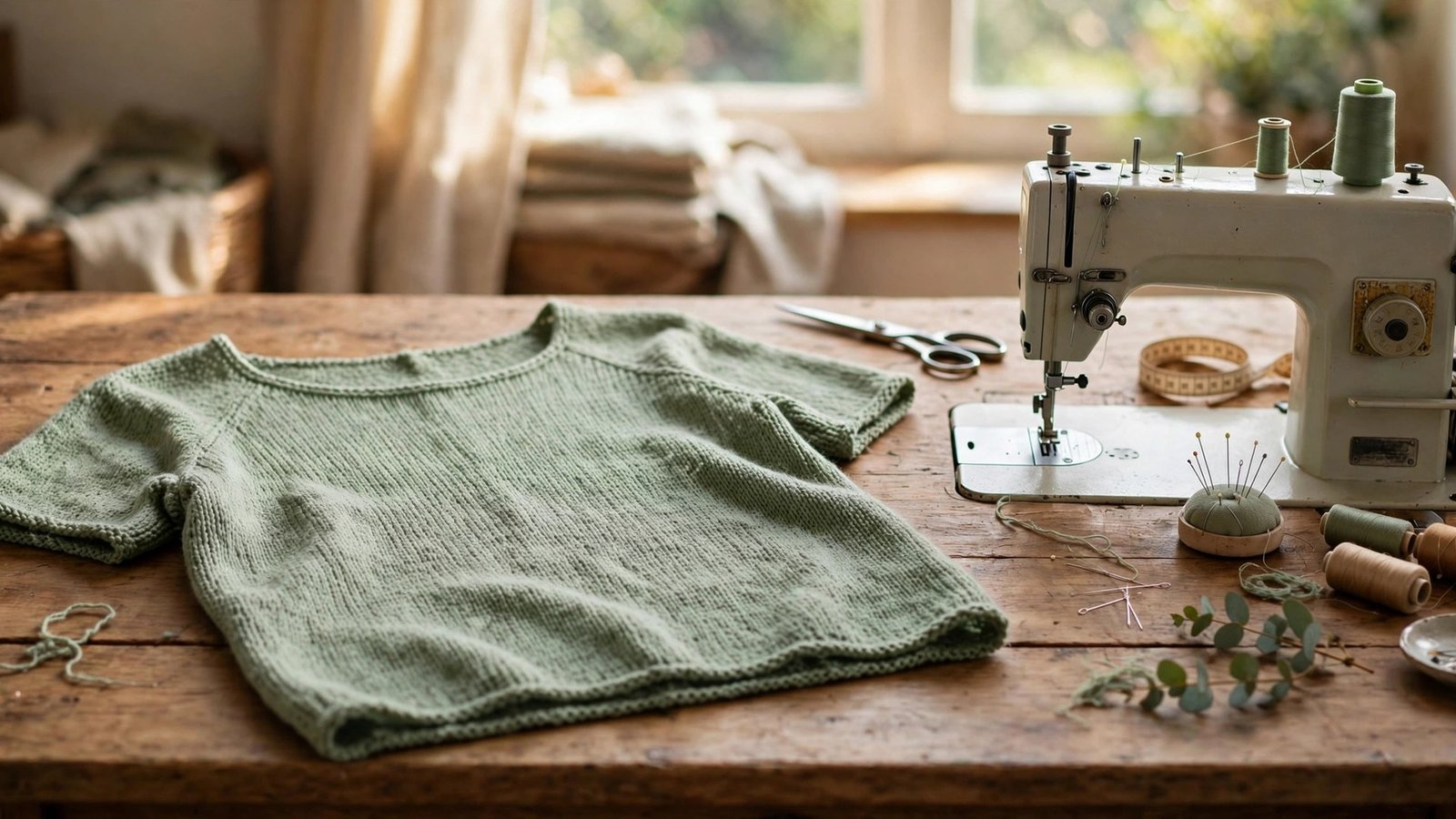
If you are wondering how to fix a wavy neckline, here is the reassuring news: a wavy neckline is one of the most common sewing problems, and it is one of the easiest to fix. A neckline goes wavy when the fabric stretches out of shape while you sew, usually because the curve was handled too roughly, the seam was not stabilised, or the fabric was a knit that needed a gentler touch.
I have fixed more wavy necklines than I can count, on my own clothes and on friends’ clothes, and the fix is almost always the same. Stabilise the curve, press it back into shape, and finish it with a technique that holds it there. The neckline that waves today can lie perfectly flat tomorrow, and it can stay flat through wash after wash.
This guide explains why necklines go wavy, how to fix a neckline on a finished garment, how to prevent waviness when you sew a neckline from scratch, and which finishing techniques work best for knits, wovens, and bias cut necklines. By the end, wavy necklines will be a problem you know how to solve, not a problem you fear.
Why Necklines Go Wavy
A neckline is a curve, and curves are the most vulnerable part of a garment. When you cut a curve, you cut across the grain in places, and the fabric along that curve can stretch. When you sew a curve, the presser foot and the feed dogs can stretch it further. When you press a curve flat on a flat board, you can stretch it again. Each small stretch adds up, and the result is a neckline that ripples instead of lying flat.
Knit fabrics are the worst offenders, because they stretch naturally. A knit neckline that is not stabilised will grow as you sew it, sometimes by a surprising amount. A woven neckline cut on the bias will behave the same way, because the bias stretches more than any other direction. Even a stable cotton neckline can wave if it is handled roughly or pressed without support.
The other common cause is a facing or binding that is too tight or too loose for the neckline it finishes. If the facing is shorter than the neckline, it pulls the neckline in and creates puckers. If the facing is longer, it lets the neckline flop and wave. Matching the lengths matters, and easing the neckline gently to the facing, rather than stretching one to fit the other, is the key. If your neckline is gaping as well as wavy, my guide to how to correct a gaping neckline covers the fitting fixes that go with it.

How to Fix a Wavy Neckline on a Finished Garment
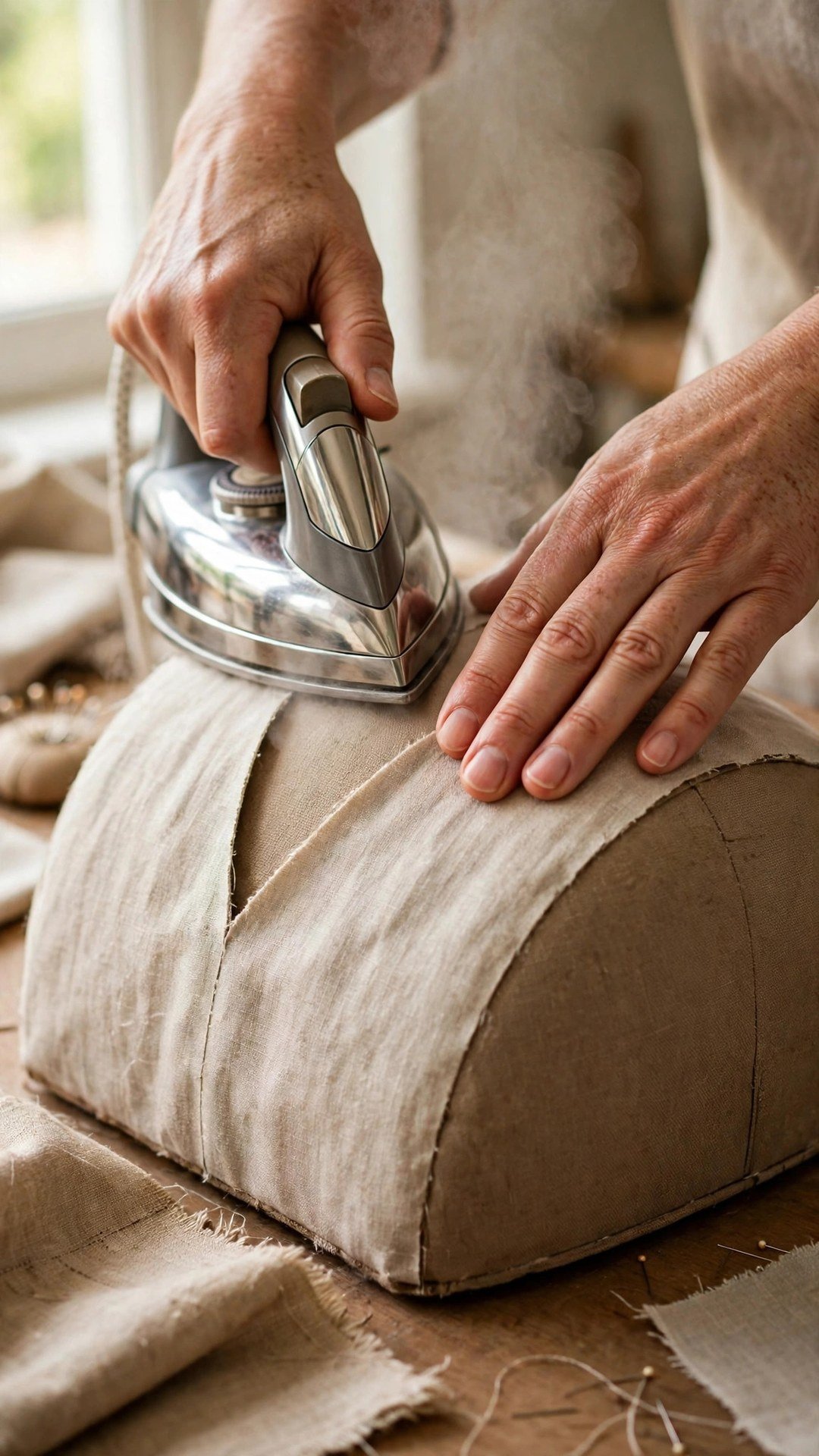
Start with the simplest fix: press it. Place the neckline on a tailor’s ham or a rolled towel, so the curve is supported, and press it with steam, easing the fullness back into shape with your fingers as you press. Work in small sections, pressing and holding the iron in place, then letting the fabric cool before you move on. On cotton and linen, this alone can fix a mild wave completely.
If pressing does not fix it, the neckline needs stabilising. Unpick the facing or binding, and apply a strip of fusible stay tape or a narrow strip of fusible interfacing along the neckline seam line, on the wrong side. Stay tape is a narrow strip of stabiliser that stops a curve from stretching, and it is the single best tool for this job. Fuse it in place, easing the neckline back to its original shape as you press, then reattach the facing or binding.
For a knit neckline, a strip of clear elastic is the classic fix. Unpick the binding or facing, stitch a strip of clear elastic to the neckline seam line, stretching it very slightly as you sew, then reattach the finish. The elastic pulls the neckline back to its proper length and holds it there. My guide to how to stop wavy knit hems uses the same stabilising idea for hems that ripple.
Preventing a Wavy Neckline When You Sew
Prevention starts with staystitching. Staystitching is a line of regular stitching sewn just inside the seam line of a neckline, right after cutting and before any other construction. It holds the curve in shape and stops it from stretching while you handle the garment.
To staystitch, sew a single line of stitching about an eighth of an inch inside the seam line, using a regular stitch length, and do not backstitch at the ends. Sew from the shoulder toward the centre front on each side, so you are always stitching with the grain rather than against it, which stops the fabric from stretching as you sew. Then handle the neckline gently, supporting it rather than letting it hang and pull.
When you attach a facing, pin it generously and ease the neckline to the facing, not the other way around. If the facing is slightly shorter than the neckline, that is fine, and it will actually help the neckline lie flat. Stitch slowly around the curve, let the feed dogs move the fabric, and press the facing with an understitch. My guide to how to sew a neckline facing shows the understitch and pressing steps that keep a facing flat.

Choosing the Right Neckline Finish
The finish you choose affects whether the neckline stays flat. A facing is the most stable finish for a woven garment, because it supports the whole curve and it can be interfaced. A bias binding finish is lovely on a lightweight fabric, but the bias can stretch, so handle it gently and do not pull it as you stitch. A ribbed knit band is the best finish for a knit top, because it has recovery built in and it pulls the neckline back into shape.
For a knit neckline, cut the band slightly shorter than the neckline, usually about fifteen percent shorter, and stretch it evenly to fit as you sew. This is what makes a knit neckline lie flat instead of waving. Pin the band in quarters, matching the quarter marks on the band to the quarter marks on the neckline, and stretch each quarter evenly. If the band is the same length as the neckline, it will not pull the neckline in, and the neckline will wave.
For a woven neckline, consider a facing with a light interfacing, or a bias binding cut from a stable fabric. Avoid a narrow binding on a deep curve, because it is hard to control and it will wave. A wider facing, around two inches, gives the neckline more support and is easier to sew neatly.
When the Fabric Itself Is the Problem
Sometimes the fabric is simply too unstable for the neckline you want. A very drapey rayon, a loosely woven linen, or a slinky knit will always be harder to keep flat than a stable cotton. That does not mean you cannot use them, but it does mean you need to stabilise more aggressively. Use stay tape on every curve, interface the facing, and handle the garment gently at every stage.
If a neckline keeps waving no matter what you do, consider changing the finish. Replace a facing with a bias binding, or replace a binding with a facing, and see if the new finish behaves better. Sometimes the fix is not more stabilising, but a different approach entirely. I have rescued two dresses by replacing a wavy facing with a simple bias binding, and both of them went from unworn to favourites.
Frequently Asked Questions
Why is my knit neckline wavy?
Knit fabric stretches as you sew it, and an unstabilised neckline grows longer with every pass under the presser foot. Staystitch the neckline, stabilise it with clear elastic or stay tape, and use a knit band cut slightly shorter than the neckline so it pulls the curve back into shape.
Can I fix a wavy neckline without unpicking?
Sometimes. A good press on a tailor’s ham, with steam and gentle easing, fixes a mild wave on cotton and linen. For a severe wave, or a knit neckline, you will need to unpick the finish, stabilise the curve, and reattach it. The unpicking is worth it for a neckline you will wear often.
What is staystitching?
Staystitching is a line of stitching sewn just inside the seam line of a neckline or armhole, right after cutting, to stop the curve from stretching.
Should I interface a neckline facing?
Yes. A light to medium fusible interfacing on the facing gives the neckline support and stops it from stretching. Test the interfacing on a scrap first, so it supports the fabric without making it stiff.
Does clear elastic really fix a wavy knit neckline?
Yes, it is the most reliable fix I know. Stitch a strip of clear elastic to the neckline seam line, stretching it very slightly, and it will pull the neckline back to its proper length and hold it there through washing.
A wavy neckline is not a disaster. It is a curve that stretched a little too much, and curves can be coaxed back. Staystitch every neckline, stabilise the curve, choose a finish that supports it, and press it on a ham. Do that, and your necklines will lie flat, wash after wash, exactly where they belong.
Written by June Carter
I am June, a sewing enthusiast who loves turning simple fabric into things people actually use. I test every technique and product I write about at my own machine before it lands here.