
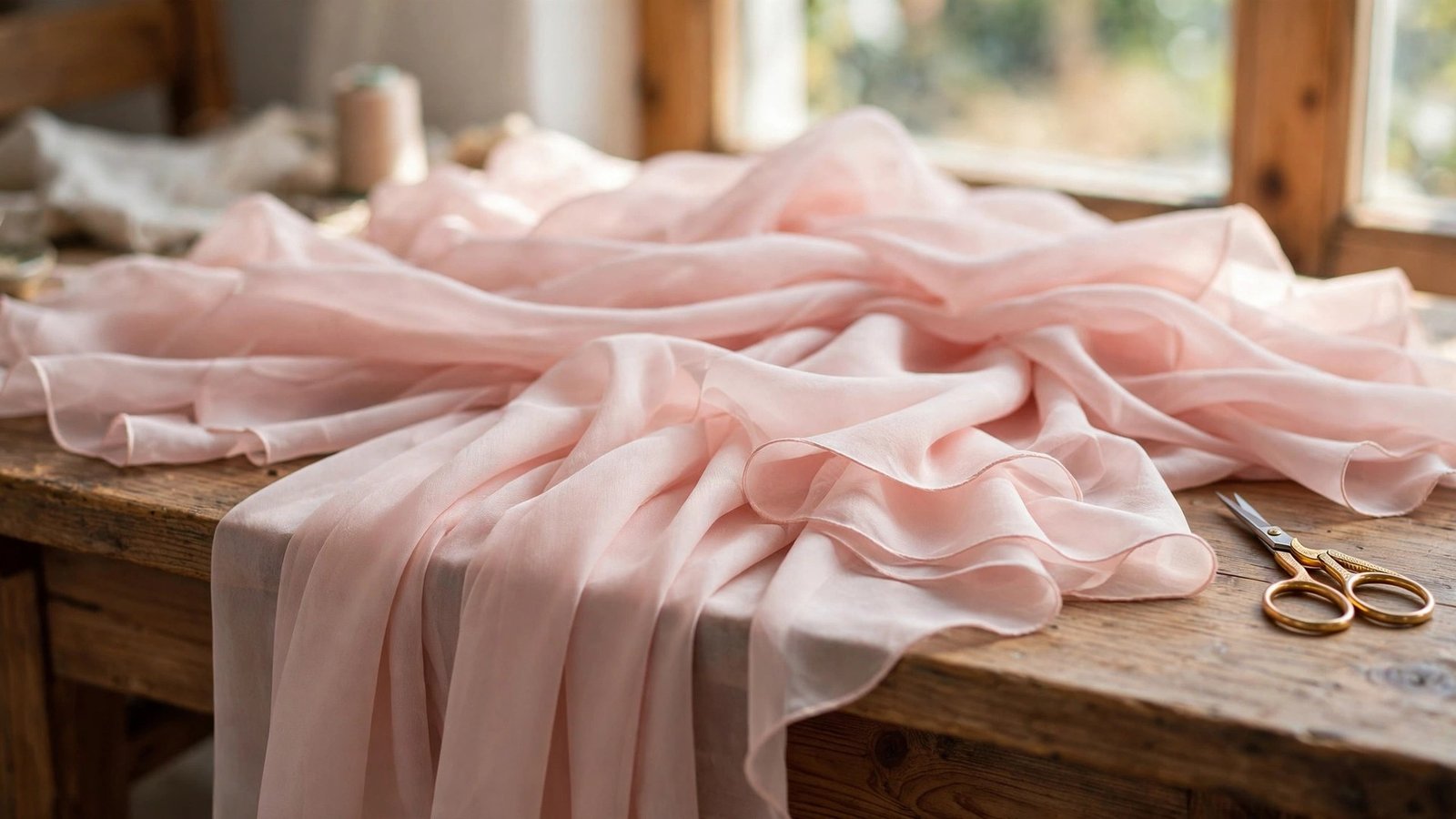
Learning how to sew with chiffon without puckering feels like a rite of passage, because chiffon is beautiful and famously uncooperative. It is sheer, slippery, and light as air, and it puckers at the slightest provocation: a dull needle, a tight tension, a heavy presser foot, or a moment of pulling the fabric. I avoided chiffon for years, and when I finally sewed with it, I learned that the secret is not talent, it is preparation and patience.
Chiffon puckers for simple reasons. The fabric is so fine that the needle pushes it down into the needle plate instead of piercing it cleanly. The layers shift against each other because there is almost no friction between them. And the tension that works for cotton is far too tight for a fabric this light. Fix those three things and chiffon becomes manageable, even enjoyable.
This guide covers the preparation that tames chiffon, the needle and thread to use, the machine settings that stop puckering, the seam finishes that suit sheer fabric, and how to press and handle it without ruining the drape.
Why Chiffon Puckers So Easily
Chiffon is a sheer, lightweight woven, usually made from silk, polyester, or rayon, and its fibres are fine and loosely woven. When the needle comes down, it can push the fabric into the hole in the needle plate instead of piercing it, which creates a tiny pucker at every stitch. A dull or slightly burred needle makes this worse, because it drags the fibres instead of cutting through them cleanly.

Preparing Chiffon Before You Cut
Preparation starts before you cut. Chiffon shifts while you cut it, so lay it on a cutting mat or a layer of tissue paper, and use a rotary cutter rather than scissors, which lift and shift the fabric as they cut. Pin the pattern tissue to the chiffon with fine pins, or use pattern weights instead of pins to avoid snagging the fibres. Cut slowly and do not lift the fabric while you cut.
Needle, Thread, and Machine Settings
Use a new, sharp microtex needle in a fine size, usually size 60 or 70, for chiffon. A microtex needle has a very sharp point that pierces the fine fibres cleanly instead of pushing them aside. Change the needle often: a needle that has sewn a few seams is already too dull for chiffon, and a dull needle is the fastest route to puckering. Use a fine, good quality thread, and a short stitch length, around 2 millimetres, so the stitches hold the fine fabric without pulling it.
Loosen the top tension. Start by reducing it by one or two numbers from your normal setting and test on a scrap of the same chiffon with the same layers. The seam should lie flat with no ripples. If it still puckers, loosen the tension a little more and test again. Also reduce the presser foot pressure if your machine allows it, so the foot does not push the top layer ahead of the bottom one.
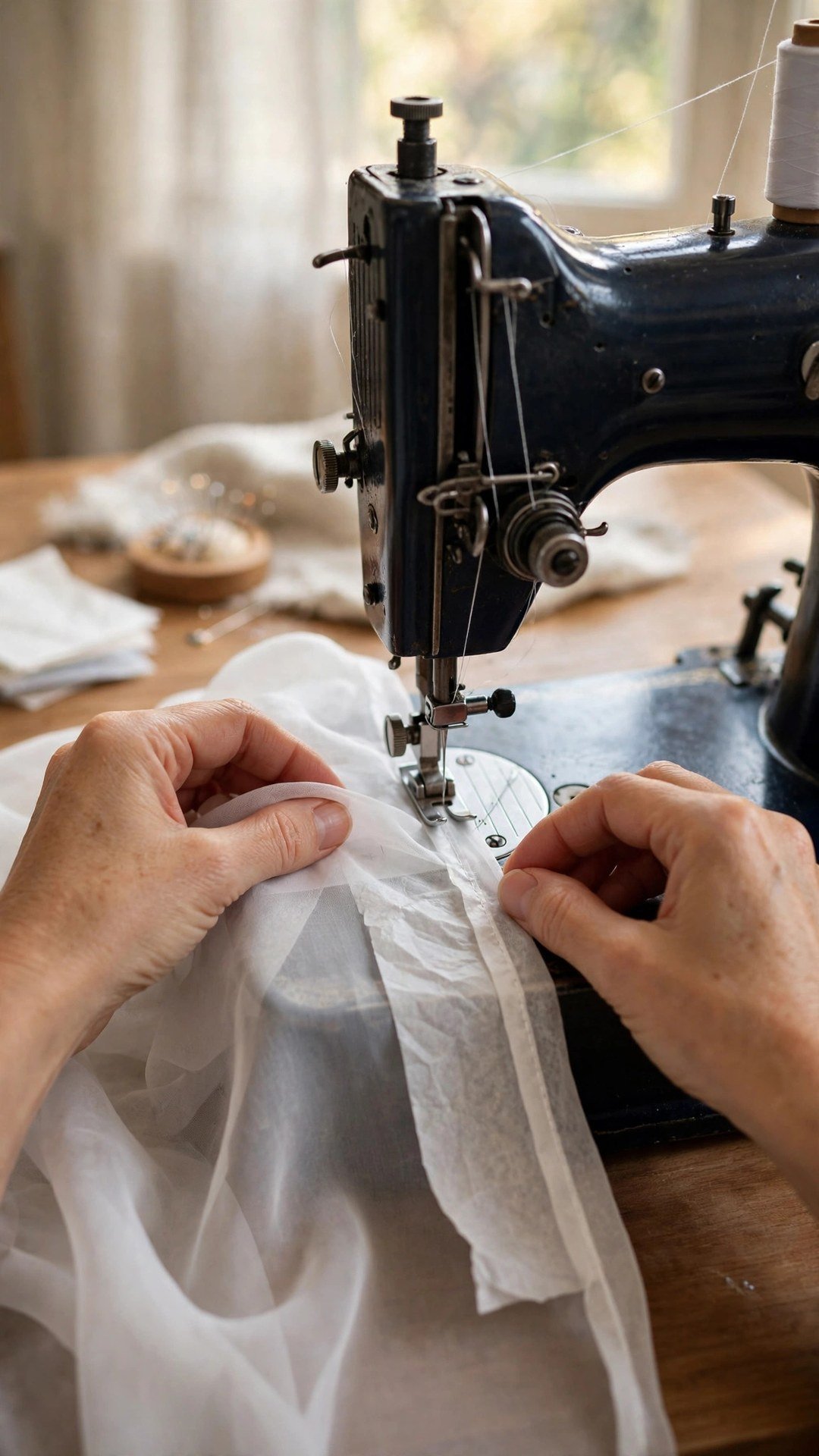
Use a straight stitch needle plate if your machine has one. The small round hole, instead of a wide slot, supports the fabric right up to the needle and stops it from being pushed down into the plate. If you do not have a straight stitch plate, sew with a strip of tissue paper under the seam, which does the same job. A walking foot also helps, because it feeds both layers together and stops them from shifting. My guide to using a walking foot shows how to fit one, and my guide to adjusting stitch length and width covers the settings.
Sewing Chiffon Seams Without Puckering
Sew slowly. Chiffon rewards a slow, steady speed and punishes rushing. Let the feed dogs move the fabric, and do not pull or push it. Hold the fabric lightly at the front and back to keep it flat, but do not stretch it. If the seam starts to pucker, stop, lift the presser foot, and let the fabric relax before you continue. Sewing a pucker in is far harder to fix than preventing it.
Use a French seam for chiffon wherever you can. A French seam encloses the raw edges inside the seam, which is perfect for sheer fabric where a raw edge would show through. Sew the seam wrong sides together first with a narrow seam allowance, trim it, press it, then sew it again right sides together to enclose the edge. The result is a clean, strong seam with no raw edges and no puckering, and it looks beautiful from both sides. My guide to sewing a French seam walks through the method step by step.
For hems, a narrow rolled hem is the classic chiffon finish. Use a rolled hem foot if you have one, or hand roll the hem and stitch it with small, even stitches. A wide hem on chiffon looks heavy and can pucker, so keep the hem narrow and light. Press the hem gently with a cool iron and a pressing cloth, and never press hard, because chiffon scorches and shines easily.
Pressing and Handling Chiffon
Pressing chiffon needs a light touch. Use a cool to medium iron, a pressing cloth, and very little pressure. Press, do not iron: lift the iron and set it down, rather than sliding it across the fabric, because sliding stretches chiffon and creates ripples. Let each pressed area cool before you move the fabric, so the press sets without distortion.
Handle chiffon gently at every stage. Do not hang a chiffon garment on a hanger by its shoulders while it is damp, because it will stretch out of shape. Lay it flat to dry, and store it folded rather than hung if you can. When you try the garment on, move gently and check the fit without pulling at the seams.
If a seam has already puckered, you can sometimes rescue it. Remove the stitching, press the fabric flat with steam and a pressing cloth, and sew the seam again with looser tension and a stabiliser underneath. If the puckering is mild, pressing with steam and letting the fabric cool flat will often smooth it out. Severe puckering, where the fabric has been stretched and distorted, is harder to fix, which is why prevention matters so much with chiffon.
Chiffon Projects Worth Trying First
If you are new to chiffon, start with a simple project: a sheer overlay, a loose scarf, or a simple blouse with straight seams. These projects let you practise the handling and the French seam without the pressure of a fitted garment. Once you are comfortable, move on to a chiffon dress or a lined blouse, where the skills you have learned will pay off.
Choose a polyester chiffon for your first project, because it is more forgiving than silk chiffon and less expensive if something goes wrong. Silk chiffon is beautiful and delicate, and it deserves to be sewn once you have practised on the easier version. Rayon chiffon sits in between: lovely drape, moderate price, and a little more forgiving than silk.
Keep your first chiffon project simple, take your time, and enjoy the fabric. Chiffon has a drape and a lightness that no other fabric can match, and a garment sewn well in chiffon feels like wearing air. The preparation and patience are worth it, and the skills you learn will make every sheer fabric easier from now on.

Frequently Asked Questions
Why does chiffon pucker when I sew it?
Chiffon puckers because the fine fabric is pushed into the needle plate, the tension is too tight, or the layers shift. Use a sharp microtex needle, loosen the tension, sew with tissue paper underneath, and let the machine feed the fabric without pulling.
What needle should I use for chiffon?
A new, sharp microtex needle in size 60 or 70. Change it often, because a dull needle drags the fine fibres and causes puckering. Use a fine, good quality thread and a short stitch length of about 2 millimetres.
Should I use a stabiliser with chiffon?
Yes. Staystitch curves immediately after cutting, and sew straight seams with a strip of tissue paper or tear away stabiliser underneath. The stabiliser supports the fabric and tears away cleanly after sewing.
What is the best seam finish for chiffon?
A French seam, which encloses the raw edges inside the seam. It is clean, strong, and looks beautiful on sheer fabric where raw edges would show through. A narrow rolled hem is the best finish for chiffon hems.
How do I press chiffon without ruining it?
Use a cool to medium iron with a pressing cloth, press by lifting and setting the iron down rather than sliding it, and let each area cool before moving the fabric. Never press hard, because chiffon scorches and shines easily.
Chiffon is not difficult, it is just demanding. Prepare it well, use a sharp fine needle, loosen the tension, sew slowly with stabiliser underneath, and finish with French seams. Do that, and your chiffon will lie flat, drape beautifully, and look like it was sewn by someone who knows exactly what she is doing.
Written by June Carter
I am June, a sewing enthusiast who loves turning simple fabric into things people actually use. I test every technique and product I write about at my own machine before it lands here.