
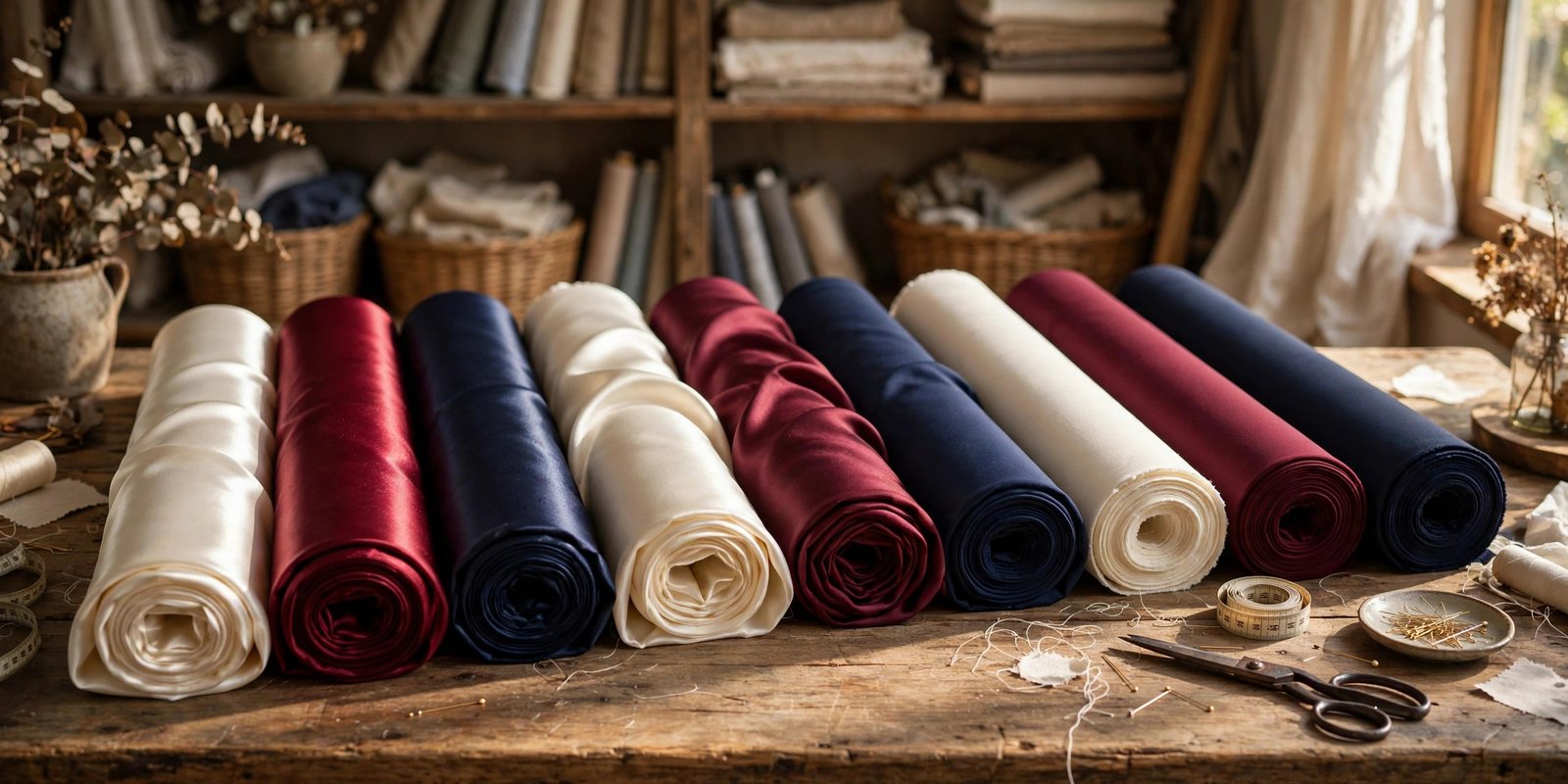
Figuring out how to choose lining fabric feels mysterious until someone explains it plainly, and then it becomes one of the easiest decisions in your project. The lining is the part of the garment that touches your skin, hides your seam allowances, and decides whether a jacket slides on smoothly or fights you every morning. Get it right and the whole garment feels more expensive than it was to make.
I used to grab whatever slippery fabric was cheapest and hope for the best. Sometimes it worked, and sometimes I ended up with a skirt that clung, a jacket that crackled with static, or a dress that needed re-lining a year later. A little knowledge fixes all of that. Once you understand the main lining fabric types and how to match them to your shell fabric, choosing becomes quick and almost automatic.
In this guide I will walk you through the linings I actually reach for, how to match weight and care to your outer fabric, and the simple swatch test I do before I commit to yardage. No jargon, no overwhelm, just practical choices that work.
How to Choose Lining Fabric Without the Guesswork
Here is my decision ladder, and it works for almost everything: start with the garment type, then match the lining weight to the shell fabric, then check care and stretch compatibility, and finally pick your color. A structured blazer wants a smooth, stable lining. A breezy summer dress wants something featherlight and breathable. A winter coat wants warmth without bulk. When you let the garment lead, the lining almost picks itself.
The single most important rule is this: the lining should never be heavier or stiffer than the outer fabric. A stiff lining will distort a fluid shell, change how it drapes, and show an ugly ridge on the right side. If you remember nothing else, remember that the lining supports the garment; it never bosses it around.
The Main Lining Fabric Types
Polyester lining is the workhorse most of us start with. It is smooth, durable, inexpensive, and easy to find in a rainbow of colors. It does not breathe particularly well, so I save it for jackets and skirts rather than close-fitting summer dresses. Acetate is the classic tailored lining with a beautiful hand and a subtle sheen, but it is fussy about water, so keep it away from garments you plan to wash often.
Bemberg, also called cupro, is my favorite all-rounder. It is a regenerated cellulose fiber that breathes like cotton, resists static, and slides beautifully over clothing. If you are lining one special garment, like a wool coat or a tailored blazer, this is where I would put my effort. Silk habotai is the luxury option: featherlight and gorgeous in evening wear and sheer garments, though it needs gentle handling. For everyday breathability, cotton voile, cotton lawn, and cotton batiste make wonderful linings in warm weather garments where you want airflow against the skin.
Match the Lining to Your Garment Type
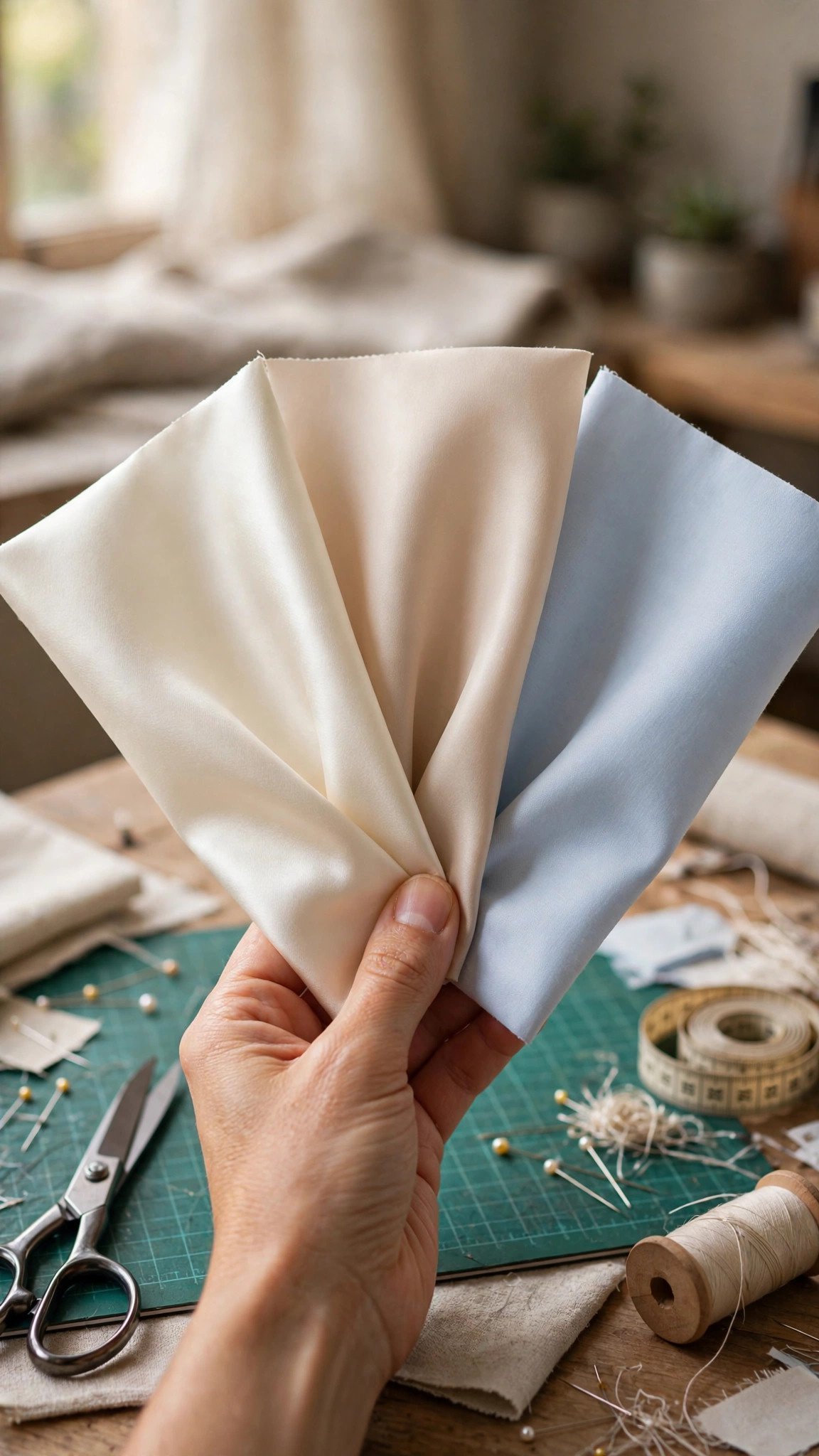
Different garments ask for different things. Summer dresses and skirts need linings that breathe, so reach for cotton voile, cotton lawn, or a lightweight rayon. Keep the weight light so nothing sticks to your skin on a warm day, and choose a light neutral color under sheer skirts so the lining disappears.
Suits and tailored jackets live or die by what is stitched inside. Match the lining to the shell weight, pick something smooth enough to slide over shirts, and coordinate the color with your fabric for a polished finish. Evening and sheer garments hide nothing, so use silk habotai or a nude tone lining that preserves transparency while covering what needs covering. Winter coats are a different job entirely: pair a smooth lining like Bemberg or polyester taffeta with a warm interlining such as flannel or quilted batting, and make sure the layers move together without binding.

Weight, Drape, and Stretch Compatibility
Drape is how fabric moves, and your lining and shell need to move together. Hold a swatch of each in one hand and let them fall. If one swings freely while the other hangs stiff, keep shopping. A mismatch in drape causes puckering, pulling, and hems that never sit right, and no amount of pressing fixes it afterward.
Stretch is the compatibility check people forget. If your outer fabric is a knit or has any spandex, your lining needs a similar amount of stretch, or the garment simply will not fit once it is sewn. Test by stretching both swatches side by side. And here is a practical tip from my own cutting table: always cut your lining on grain, exactly like the shell, so the two layers behave the same way through wearing and washing.
Care Labels, Prewashing, and Shrinkage
A lining that shrinks more than the shell will pucker every seam it touches, so care compatibility is non-negotiable. If your outer fabric is machine washable, choose a lining that tolerates the same treatment. If the shell is dry clean only, an acetate or silk lining is perfectly happy to join it. Always prewash your lining fabric the same way you prewash the shell, and do it before you cut, because shrinkage ruins a good fit faster than any sewing mistake.
My swatch test takes five minutes and has saved me more than once. Cut a small square of the lining, mark its measurements, wash and dry it exactly as you will treat the finished garment, then measure again. If it shrinks noticeably more than your shell fabric, pick a different lining. Also iron a corner of the swatch: some markings and finishes react to heat, and you want to discover that on a scrap, not on your nearly finished jacket. When you are ready to sew, calculate lining yardage from your pattern envelope the same way you would for the shell, and cut the lining pieces just as carefully.

Color, Sheerness, and a Few Special Cases
Color choice is part function, part fun. Under sheer fabrics, a nude tone that is close to the wearer’s skin keeps the garment modest while looking nearly invisible. Under opaque fabrics, match the lining to the shell for a classic tailored look, or pick a surprise print or bold color for the private joy of it. I have a gray blazer with a wild floral lining and it makes me smile every time I put it on.
A few special cases deserve a mention. Dark linings can crock, which means the dye rubs off on light clothing, so test dark satins against a white cloth with a little friction before you commit. Very lightweight shells sometimes do better with an underlining, a layer basted to each pattern piece, rather than a traditional hanging lining. And for bags and structured accessories, skip garment linings entirely and use a sturdy cotton instead. When you are still building your fabric instincts, sticking to beginner friendly fabrics while you learn makes every project more forgiving.
FAQ
What is the best all purpose lining fabric?
For most garments, Bemberg or cupro is the best all-rounder: breathable, anti-static, and smooth. If budget matters, a good quality polyester lining handles jackets and skirts very well. For summer dresses, cotton voile or lawn wins on comfort.
Should the lining match the shell fabric exactly?
Not exactly, but it should be compatible. Match the weight class, the care method, and the stretch, and make sure the drape is harmonious. The lining should always be the same weight or lighter than the shell, never heavier.
Do I need to prewash lining fabric?
Yes. Wash and dry your lining exactly as you will treat the finished garment, before you cut. A lining that shrinks more than the shell will pucker every seam, and prewashing is the only way to catch that before it matters.
Can I use quilting cotton as a lining?
You can in casual garments like summer skirts and unlined jackets, where breathability matters more than slip. It does not slide the way a traditional lining does, so I would not use it in a tailored coat or a fitted dress where ease of dressing matters.
Written by June Carter
I am June, a sewing enthusiast who loves turning simple fabric into things people actually use. I test every technique and product I write about at my own machine before it lands here.