
If you are wondering how to build a beginner sewing kit, start here: you need far fewer tools than the sewing shops would like you to believe. A good kit is a small set of reliable tools that handle cutting, measuring, marking, pinning, and stitching, and everything else can wait until you know what kind of sewing you love. I have watched too many beginners spend a fortune on gadgets they never use, while missing the one sharp pair of scissors that would have changed everything.
My kit below is the one I recommend to every new sewist, built from the tools I reach for in almost every project. It is practical, affordable, and easy to store, and each tool earns its place by doing a real job. I will also tell you which extras are worth adding next, and which popular tools you can safely skip until later, so your money goes where it matters.
The Essentials: Cutting, Measuring, and Marking
Start with cutting, because dull scissors ruin fabric and frustrate beginners faster than anything else. Buy one good pair of fabric scissors, use them only on fabric, and never let them cut paper. A small pair of sharp thread snips is the second cutting tool worth owning, for trimming threads and snipping curves neatly. A rotary cutter and mat are wonderful later, but they are not essential for your first projects, and good scissors will handle everything you need at the start.
For measuring, you need a flexible measuring tape and a clear ruler. The tape measures bodies and curves, and the ruler measures straight lines, seam allowances, and hems on flat fabric. A seam gauge, that little metal ruler with a sliding marker, is a cheap extra that makes hems and seam allowances far more accurate. If you are choosing between tools, my list of 8 essential tools for working with fabric covers these in more detail.
For marking, buy a water soluble fabric marker or a few pieces of tailor’s chalk. You need to mark darts, notches, button positions, and hem lines, and a marker that vanishes with water or a press is far better than a pen that stains. Keep your marking tools in the kit, not in a drawer somewhere else, so they are always there when you need them.

Pins, Needles, and Thread: The Stitching Core
Pins hold your fabric together while you sew, and good pins make a real difference. Buy glass head pins, which are easy to see and will not melt under the iron, and a small pincushion or magnetic pin holder to keep them safe. Sewing clips are a lovely extra for thick layers and for fabrics that pins would mark, like leather or vinyl, but pins alone will carry you through your first projects.
Needles come in two kinds, and you need both. Hand sewing needles in a mixed pack cover buttons, hems, and repairs, and machine needles in universal and ballpoint types cover most fabrics you will sew at first. Change your machine needle regularly, because a blunt needle causes skipped stitches and puckered seams, and a fresh needle is one of the cheapest fixes in sewing. My guide to how to choose a sewing machine needle explains the sizes in plain language.
Pressing Tools and a Place to Keep It All
Pressing is half of sewing, and your kit needs the tools to do it well. A steam iron you already own is fine to start with, and an ironing board or a tabletop pressing mat gives you a flat, heat safe surface. A pressing cloth, a scrap of cotton fabric, protects delicate fabrics from shine and scorch marks, and a tailor’s ham or a rolled towel helps you press curved seams neatly. You do not need a fancy pressing setup, just a flat surface, steam, and a cloth.
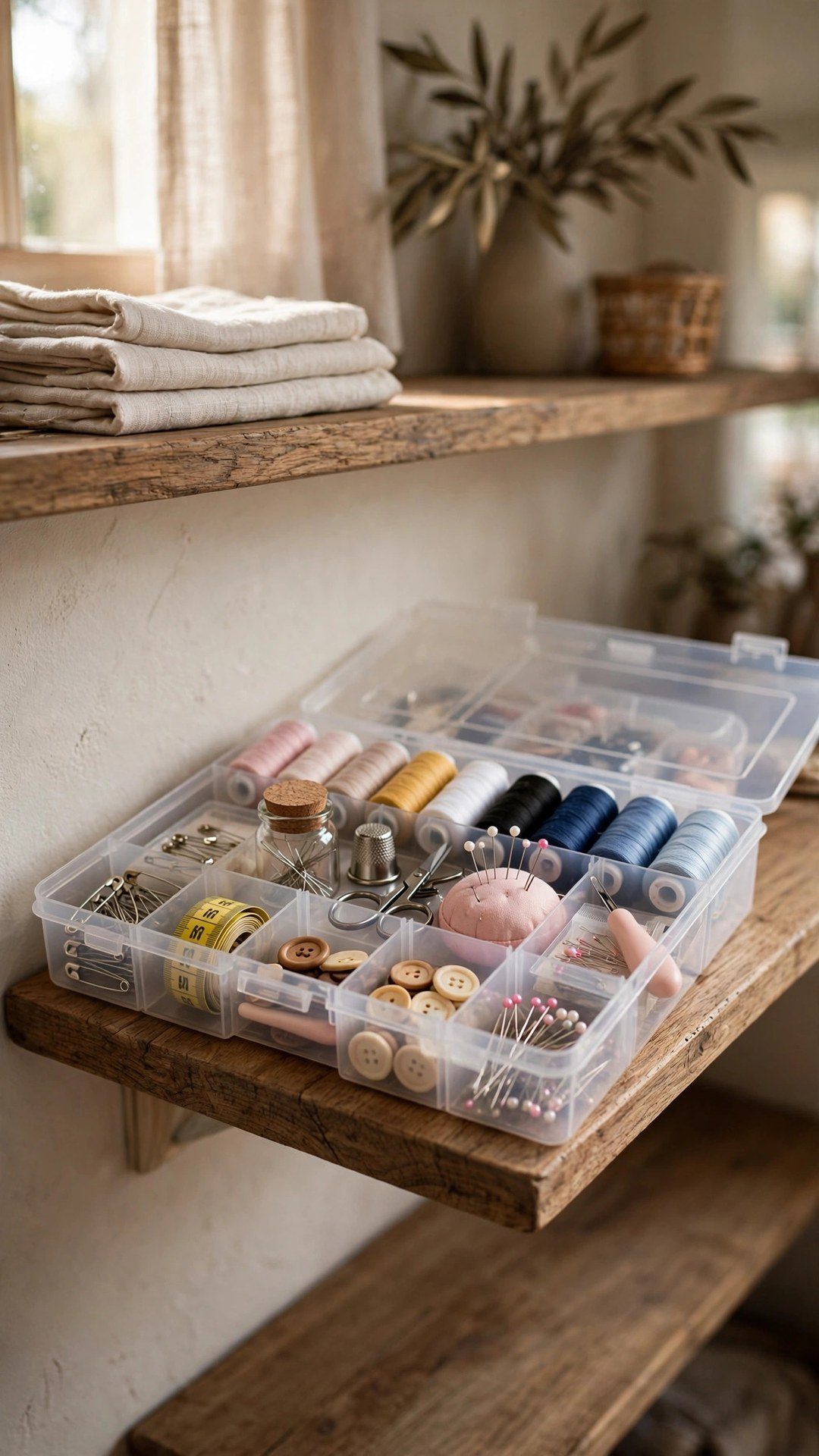
Storage matters more than beginners expect, because a kit scattered across three drawers is a kit you will not use. Choose one box, basket, or bag that holds everything, and keep it in one place. A clear box with compartments works well, because you can see what is inside, and a small basket looks lovely on a shelf. The best storage is the one you will actually put things back into, so pick something simple and keep it near your sewing spot.
If you are setting up a dedicated corner, my guide to how to set up a small sewing space has practical ideas for small rooms and shared tables. Even a single shelf and a box can be a real sewing space, and having your kit in one place means you can start sewing in minutes instead of hunting for scissors.
Nice Extras Worth Adding Next
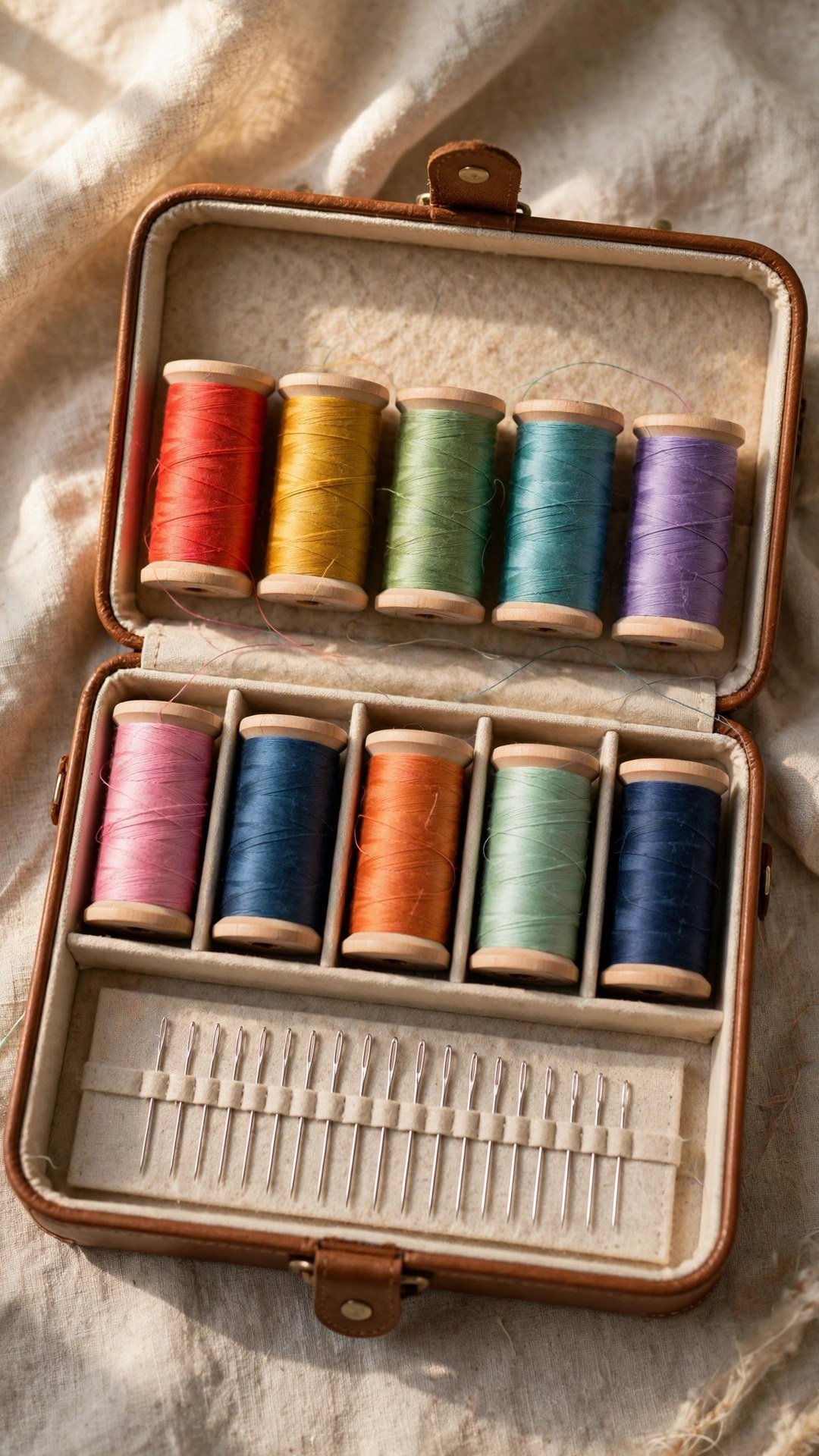
Once the essentials are in place, a few extras make sewing noticeably easier. A seam ripper is the first extra to buy, because every sewist unpicks stitches, and a good ripper with a sharp point and a comfortable handle makes the job quick and safe. A pair of pinking shears finishes raw edges neatly and slows fraying, and a fabric marking pencil in white and blue covers dark and light fabrics alike.
A rotary cutter, cutting mat, and clear ruler are the next big step, especially if you plan to quilt or cut lots of straight pieces. They speed up cutting enormously and improve accuracy, but they are an investment, so wait until you know you will use them often. A walking foot for your machine is another excellent extra for knits and slippery fabrics, and it solves a whole family of feeding problems in one purchase.
What to Skip for Now
Some tools look essential in the shop and gather dust at home, and it helps to know which ones to skip at the start. Fancy embroidery scissors, specialised feet, and pattern making rulers are wonderful later, but they solve problems you do not have yet. A serger is a big purchase that beginners do not need, because a zigzag stitch and pinking shears finish edges perfectly well for first projects. My article on do you need a serger explains when that purchase actually makes sense.
Skip the giant thread sets in fifty colours, because you will use five of them and the rest will dry out in the box. Buy thread as you need it, in the colours your projects call for, and your collection will stay fresh and useful. Skip the cheap multi tool kits too, because the scissors are blunt, the pins bend, and the tape stretches, and you will end up replacing everything one piece at a time anyway.
Finally, skip the pressure to have a perfect kit before you start sewing. The best kit is the one that lets you start today, with tools that work and a place to keep them. Sew a few projects, notice which tools you reach for and which ones you wish you had, and let that experience guide your next purchase. Your kit will be personal, practical, and exactly right for the sewist you are becoming.
Frequently Asked Questions
What tools do I need to start sewing?
You need fabric scissors, thread snips, a measuring tape, a clear ruler, fabric markers, glass head pins, hand and machine needles, good all purpose thread, a seam ripper, and an iron. That small set handles almost every beginner project.
Should a beginner buy a sewing machine straight away?
If you plan to sew regularly, a simple reliable machine is worth it, and my guide to choosing a beginner machine will help you pick one. If you are unsure, start with hand sewing and borrow or hire a machine for your first project.
How much thread should I buy to start?
Start with white, black, grey, and cream in good quality all purpose polyester thread. Add colours as your projects need them, rather than buying a large set you will barely use.
Do I need a rotary cutter as a beginner?
No, good fabric scissors will handle your first projects perfectly well. A rotary cutter, mat, and ruler are a wonderful upgrade later, especially for quilting and straight cuts.
Where should I keep my sewing kit?
Keep everything in one box, basket, or bag, in one place near your sewing spot. A kit you can see and reach in minutes is a kit you will actually use.
Start With the Essentials, Then Sew
A beginner sewing kit is not a shopping list to complete in one trip, it is a small set of reliable tools that grows with you. Buy the essentials, keep them together in one place, and start sewing. Your first projects will teach you which tools matter most to you, and your kit will grow naturally from there. The best time to start is today, with scissors, thread, pins, and a piece of fabric you love.
Written by June Carter
I am June, a sewing enthusiast who loves turning simple fabric into things people actually use. I test every technique and product I write about at my own machine before it lands here.