
The best thread for sewing machines, if you want the short answer, is a good all-purpose polyester thread. I have sewn with the cheap stuff, the fancy stuff, and the stuff that came free with a machine, and the difference is not subtle. Bad thread snaps, shreds, nests under your fabric, and fills your machine with lint. Good thread just sews.
So here is my quick answer: buy Gutermann Sew-All. It is the spool I reach for on probably 8 out of 10 projects, and it is the one I recommend when a beginner asks me what to buy first. Around $27.50 gets you a 20-spool set on Amazon, which sounds like a lot until you realize you will use every color.
Gutermann Sew-All Thread Set, 20-pack
That said, “best” depends on what you sew. A quilter piecing cotton blocks wants something different from someone hemming jeans. Below are the 5 threads I actually keep on my shelf, each with an honest price, who it suits, and the drawback nobody mentions in the listing. If you are brand new to all of this, read my guide to how to thread a sewing machine first, because even the best thread in the world sews badly through a mis-threaded machine.
Best thread for sewing machines: my 5 top picks
1. Gutermann Sew-All, 100m spools: best overall
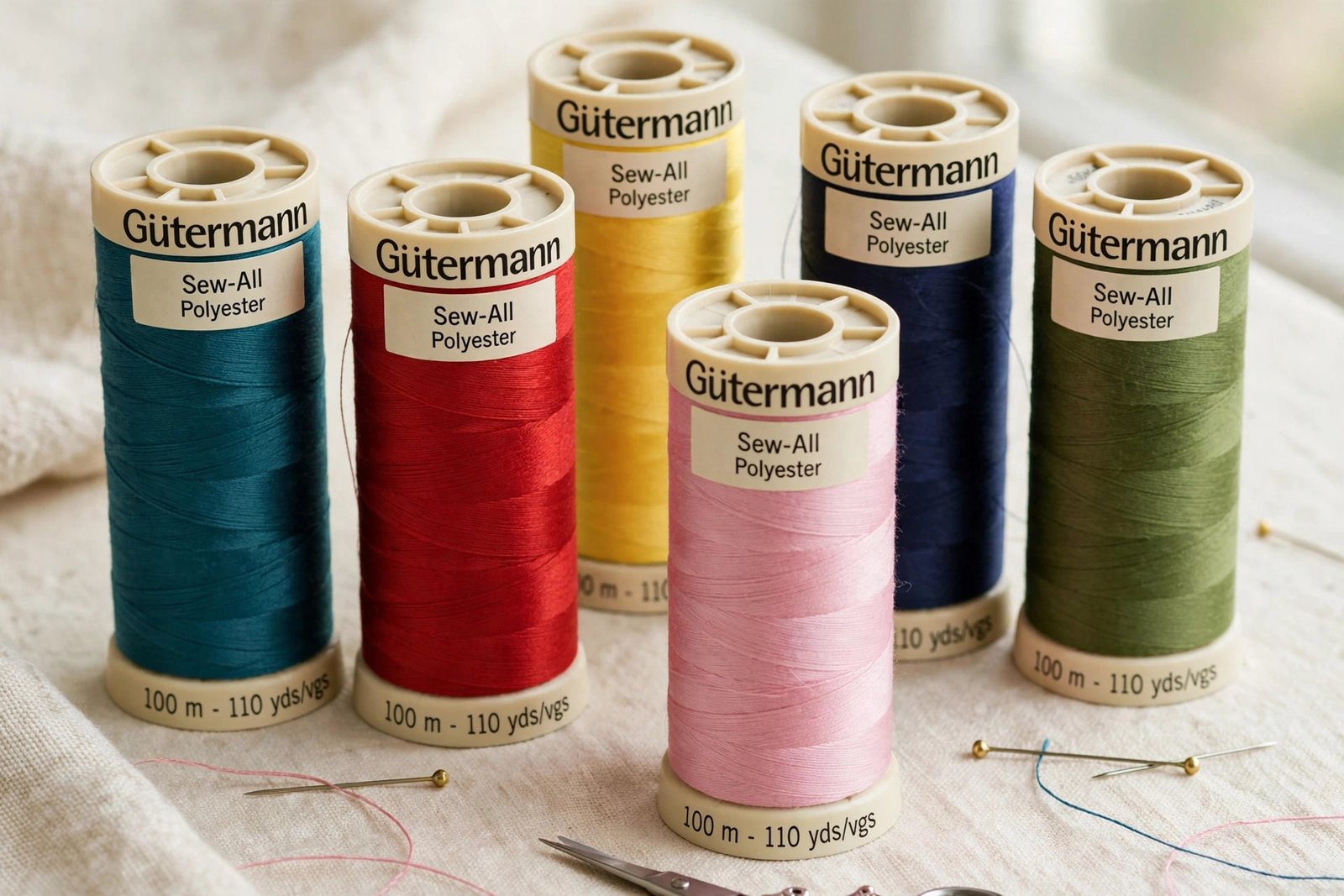
This is the workhorse. Sew-All is 100% polyester, made in Germany, and it sews cleanly on every machine I have tried it on, from a 1970s Singer to a modern computerized Brother. The thread has almost no thick and thin spots, which is the main reason cheap thread causes tension headaches. It comes in something like 400 colors, so matching your fabric is never a problem.
The 20-spool set (around $27.50) is the smart buy if you sew regularly. That works out to roughly $1.38 per 100m spool, which is genuinely good value for thread of this quality. If 20 feels like a commitment, the 10-spool sets run around $19.
Who it is for: everyone. If you only buy one thread, make it this one.
The honest drawback: the 100m spools run out faster than you expect on big projects. I once ran dry mid-way through a pair of curtains and had to wait two days for a reorder. For anything large, buy the color you need in the bigger 250m or 500m spool, or keep a spare.
Gutermann Sew-All Thread Set, 20-pack
2. Coats & Clark Dual Duty XP, 250 yards: best budget pick
Dual Duty XP is the thread I grew up seeing in every American sewing basket, and there is a reason it never left. It is a polyester-wrapped core thread, which means it has the strength of polyester with a slightly softer hand. A 250-yard spool costs around $3, and you can find it in any fabric store in the US, which matters when you need a color today, not in two days.
For basic garment sewing and repairs, it performs nearly as well as thread costing three times as much. I have sewn entire shirts with it and never had a seam fail in the wash.
Who it is for: beginners on a budget, and anyone who wants to grab thread locally instead of ordering online.
The honest drawback: it sheds more lint than Gutermann or Mettler. Not a disaster, but you will want to clean your bobbin area more often. If your machine starts acting up, lint from budget thread is the first suspect. My guide to fixing skipped stitches covers the cleaning routine that solves most of it.
Coats & Clark Dual Duty XP General Purpose Thread, 250-yard

3. Mettler Metrosene, 1,097 yards: smoothest running, lowest lint
Mettler is the Swiss thread brand that serious sewists whisper about. Metrosene is their all-purpose polyester, and the first thing you notice is how smoothly it feeds. It produces noticeably less lint than Coats & Clark, which your machine will thank you for, especially if you own a machine with tight tolerances like a Bernina.
The 1,097-yard spool (around $14) is the one to get. Yes, that is more than a small spool of Gutermann, but you are getting eleven times the thread. Per yard, it is one of the cheapest quality threads you can buy. I keep white, black, and a grey on hand at all times.
Who it is for: anyone who sews a lot, owns a fussy high-end machine, or is tired of cleaning lint out of the bobbin case.
The honest drawback: the color range in the big 1,097-yard spools is smaller than the 164-yard spools, and small local shops often only carry the small ones. If you want an unusual color in bulk, you may have to order it.
Mettler Metrosene 100% Polyester Thread, 1,097 yards, White

4. Aurifil 50wt Mako Cotton, 3-pack: best for quilting and piecing
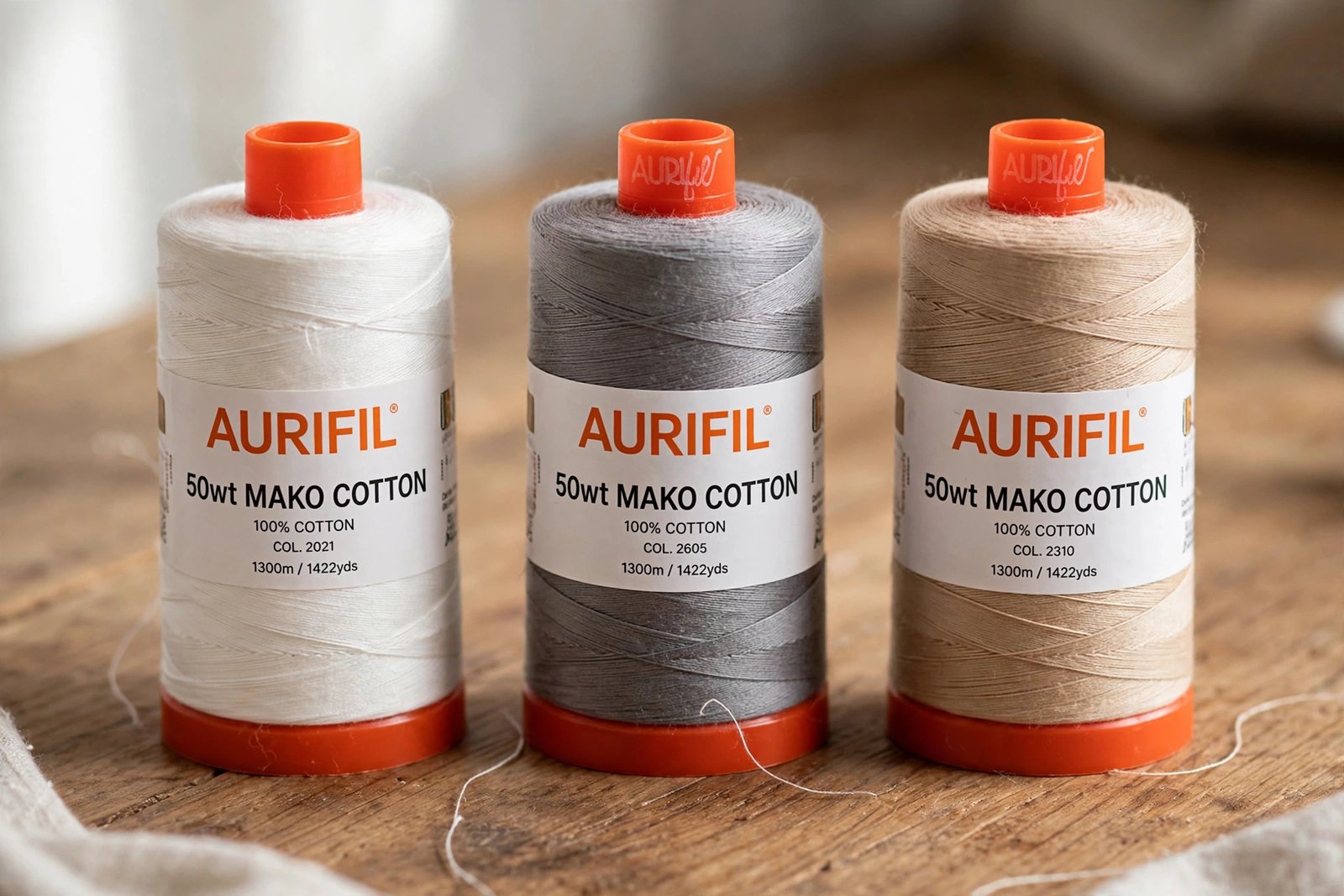
Aurifil is the odd one out here because it is cotton, not polyester. It is made in Italy from long-staple Egyptian cotton, and quilters are devoted to it for good reason: the 50 weight is fine enough that seams press flat and crisp, which is exactly what you want when piecing quilt blocks where every sixteenth of an inch counts.
A 3-pack of the big 1,422-yard spools runs around $40. That is real money, but one spool lasts most quilters months. Do not buy this for general garment sewing, though. Cotton has almost no stretch and less strength than polyester, so it is the wrong choice for seams that take stress.
Who it is for: quilters, and anyone piecing cotton fabrics where flat, precise seams matter more than stretch.
The honest drawback: the price stings, and cotton thread is genuinely worse than polyester for everyday garment seams. This is a specialist, not an all-rounder. Buy it for quilting, not as your only thread.
Aurifil 50wt Mako Cotton Thread, 3-pack, 1,422 yards each
5. Gutermann Sew-All 1,094-yard spool in Nu White: best big neutral spool
Here is the most practical purchase on this list. Most of what beginners sew is in white, cream, or black thread, and buying those colors in tiny 100m spools is burning money. This single 1,094-yard spool of Sew-All in Nu White costs around $9.50 and will last you through dozens of projects.
I keep one of these on my machine more than any other spool. White disappears into light fabrics, works as a bobbin thread under almost anything, and you never have to think about whether you have enough.
Who it is for: every beginner. Buy this before you buy anything colorful.
The honest drawback: it is only one color, obviously. And at this size it does not fit every machine’s spool pin comfortably, so check yours or use a thread stand. A minor thing, but worth knowing before it arrives.
Gutermann Sew-All Thread, 1,094 yards, Nu White

My overall winner
If I could only keep one thread from this list, it would be Gutermann Sew-All, and it is not close. It sews well on every machine, comes in every color, barely sheds lint, and the 20-pack at around $27.50 is the best value in decent thread anywhere. I have sewn garments, bags, curtains, and quilts with it. It has never let me down.
That said, buy the Coats & Clark if money is tight right now, and add the Aurifil the day you start quilting. Thread is one of the cheapest upgrades in sewing. A $3 spool of the right thread will do more for your stitch quality than a $30 presser foot.
How to choose thread weight and type for your sewing machine
Once you know the brands, the next question is what all the numbers and fiber names mean. Here is the short version I give every beginner.
Start with all-purpose polyester. For roughly 90% of home sewing, an all-purpose polyester thread in the standard weight is correct. It has a little stretch, it does not shrink in the wash, and it is strong enough for garment seams. Every thread on this list except the Aurifil falls in this camp.
Match the thread to the fabric, not the machine. Light fabrics want fine thread, heavy fabrics want heavier thread. Sewing denim with all-purpose thread works, but your seams will look better and hold longer with a heavier topstitching thread. Pairing the right thread with the right fabric matters as much as the brand, which is why I wrote a separate guide to how to choose fabric for a beginner project.
Thread weight numbers are backwards. This confuses everyone. With the common “wt” system, a bigger number means a finer thread: 50wt is fine, 30wt is noticeably thicker. Most all-purpose sewing thread is around 50wt. You do not need to memorize this, just know that if a pattern calls for topstitching thread, it means something thicker than your normal spool.
Cotton vs polyester is a real choice. Polyester wins for garments because it stretches slightly and does not weaken with age. Cotton wins for quilting because it presses flat and behaves like the cotton fabric around it. Neither is “better” in general. If you want to go deeper on thread types and weights, WAWAK’s guide to Gutermann threads is the clearest manufacturer-side breakdown I have found.
Old thread is bad thread. Thread gets brittle with age, heat, and sunlight. That box of thread from your grandmother’s attic might look charming, but if it snaps when you tug it firmly between your hands, throw it out. A $3 fresh spool beats a free 20-year-old one every time.
Frequently asked questions
Can I use any thread in my sewing machine? Almost. Any decent-quality all-purpose thread works in any home sewing machine. What does not work well is very old thread, very cheap thread that sheds lint, or specialty threads (like heavy upholstery thread) without also switching to a larger needle. When in doubt, all-purpose polyester is the safe answer.
What is the best thread for a beginner? Gutermann Sew-All or Coats & Clark Dual Duty XP, in white or cream. You want one reliable spool while you learn, not a rainbow of questionable quality. Once you can sew a straight stitch confidently, then start collecting colors.
Should the bobbin thread match the top thread? For most sewing, yes, use the same thread top and bottom. It keeps the tension balanced and the stitch looking clean on both sides. The exception is decorative work where you might want a different bobbin color deliberately.
What thread should I use for topstitching? A heavier thread, usually labeled topstitching or heavy-duty, in the 30wt range, paired with a topstitch needle (size 90/14 or 100/16). Regular all-purpose thread works for subtle topstitching, but the thicker thread gives that crisp, visible stitching line you see on jeans. Check what your pattern recommends; learning how to read sewing pattern symbols will tell you exactly where the pattern wants it.
Why does my thread keep breaking? Nine times out of ten it is one of four things: old or cheap thread, a burr or wrong-size needle, incorrect threading, or the tension set wrong for the fabric. Replace the thread and the needle first, since those are the cheapest fixes, then re-thread carefully. If it still breaks, my troubleshooting guides will walk you through the rest.
Now go sew something
Thread is sorted. If you are sewing garments, start with how to take accurate body measurements, because good fit starts before you cut. Then pick one of my easy sewing projects for beginners and put that new thread to work. The best thread for sewing machines is the one that is already in your machine, sewing.
Written by June Carter
I am June, a sewing enthusiast who loves turning simple fabric into things people actually use. I test every technique and product I write about at my own machine before it lands here.