
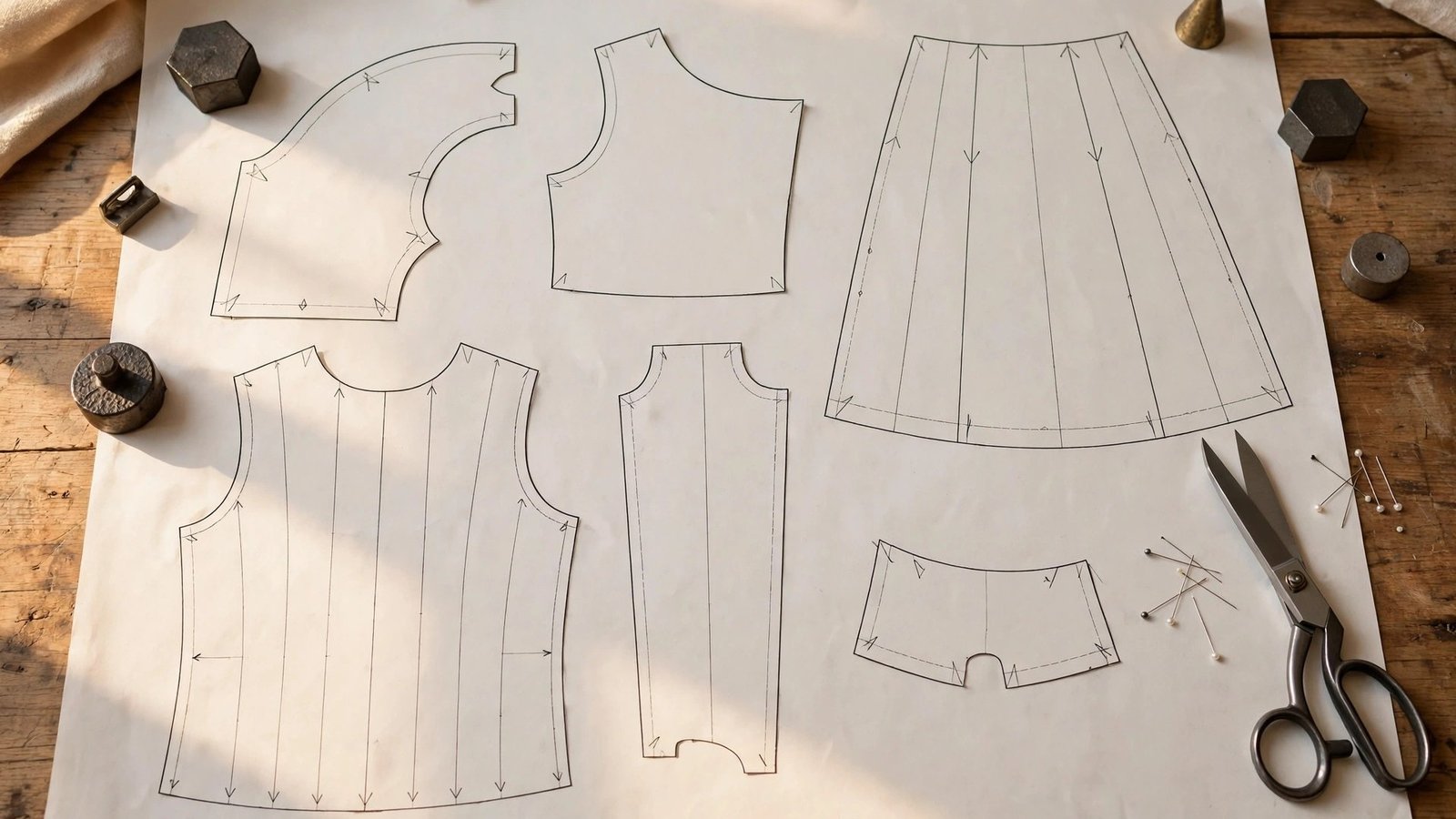
If you are wondering how to use A0 copy-shop files, the short answer is that they let you skip the taping. Instead of printing a sewing pattern across twenty home printer pages and sticking them together, you take one large file to a copy shop and come home with a single sheet that is about a metre wide, with every pattern piece printed whole at full size. It is the fastest route from a PDF pattern to a cuttable piece, and once you have tried it, the tiled pages start to feel like a chore.
I still use tiled pages for quick tests and small pieces, but for a full dress or coat pattern, the A0 sheet wins every time. There are no taped joins to shift, no page edges to misalign, and no guessing whether a piece that crosses four pages is really straight. In this guide I will show you how to find the A0 file in your download, how to check it is set up correctly, what to ask for at the copy shop, and how to check the finished sheet before you cut. If you have only ever printed patterns at home, my guide to how to print PDF patterns at actual size is a useful starting point for the scale checks below.
One thing to know before you start: not every PDF pattern includes an A0 file, and not every copy shop can print one. Most independent pattern designers include a copy-shop file as a separate PDF, usually labelled A0, copy shop, or large format. Big commercial pattern companies sometimes do not. Check your download folder first, and check with your local copy shop before you travel there, because a wasted trip with a file on a memory stick is a frustrating way to spend a morning.
How to Use A0 Copy-Shop Files: Finding the Right File
When you buy a PDF pattern, the download usually contains several files, and the A0 file is easy to miss among them. Look for a file with A0 in the name, or words like copy shop, large format, or print shop. It is often a single PDF with one or two very large pages, while the home printing file has twenty or thirty small pages. If you open the A0 file on your computer and it shows one huge page with all the pieces laid out together, you have found it. If it opens as a stack of letter sized pages, that is the tiled file, and you need to look again.
Before you send the file anywhere, open it and check two things. First, find the test square, usually a one inch or ten centimetre square printed on the first page, and confirm it is present. Second, check that the file is set to actual size, with no scaling, fitting, or shrinking applied. Some PDF readers add a scale setting of their own, so look in the print settings too. And confirm the paper size is A0, which is 841 by 1189 millimetres, rather than a custom size that your copy shop cannot feed through its machine. A quick read of how to assemble A4 tiled pattern pages will remind you why the single sheet is worth the trip when the pattern is large.
What to Ask For at the Copy Shop
Walk in with the file on a memory stick or on your phone, and ask for a black and white print on A0 paper at 100 percent scale, with no scaling and no fitting to page. Those exact words matter, because copy-shop staff print hundreds of documents a day and their machines often default to shrinking a large file to fit the paper. Say it clearly, and ask them to confirm the scale setting before they press print. Most shops charge per sheet, and a single A0 sheet is the usual unit, so a pattern with two A0 pages means two sheets.
Ask what paper they use, because it makes a difference. Plain copier paper is fine for a pattern you will trace, and it is the cheapest option. A slightly heavier paper is nicer if you plan to cut the pattern pieces out and pin them directly to fabric, since it survives more handling. Some shops offer a thin roll paper that comes off a big roll rather than a flat sheet, which is fine too, though it tends to curl at the edges until you press it flat under books overnight. Take your phone with you, because many shops now accept files by email or through a file transfer app if the memory stick fails.

Checking the Scale When You Get Home
Never cut into an A0 sheet before you check the scale, because a sheet printed at the wrong size is just expensive wrapping paper. Find the test square on the printed sheet and measure it with a ruler. A one inch square must measure exactly one inch, and a ten centimetre square must measure exactly ten centimetres. Measure both directions, not just one, because a printer can stretch a sheet slightly in one direction. If the square is right, your pattern is right. If it is off by even a small amount, the whole garment will be off, and you should take the sheet back and ask for a reprint at 100 percent.
While you are checking, look over the whole sheet for problems. Check that no pattern piece runs off the edge of the paper, that the lines are dark and complete, and that the grainlines and notches are readable. Copy-shop printers sometimes print faintly when the toner is low, and a faint dart line is easy to miss when you are tracing. If a line is hard to read, trace over it with a pen before you put the sheet away. And store the sheet rolled, not folded, if you can. A rolled sheet stays flat and readable, while a folded sheet creases right through the pattern pieces you need most.
Cutting, Tracing, and Using the Large Sheet
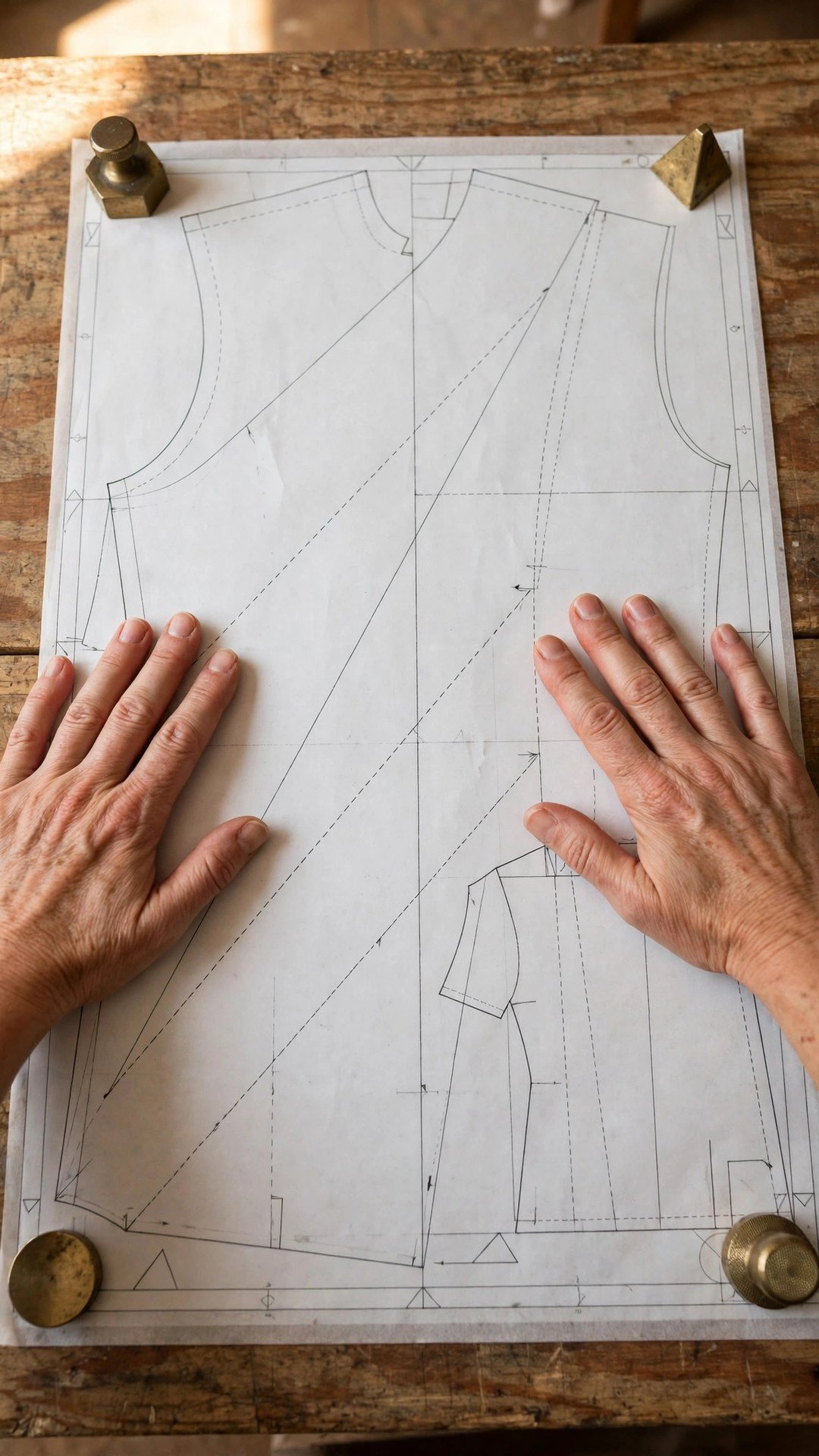
Using an A0 sheet is a pleasure after tiled pages, but it needs a big flat surface. Clear your cutting table or the dining table, roll the sheet out, and weigh the corners down with books or pattern weights so it does not curl while you work. If you plan to keep the original intact, trace the pieces you need onto tracing paper or Swedish tracing paper, rather than cutting the printed sheet. That way the A0 sheet stays whole for the next size or the next project, and you only ever cut your tracing.
When you trace, mark everything: the notches, the grainline, the dart legs, and the cutting line for your size. Large sheets often show several sizes nested together, so use a highlighter to mark your size line before you start tracing, and double check it at every piece. Then cut your fabric using the traced pieces, or pin the traced pieces to the fabric as usual. If you would rather cut the A0 sheet itself, that works too, and it is faster, but you lose the other sizes. For a pattern you love, tracing is the wiser choice, and my guide to how to trace pattern pieces covers the tracing step in detail.

Frequently Asked Questions
What is an A0 copy-shop file?
It is a version of a PDF sewing pattern formatted for a large format printer, so the whole pattern prints on one or two sheets about a metre wide instead of many home printer pages. You take the file to a copy shop and they print it at full size.
How much does an A0 pattern print cost?
It varies by shop and by region, and shops usually charge per sheet. Ask for a quote before you print, and remember that one A0 sheet often replaces twenty or more home printed pages, so compare the total, not just the single sheet price.
Can any copy shop print A0 patterns?
Most print shops and office supply stores with a large format printer can, but not every small copy shop has one. Call ahead and ask whether they print A0, whether they accept PDF files on a memory stick, and whether they can print at 100 percent scale.
What if my pattern does not include an A0 file?
Some patterns only come with tiled home printing files. In that case, either tile the pages at home, or use a projector to project the pattern onto fabric. My guide to how to use projector patterns explains the projector route.
How do I know the A0 print is the right size?
Measure the test square printed on the sheet. It must measure exactly one inch or ten centimetres on each side. If it does not, the scale is wrong and the pattern will not fit, so ask for a reprint at 100 percent.
Skip the Taping, Keep the Sewing
An A0 copy-shop file is a small luxury that pays for itself in time saved and taping avoided. Find the right file, ask for 100 percent scale on A0 paper, measure the test square when you get home, and trace your pieces before you cut. Your next pattern will go from download to fabric in an afternoon, with no sticky tape in sight.
Written by June Carter
I am June, a sewing enthusiast who loves turning simple fabric into things people actually use. I test every technique and product I write about at my own machine before it lands here.