

If you are learning how to choose elastic for waistbands, you are learning a choice that decides whether a garment is comfortable or constantly annoying. Elastic holds a waistband in place, lets it stretch when you sit and move, and returns to shape when you stand up. The wrong elastic is too tight, too loose, too stiff, or it twists and rolls inside its casing.
I have made skirts and trousers with elastic that was perfect on the first try, and I have made others where the elastic twisted every time I wore them. The difference was not luck, it was the type and width I chose. In this guide I will show you how to pick elastic by type, width, and stretch, and how to sew it so it stays flat and comfortable.
How to Choose Elastic for Waistbands by Type
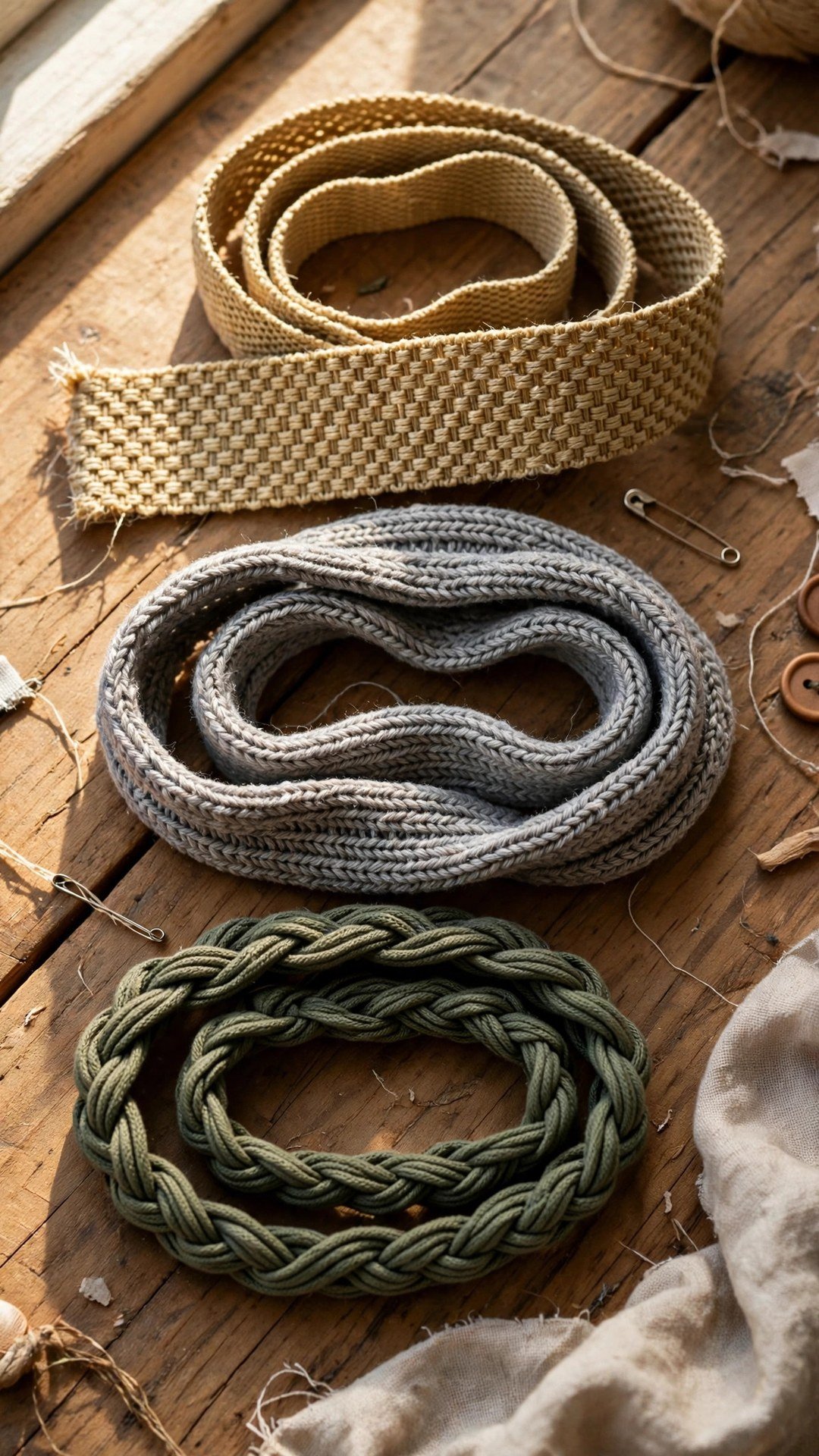
There are three main types of elastic for waistbands, and each behaves differently. Woven elastic is strong, it does not narrow much when it stretches, and it is my first choice for most waistbands. Knitted elastic is softer and more flexible, and it works well for lightweight garments and children’s clothes. Braided elastic is the most common in shops, but it narrows when it stretches and it can lose its stretch faster, so I use it only for light, low stress waistbands.
For a waistband that will be worn and washed often, choose woven elastic. It holds its width, it recovers well after stretching, and it does not twist as easily inside a casing. For a soft, comfortable waistband on a pyjama or a baby garment, knitted elastic is a good pick. Avoid braided elastic for a waistband that needs to stay firm, because it will narrow and weaken over time.
Choosing the Right Elastic Width
Width changes how a waistband feels and looks. A narrow elastic, around half an inch wide, suits a lightweight skirt or a child’s garment, where you want a soft, gentle hold. A medium elastic, around three quarters of an inch to one inch wide, is the most versatile, and it suits most adult skirts, trousers, and shorts. A wide elastic, around one and a half inches or more, gives a firm, supportive waistband that does not roll, and it looks good as an exposed waistband on lounge wear.
Match the width to the casing or the waistband you are sewing. The elastic should fit inside the casing with a little room to move, but not so much room that it twists. If you are sewing the elastic directly to the fabric, a wider elastic is easier to handle and less likely to flip. My guide to how to select elastic width compares widths in more detail, with examples for different garments.
Measuring Elastic for a Comfortable Fit
Measuring elastic is not the same as measuring a waist. Cut the elastic to your waist measurement minus about two inches, then test it by wrapping it around your waist and checking the fit. It should feel snug but not tight, and you should be able to slip two fingers under it comfortably. If it feels tight when you sit down, it is too short, and if it slips down, it is too long.
Always test the elastic before you sew it in. Pin the ends together, try the garment on, sit down, walk around, and see how it feels. A waistband that feels fine standing up can feel tight when you sit, so test both. For a child, measure with the garment on, because children grow fast and a waist measurement from last month may already be out of date. My guide to how to sew a gathered skirt shows how elastic works in a real skirt pattern.
Sewing Elastic Into a Waistband Casing
A casing is a tunnel of fabric that holds the elastic, and it is the most common way to sew a waistband. Sew the casing first, leaving a small gap of about two inches unstitched at the back. Attach a safety pin to one end of the elastic, feed it through the casing, and pull it out the other side. Overlap the ends by about an inch, sew them together securely with a zigzag stitch, then pull the elastic inside the casing and sew the gap closed.
To stop the elastic from twisting inside the casing, stitch through the casing and the elastic at the side seams, with a few stitches that catch the elastic. That is called stitching in the ditch, and it holds the elastic in place without showing on the outside. Distribute the gathers evenly around the waistband before you stitch, so the fabric does not bunch on one side. If you are sewing a knit garment, my guide to how to sew a knit t-shirt covers handling stretchy fabric well.

Fixing Twisting, Rolling, and Loose Elastic
Twisting is the most common elastic problem, and it usually means the elastic is too narrow for the casing or it was not stitched in place. Fix it by opening the casing gap, pulling the elastic flat, and stitching it in place at the side seams. Rolling usually means the elastic is too soft or too narrow for the garment weight, so choose a wider, firmer woven elastic next time.
Loose elastic after washing usually means the elastic was poor quality, or it was washed too hot. Wash elastic waistbands in warm water, not hot, and let them dry naturally when you can. If the elastic has lost its stretch, replace it by opening the casing, pulling out the old elastic, and threading in a new piece. That is a quick repair, and it is much easier than remaking the whole garment.

Frequently Asked Questions
What type of elastic is best for waistbands?
Woven elastic is best for most waistbands, because it holds its width, recovers well, and does not twist easily. Knitted elastic is good for soft, lightweight garments, and braided elastic is best only for light, low stress waistbands.
How wide should waistband elastic be?
Use half an inch for lightweight or children’s garments, three quarters of an inch to one inch for most adult skirts and trousers, and one and a half inches or more for a firm, exposed waistband that should not roll.
How long should waistband elastic be?
Cut it to your waist measurement minus about two inches, then test it by wrapping it around your waist. It should feel snug but not tight, with room to slip two fingers underneath, and it should stay comfortable when you sit.
Why does my elastic keep twisting?
Twisting usually means the elastic is too narrow for the casing or it was not stitched in place. Pull it flat, stitch it at the side seams, and choose a wider woven elastic next time.
Choose Elastic That Feels Good All Day
Elastic is a small part of a garment, but it decides comfort. Choose woven elastic in the right width, measure it on the body, sew it into a casing that fits, and stitch it in place so it cannot twist. Your waistbands will stay comfortable, flat, and reliable, wear after wear, and you will reach for those garments again and again.

Written by June Carter
I am June, a sewing enthusiast who loves turning simple fabric into things people actually use. I test every technique and product I write about at my own machine before it lands here.