
The best sewing machine for beginners is the one you will actually use, which sounds obvious until you watch someone buy an expensive machine with 200 stitches and sew exactly one pillowcase. Beginners do not need 200 stitches. They need a machine that threads without a fight, sews a straight seam without drama, and does not jam every third bobbin.
So here is my quick answer: buy the Brother CS6000i. It is the most affordable computerized machine here, and it has 60 built-in stitches (of which you will use maybe six), and it is the machine sewing teachers recommend to their students for a reason. Mine has survived eight years, three moves, and one memorable incident with a denim seam it had no business attempting.
Before the list, the three features that actually matter for a beginner, in order: a drop-in bobbin you can see (so you never sew blind into an empty bobbin), an automatic needle threader (your eyes will thank you), and speed control (so your first seams happen at a crawl, not a sprint). Everything else is garnish. Below are the 4 machines I recommend to real beginners, honestly compared, with real prices and the drawback each listing hides. If you have never threaded a machine at all, read my guide to how to thread a sewing machine first. It will make any machine on this list twice as friendly.
Best sewing machines for beginners: my 4 top picks, compared
1. Brother CS6000i: best overall
This machine has been Amazon’s bestselling sewing machine for over a decade, and it did not get there with marketing. It got there because it quietly does everything a beginner needs. Sixty built-in stitches including 7 one-step buttonholes, an LCD screen for stitch selection, an automatic needle threader, a jam-resistant drop-in bobbin, and a start/stop button so you can sew without the foot pedal while you learn. It comes with 9 presser feet, a wide table for bigger projects, and a hard case, which is more out-of-the-box value than machines costing twice as much.
The variable speed control is the unsung hero. You can cap the speed while you learn, then open it up as your confidence grows. I taught two friends to sew on this machine, and both were sewing straight seams within an hour, which says more about the machine than my teaching.
Who it is for: nearly every beginner. If you want to sew garments, quilts, bags, and home decor without buying twice, start here.
The honest drawback: the motor strains on thick layers. Four layers of denim at a jean hem will make it groan, and forcing it is how beginners burn out motors. It is also computerized, which means if the electronics ever fail, the repair costs more than a mechanical machine’s would. For normal beginner sewing, neither issue will bite you.

2. Singer 4423 Heavy Duty: best for thick fabrics
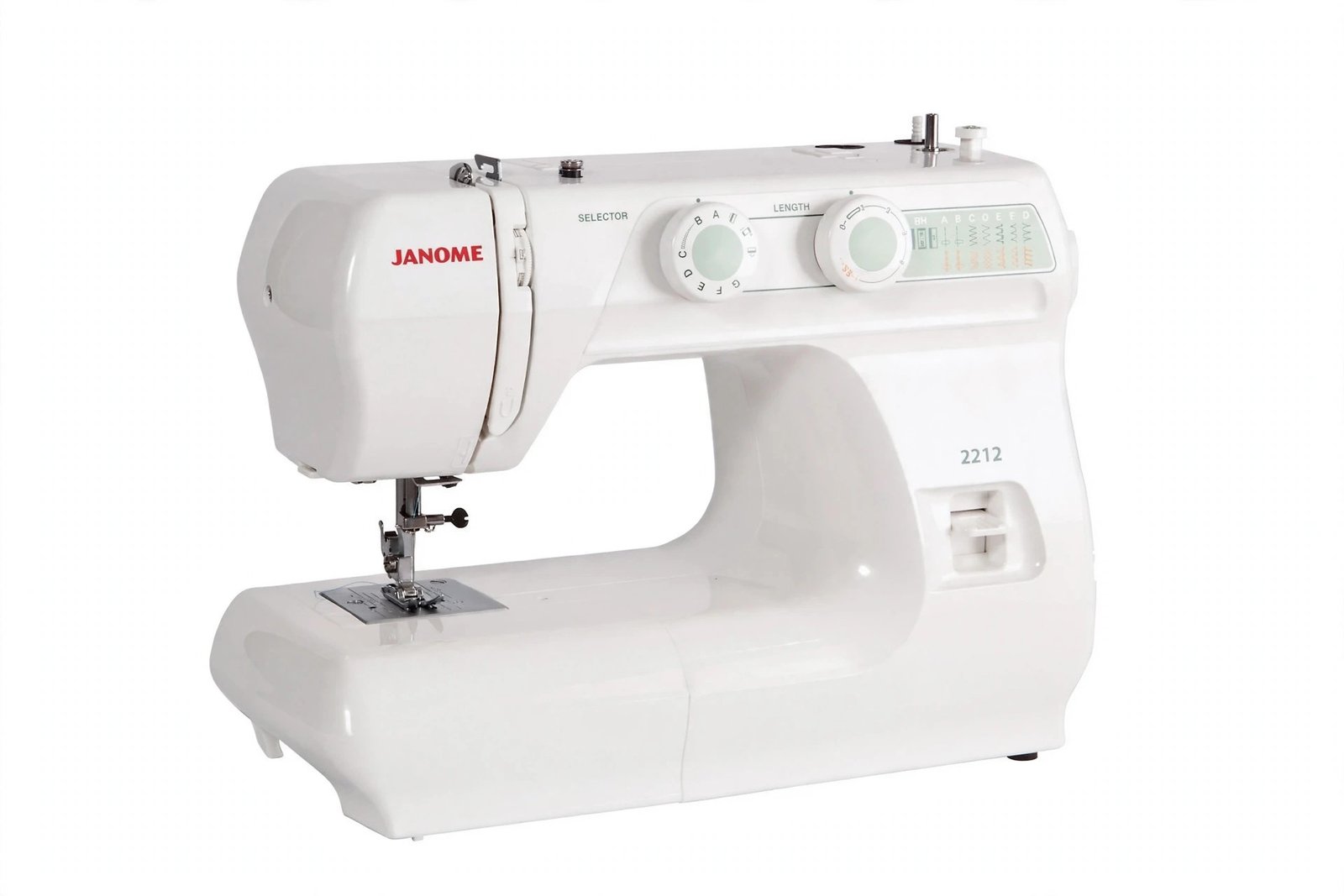
If your sewing dreams involve jeans, canvas bags, and home decor, the CS6000i will frustrate you and this machine will not. The 4423 has a heavy-duty metal interior frame, a motor Singer rates 60% stronger than standard machines, and a top speed of 1,100 stitches per minute. It offers 23 built-in stitches delivering 97 stitch applications, a built-in needle threader, a top drop-in bobbin, and a one-step buttonhole.
What sold me is the piercing power. It goes through denim hems and canvas layers without the complaining noises cheaper machines make. It costs more than the Brother, but it is the cheapest honest way to sew heavy fabric at home.
Who it is for: beginners who know they want to sew denim, bags, upholstery-weight fabric, or anything with thick seams. Also good for anyone who sews fast and wants a machine that keeps up.
The honest drawback: it is loud, it is heavy at nearly 15 pounds, and it is crude on delicates compared to the Brother. The stitch quality on chiffon will not win awards. This is a workhorse, not a ballerina, and you should buy it for the work you actually plan to do.
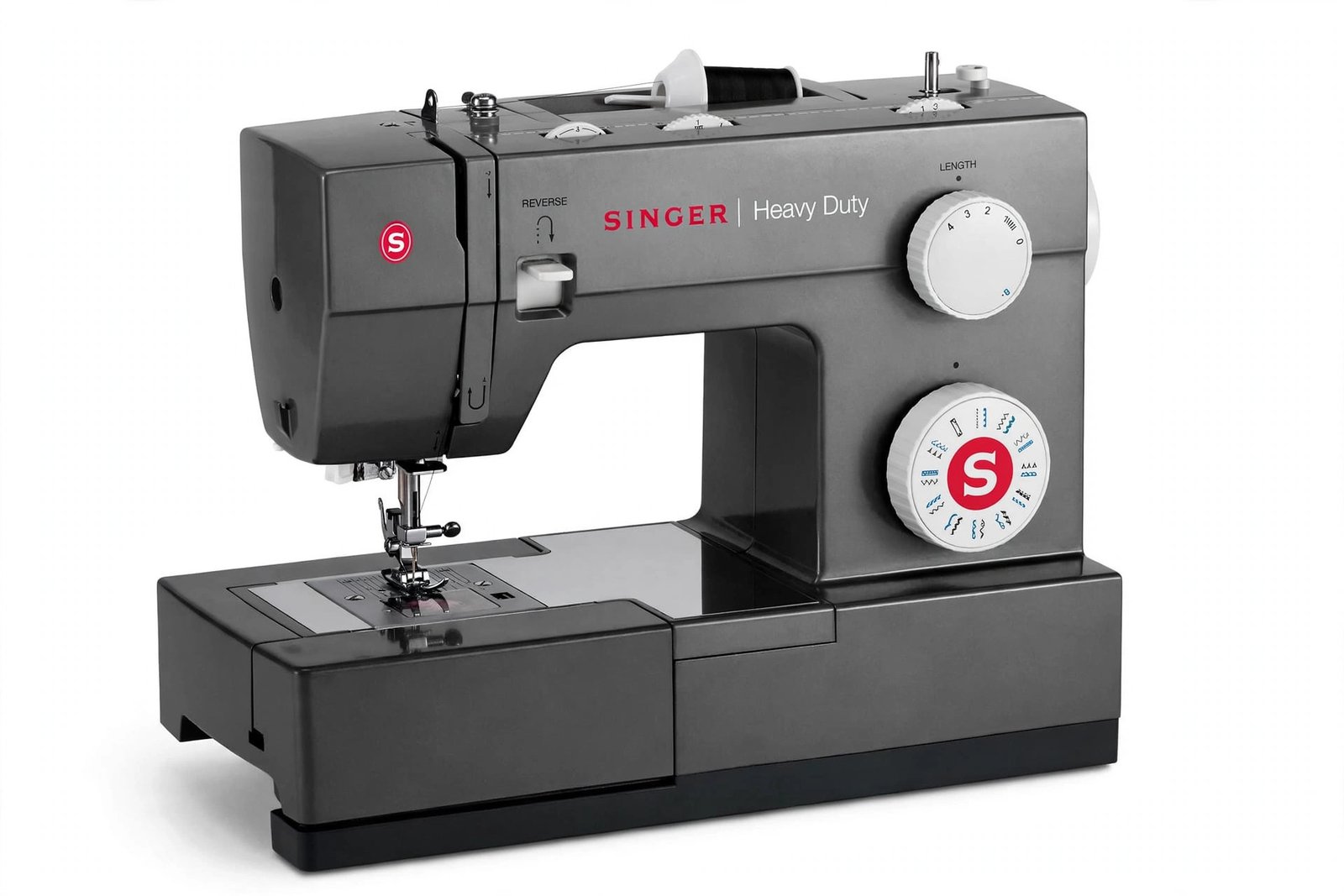
3. Brother XM2701: best budget
Sometimes the budget is the budget, and there is no shame in that. The XM2701 is a mechanical machine, meaning dials instead of a computer screen, with 27 built-in stitches, a one-step buttonhole, 6 quick-change presser feet, a built-in needle threader, and a jam-resistant drop-in bobbin. It is lightweight at under 13 pounds, and it is consistently the bestselling sewing machine on Amazon, one of the most affordable first machines you can buy.
For a first machine on a tight budget, it is genuinely good. The stitches are the ones beginners use, the threading path is simple, and it handles quilting cotton and light apparel fabric without complaint.
Who it is for: absolute beginners, teenagers learning to sew, or a second machine to take to classes without risking the good one.
The honest drawback: you will outgrow it. Within a year or two of regular sewing, you will want more stitches, better lighting, and finer tension control. Think of it as a starter machine with a resale plan, not a forever machine. At this price, that is a fair trade.
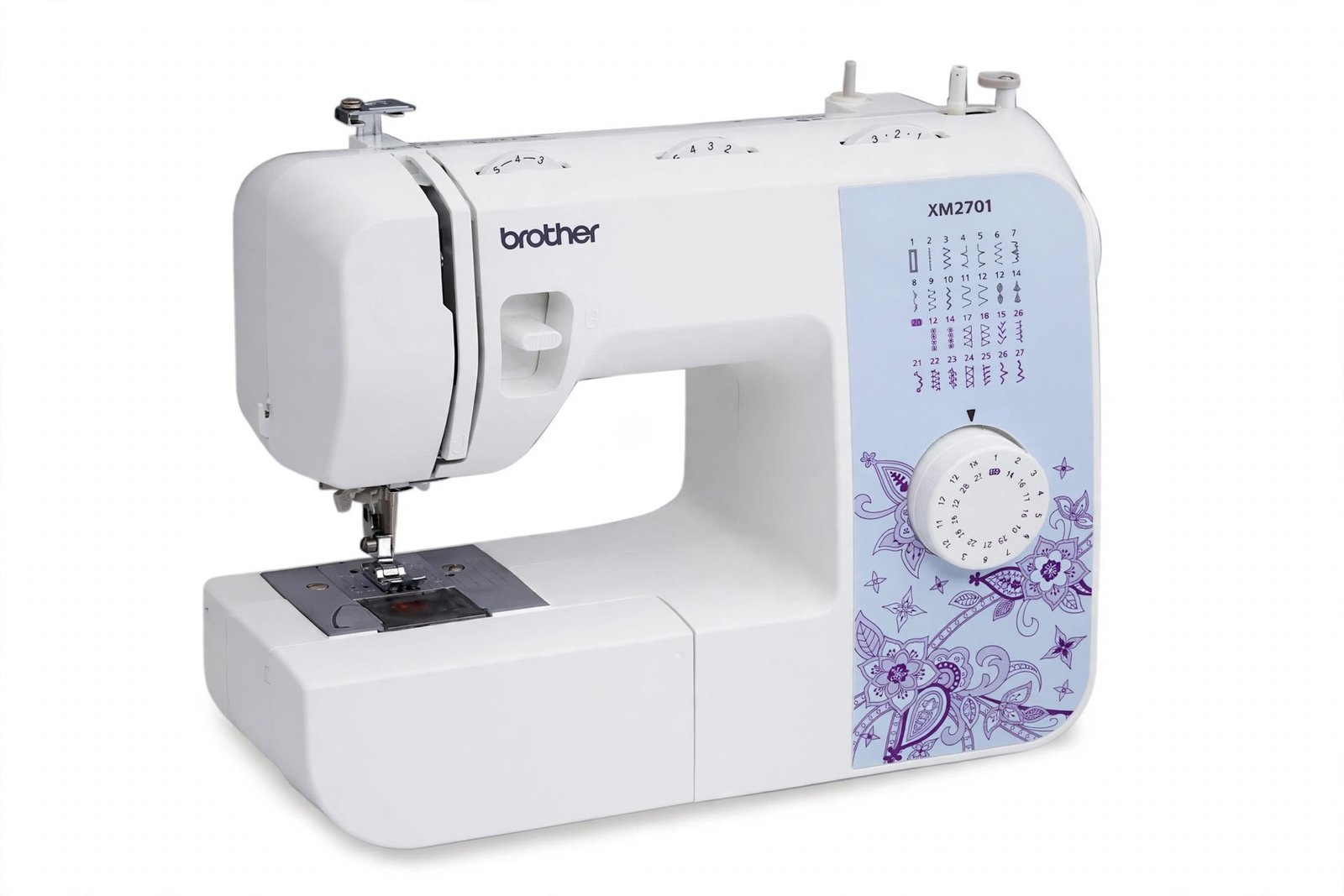
4. Janome 2212: best simple mechanical
Some people do not want a computer in their sewing machine, and I respect that deeply. The Janome 2212 is a mechanical machine with 12 built-in stitches, a four-step buttonhole, dial stitch selection, and Janome’s famously smooth feeding. It is the machine sewing instructors recommend when a student says the words “I just want it to sew.”
Twelve stitches sounds limiting until you realize beginners use about five. What you get instead of stitch count is build quality: this machine feels solid, sews evenly, and has a reputation for running for decades with basic maintenance.
Who it is for: beginners who distrust computerized anything, anyone who wants a machine their grandkids could inherit, and sewists who value stitch quality over stitch quantity.
The honest drawback: the front-loading bobbin is fiddly compared to a drop-in, and you will miss it every time you change the bobbin. There is no automatic needle threader, and 12 stitches means no decorative options when you eventually want them. Simple is a trade, not a free lunch.
My overall winner
The Brother CS6000i, and it is not close for most beginners. It removes every friction point a new sewist hits: threading is automatic, the bobbin is visible, the speed is controllable, and the 9 included feet mean you will not be buying accessories in month two. I have watched complete beginners go from box to finished pillowcase in an afternoon on this machine.
The one exception: if you know, really know, that heavy fabric is your thing, get the Singer 4423 instead and skip the regret. Buying the wrong machine for your actual sewing is the most expensive mistake on this list. And whatever you buy, throw away the thread that comes in the box with it. It is always terrible. My best thread for sewing machines guide will set you up with the good stuff for a few dollars.
How to compare sewing machines: the specs that actually matter
Listings drown you in numbers. Here is what to actually look at, in the order I would prioritize them.
Bobbin type: drop-in beats front-load for beginners. A top drop-in bobbin sits under a clear cover, so you can see when thread runs low. A front-loading bobbin hides inside a metal case and requires a small ritual to change. The Janome 2212 is the only pick above with a front-loader, and it is its single biggest annoyance.
Automatic needle threader: get one. Threading a needle by hand is fine at 25. At 45, in bad light, at 10pm, it is the reason projects stall. Three of the four machines above thread the needle for you. Your future self says thanks.
Speed control matters more than top speed. Beginners should sew slowly. A machine with adjustable speed lets you cap it while you learn. Maximum speed only matters later, and only the Singer 4423’s 1,100 stitches per minute is genuinely fast.
Weight is a feature, not a bug. A heavier machine vibrates less and sews straighter. The Singer’s 15 pounds is annoying to carry to class and wonderful on the table. Decide which matters more to you.
Warranty and support are real value. Brother’s 25-year limited warranty and free lifetime phone support have saved more beginners than any stitch count ever has. When your machine eats thread at midnight, a human on the phone beats a manual.
If you want one more data point before deciding, Sewing Insight’s long-term CS6000i review tested it against the hype after years of ownership and reached the same conclusion I did: it is the default recommendation for a reason.
Frequently asked questions
Computerized or mechanical for a beginner?
Either works, and the internet argues about this endlessly. Computerized (like the CS6000i) is easier to learn on: push-button stitch selection, automatic settings, speed control. Mechanical (like the XM2701 or Janome 2212) is simpler to maintain and cheaper to repair. If you are comfortable with gadgets, go computerized. If you want a machine you could fix with a screwdriver, go mechanical.
How much should a beginner spend on a sewing machine?
A sensible mid-range budget gets you a machine you will not outgrow in six months. At the very cheapest end, you are gambling on quality. Spending top dollar as a total beginner, you are paying for features you cannot evaluate yet. Start in the middle, learn what you actually sew, then upgrade with knowledge.
Should I buy a used or vintage machine?
A serviced vintage all-metal machine (old Singers, Kenmores) can sew beautifully for pocket change at a thrift store, and I love them. But as a total beginner, you cannot evaluate whether a used machine is healthy, and a sick machine will convince you that you are bad at sewing when the machine is the problem. Learn on a new machine with a warranty. Hunt vintage later, when you know what good stitching feels like.
What about mini sewing machines for beginners or kids?
Skip them for learning. Mini machines are underpowered, finicky about thread, and frustrating enough to end a sewing hobby before it starts. A full-size budget machine like the XM2701 costs barely more and sews like a real tool, because it is one.
Why does my new machine keep jamming?
Almost always threading or the bobbin, not the machine. Re-thread with the presser foot up, make sure the bobbin is seated correctly, and use decent thread. If it still misbehaves, my guide to fixing skipped stitches walks through the fixes in order.
Now go make something crooked and wonderful
Your first seams will wander. Mine looked like a seismograph reading. That is normal, and it is why I tell every beginner to start with one of my easy sewing projects for beginners instead of a fitted garment. Pick your machine, learn to sew a straight stitch, and give yourself permission to be bad at it for exactly as long as it takes. The machine is the easy part. Showing up is the skill.
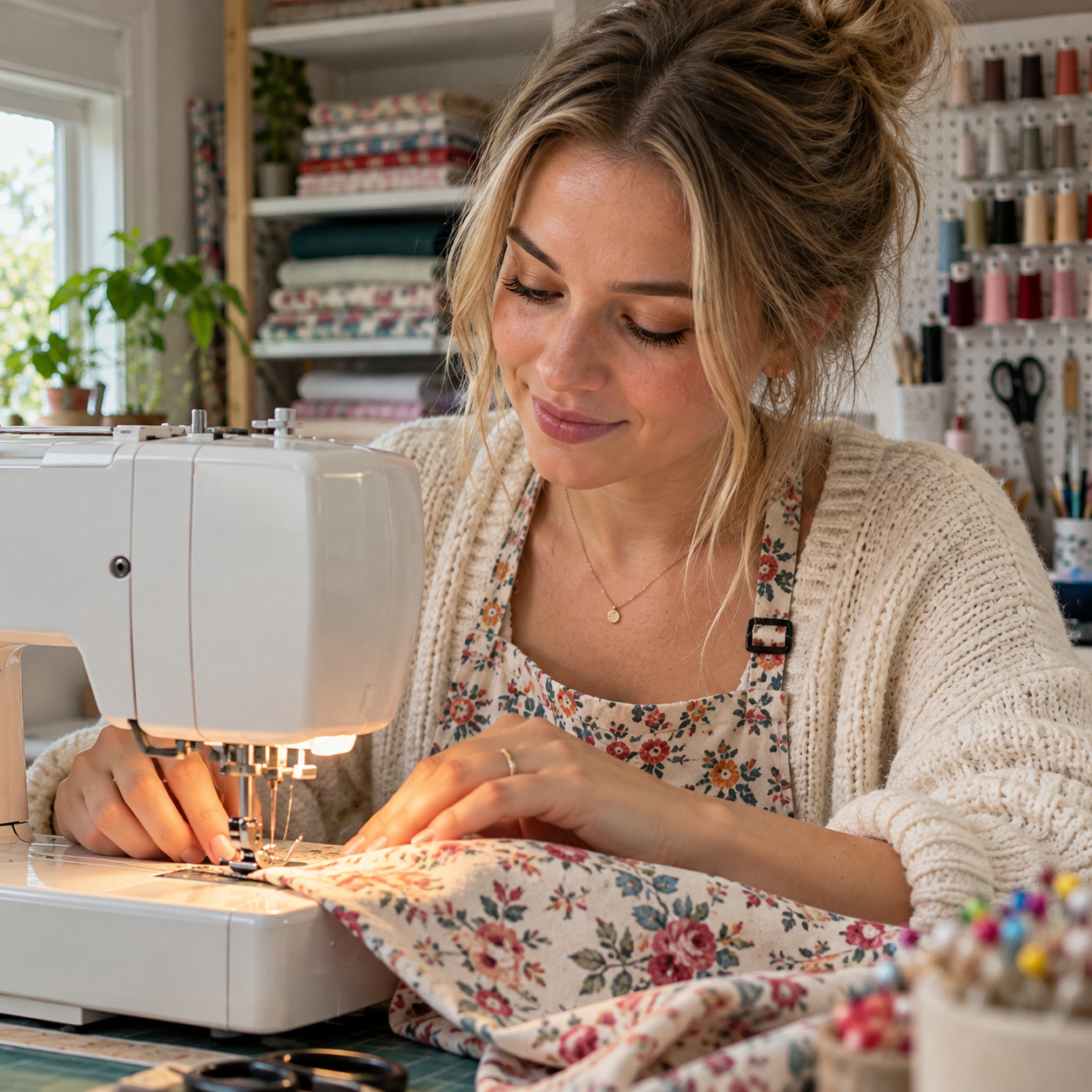
Written by June Carter
I am June, a sewing enthusiast who loves turning simple fabric into things people actually use. I test every technique and product I write about at my own machine before it lands here.