Denim will humble a sewing machine faster than anything else in your fabric stash. One minute you are hemming jeans like a hero, the next the needle is bouncing off a flat-felled seam, the motor is straining, and you are holding a broken needle and a grudge. I have been there, and the lesson cost me a needle, a bobbin case spring, and most of a Saturday.
Here is the short version: most regular machines can sew denim with the right needle and technique, but if you sew heavy fabric often, a machine built for it changes everything. My quick answer is the Singer Heavy Duty 4411. It is the machine I recommend to anyone who asks me about denim on a sensible budget: metal frame, stronger motor, and it walks through jean seams without drama.
Singer Heavy Duty 4411 Sewing Machine
Below are the 5 machines I recommend for denim and thick fabric, each with who it suits best and the honest drawback nobody mentions in the product descriptions. If you are brand new to machines entirely, start with my guide to the best sewing machines for beginners first, then come back here when denim is the goal.
What actually makes a machine good at denim
Before the picks, it helps to know what you are shopping for, because marketing loves the word heavy duty and slaps it on anything with a gray plastic shell. Real heavy-duty capability comes down to a few things. A metal interior frame, not a plastic one, because the frame is what absorbs the vibration when the needle punches through six layers of denim. A stronger motor with genuine piercing power, because that is what keeps the needle moving at a steady speed instead of stalling on thick seams.
Adjustable presser foot pressure matters more than people realize. Thick fabric needs a firm grip from the foot, and the ability to dial that pressure up and down is the difference between denim that feeds evenly and denim that puckers. Good feed dogs with a strong grip, a walking foot option for the really thick stuff, and speed control so you can slow down over seam intersections round out the list. And never underestimate the needle: even the best machine in the world sews denim badly with the wrong needle. My guide to how to choose a sewing machine needle will save you from that particular heartbreak.
My 5 picks for denim and thick fabric
1. Singer Heavy Duty 4411: the denim workhorse I recommend most
This is the machine that taught a generation of sewists that denim does not have to be scary. The 4411 has a heavy-duty metal interior frame, a motor with noticeably more piercing power than standard machines, and a top speed that gets through long jean seams quickly. The stainless steel bedplate lets thick fabric glide instead of drag, and the adjustable presser foot pressure handles the jump from single-layer denim to a crossed waistband seam without complaint.
What I love about it is that it does not pretend to be something it is not. It is a straightforward mechanical machine with 11 built-in stitches, a top drop-in bobbin, and an automatic needle threader. Nothing computerized to glitch, nothing fancy to break. You thread it, you set your stitch length a little longer for denim, and you sew.
Who it is for: anyone who wants the most capable denim machine for the least money, and anyone sewing jeans, canvas bags, and home decor on a regular basis.
The honest drawback: the stitch selection is basic and the buttonhole is a four-step manual one, which feels fiddly after you have used a one-step. If decorative stitching matters to you, look at the 4423 below. For denim and utility sewing, though, the 4411 is all the machine most people will ever need.
Singer Heavy Duty 4411 Sewing Machine
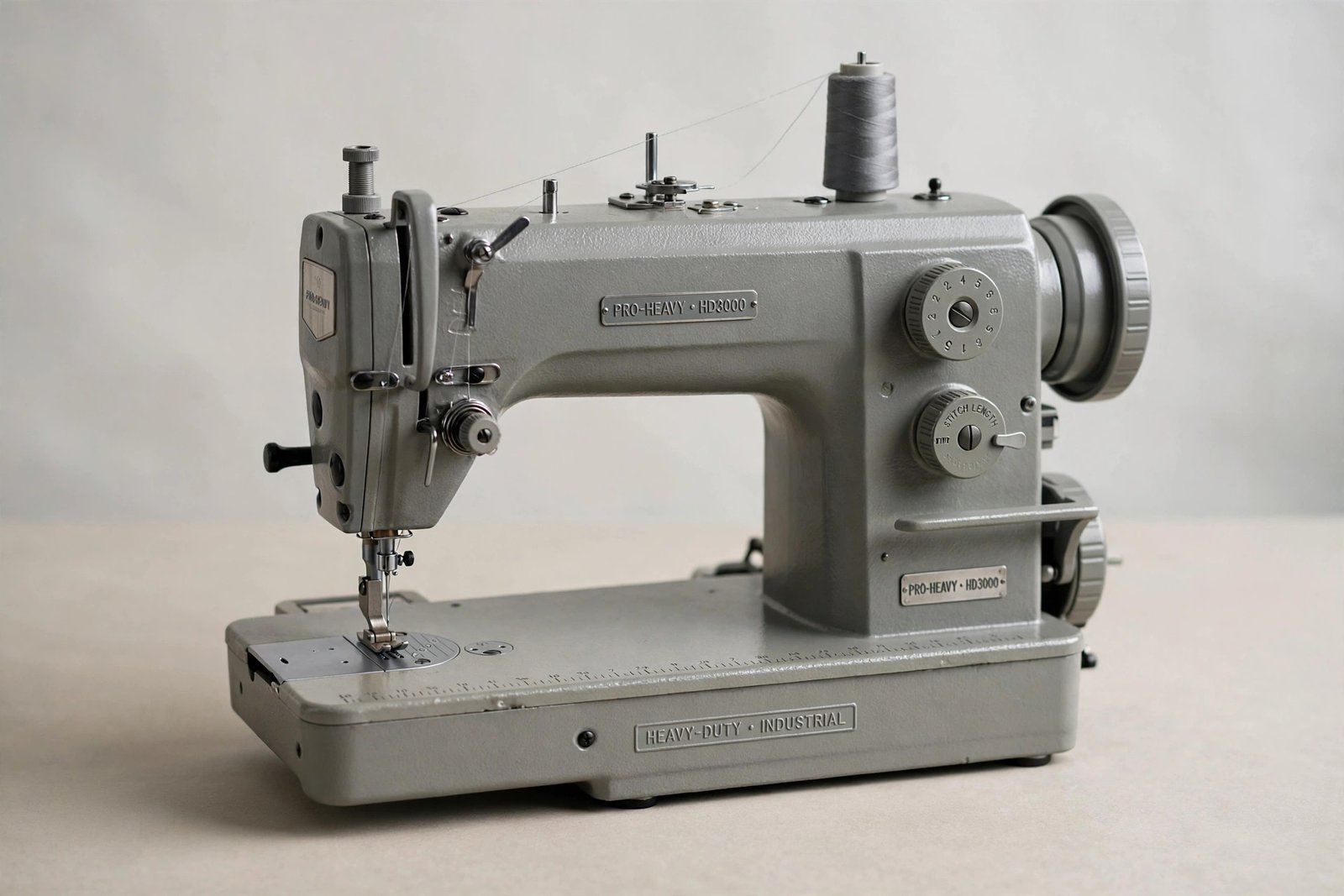
2. Janome HD3000: the mechanical tank
If you want a machine that feels like it was built in a different, sturdier era, this is it. The Janome HD3000 has a heavy-duty aluminum internal frame and a reputation for outlasting its owners. It is a mechanical machine with 18 stitches, a one-step buttonhole, and a jam-proof top-loading bobbin, and everything about it feels precise and considered.
On denim it is a quiet powerhouse. The feed is smooth, the stitch quality on thick seams is excellent, and the machine does not vibrate or wander the way lighter machines do. Janome’s build quality shows in the details: the needle threader actually works, the tension stays put, and the hard cover it comes with means you can put it away without babying it.
Who it is for: sewists who want a buy-it-once machine and prefer mechanical simplicity, especially anyone who sews denim plus a steady rotation of garment fabrics.
The honest drawback: it sews a little slower than the Singer Heavy Duty line, and it has fewer decorative stitches than similarly priced computerized machines. You are paying for build quality and longevity, not stitch count.
Janome HD3000 Heavy-Duty Sewing Machine
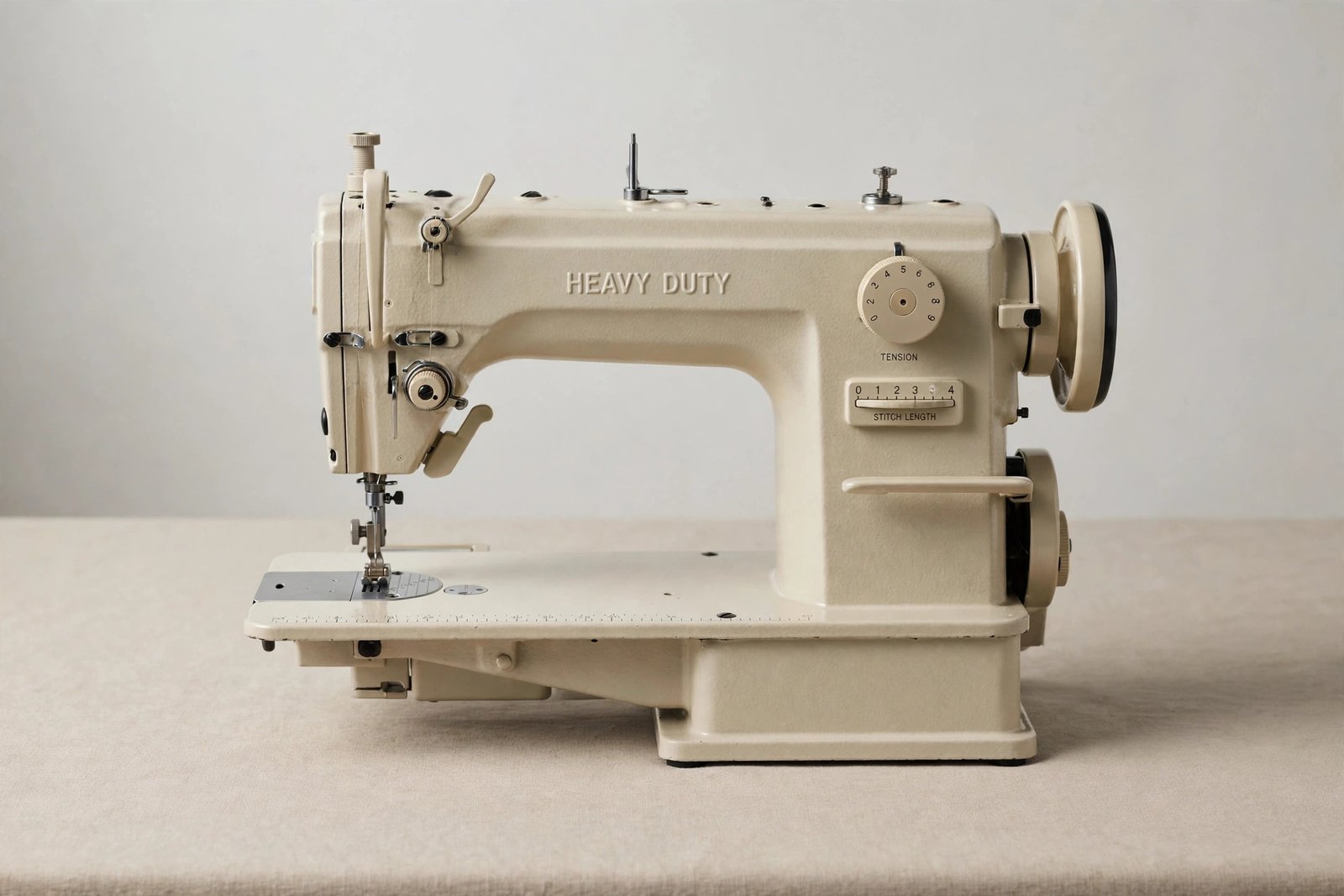
3. JUKI TL-2010Q: the serious heavy fabric machine
The Juki TL-2010Q is the machine people graduate to when denim and heavy fabric become a lifestyle rather than an occasional project. It is a semi-industrial straight-stitch machine, which means it does exactly one stitch, but it does that stitch through just about anything. Denim, canvas, upholstery, leather: the TL-2010Q punches through multiple layers with the calm confidence of a machine that was never asked to do embroidery and is grateful for it.
The feature set reads like a wish list for heavy fabric work: adjustable presser foot pressure, a knee lifter for hands-free foot control, an automatic thread trimmer, speed control, and an industrial-style sub-tension system that keeps stitches perfect on thick seams. The large throat space is a genuine luxury when you are wrestling a whole pair of jeans under the needle.
Who it is for: dedicated denim sewists, quilters who also sew heavy home decor, and anyone who wants the closest thing to an industrial machine that still fits on a home table.
The honest drawback: straight stitch only, no zigzag, no buttonholes, no decorative anything. It is a specialist, and if you need one machine to do everything, this is not it. It is also the priciest machine on this list and the heaviest, so it is more of a permanent resident than a portable.
JUKI TL-2010Q Sewing and Quilting Machine

4. Brother ST371HD: the friendly all-rounder
The Brother ST371HD is the machine I point beginners toward when their main goal is mending and everyday sewing with occasional denim. It is from Brother’s Strong and Tough line, with a metal needle plate, heavyweight needles included in the box, and 37 built-in stitches covering utility, stretch, and decorative work. For hemming jeans, patching knees, and sewing the odd canvas tote, it is plenty of machine.
It is also one of the easiest machines on this list to live with: automatic needle threader, jam-resistant drop-in bobbin, free arm for cuffs and sleeves, and a straightforward dial-based stitch selection that never confuses anyone. If your sewing life is mostly garments and quilting cotton with denim as a guest star rather than the lead, this balance of capability and simplicity is exactly right.
Who it is for: beginners and casual sewists who want to handle denim confidently without buying a machine that is overkill for everything else they sew.
The honest drawback: it is the least heavy-duty of the five. It handles standard denim and jean seams fine, but if you are regularly sewing through six-plus layers or working with waxed canvas and leather, step up to the Singer or Janome. This is a strong regular machine, not a workhorse.
Brother ST371HD Strong and Tough Sewing Machine

5. Singer Heavy Duty 4423: the 4411 with more stitches
The 4423 is the 4411’s slightly fancier sibling: same heavy-duty metal frame, same strong motor and piercing power, but with 23 built-in stitches instead of 11 and a one-step buttonhole instead of the four-step. If you like everything about the 4411 but want more stitch options and a less fiddly buttonhole, this is your machine.
On denim it performs like the 4411, which is to say excellently. The extra stitches are genuinely useful for garment sewing: stretch stitches for the waistband elastic in your jeans, decorative stitches for topstitching that looks intentional, and the one-step buttonhole is a real quality-of-life upgrade if you sew fly fronts. Adjustable presser foot pressure and the stainless steel bedplate carry over too.
Who it is for: sewists who want the 4411’s denim capability plus a fuller stitch menu for garment sewing, and anyone who has strong feelings about manual buttonholes.
The honest drawback: you are paying more than the 4411 for stitches, and if you only ever sew straight seams on denim, those extra stitches sit unused. Be honest with yourself about whether you will use them before you spend the difference.
Singer Heavy Duty 4423 Sewing Machine

My overall winner
The Singer Heavy Duty 4411, and it is not particularly close for most people. It hits the sweet spot this whole category is chasing: a real metal frame, real piercing power, and denim performance that embarrasses machines costing twice as much, without a single feature you need a manual to understand. The Janome HD3000 is the better machine if longevity is your top priority and you prefer mechanical precision. The Juki is the dream machine for the denim-obsessed. But for the sewist who asked me this question, who wants to sew jeans without fear and without overthinking it, the 4411 is the answer I give every time.
One thing I want to say plainly: the machine matters less than the setup. A mid-range machine with a fresh denim needle, a slightly longer stitch length, and decent thread will outperform an expensive machine threaded with bargain thread and a dull universal needle. Machine shopping is fun, but technique is free.
How to sew denim like you mean it
Whichever machine you choose, these are the habits that make denim behave. Use a denim needle, size 90/14 or 100/16 depending on the weight, and change it at the start of every denim project. Denim dulls needles fast, and a dull needle is the number one cause of skipped stitches on jeans. Lengthen your stitch to about 3 to 3.5 millimeters; short stitches perforate denim like a postage stamp and weaken the seam.
Slow down over thick intersections. The crossed seams at a waistband or a flat-felled inseam can be six to eight layers thick, and no machine loves that at full speed. Use the handwheel to walk the needle over the hump if the machine hesitates. A hump jumper, that little plastic wedge that levels the presser foot, is a tiny tool that solves a huge problem here. Press your seams before you sew across them, and consider hammering bulky intersections flat with a mallet; it sounds violent and it works beautifully.
Finish your seams thoughtfully, because denim frays with enthusiasm. A serged edge is the gold standard, a zigzag works fine, and flat-felled seams are the classic jean construction for a reason. Whatever you choose, keep the machine clean: denim sheds a surprising amount of lint into the bobbin area, so give it the lint cleaning routine after every denim project and your machine will thank you with years of faithful service.
Frequently asked questions
Can a regular sewing machine sew denim?
Yes, for occasional denim work. A standard machine with a denim needle, longer stitch length, and good technique handles jeans and light canvas fine. A heavy-duty machine earns its keep when denim is frequent, the layers are thick, or your regular machine is straining and breaking needles.
What needle should I use for denim?
A denim or jeans needle, size 90/14 for medium denim and 100/16 for heavy denim and canvas. Denim needles have a reinforced shaft and a sharp point designed to punch through tightly woven twill without deflecting. Change it often; denim dulls needles faster than any other common fabric.
Why does my machine skip stitches on thick seams?
Usually a dull or wrong needle, sometimes thread that is too fine for the job, occasionally speed: the machine needs a moment to punch through and a steady pace helps. Check the needle first, lengthen the stitch slightly, and walk over the thickest intersections with the handwheel instead of powering through.
Do I need a walking foot for denim?
Not strictly, but it helps on very thick or layered projects like quilted denim jackets and bags. A walking foot feeds the top and bottom layers together so nothing shifts. For straightforward jean seams, the standard foot with good presser foot pressure is enough.
Is a serger necessary for sewing denim?
No, but it is lovely to have. A serger finishes denim seam edges fast and professionally. Without one, a zigzag stitch or flat-felled seams do the job. Denim garments existed long before home sergers did.
Buy the machine for the sewing you actually do
That is my whole philosophy in one sentence. If you hem jeans twice a year, the Brother will make you happy and the Juki would be a very expensive paperweight. If you are turning out canvas bags and denim jackets every month, buy the workhorse and stop apologizing to your machine. Match the machine to the work, set it up right, and denim stops being the scary fabric. It becomes the satisfying one, the one that holds its shape, takes beautiful topstitching, and makes you look like you know exactly what you are doing. Which, after this, you will.
Written by June Carter
I am June, a sewing enthusiast who loves turning simple fabric into things people actually use. I test every technique and product I write about at my own machine before it lands here.