

Learning how to measure windows for curtains is the difference between curtains that look custom made and curtains that look like an afterthought. I learned this the hard way when I hung my first pair of sewn curtains and discovered they were two inches too short and about half as full as they should have been. The window looked sad, and I looked sadder.
Good news: measuring for curtains is simple once you know the order to do it in. You measure the rod position first, then the width, then the length, and you write everything down immediately. Here is the exact process I use now, and my windows have never looked better.
Gather Your Measuring Tools
You do not need anything fancy, but the right basics make this go smoothly. Grab a steel tape measure, the stiffer kind that does not flop when you stretch it out. A soft dressmaker’s tape is lovely for sewing, but for windows the steel tape gives you truer numbers.
Bring a pencil and a notepad, and write down every measurement the moment you take it. I know it sounds obvious, but there is nothing worse than measuring three windows and forgetting which number belonged to which room. A step ladder is essential for tall windows, and a small level helps if you are marking rod bracket positions at the same time.
Finally, grab a helper if you can. Holding the tape across a wide window while keeping it level is a two person job, and a second set of eyes will catch the tape sagging in the middle. If you are sewing the curtains yourself, keep that notepad; you will need the same numbers when you start calculating how much fabric to buy.
Decide Where the Rod Goes Before Anything Else
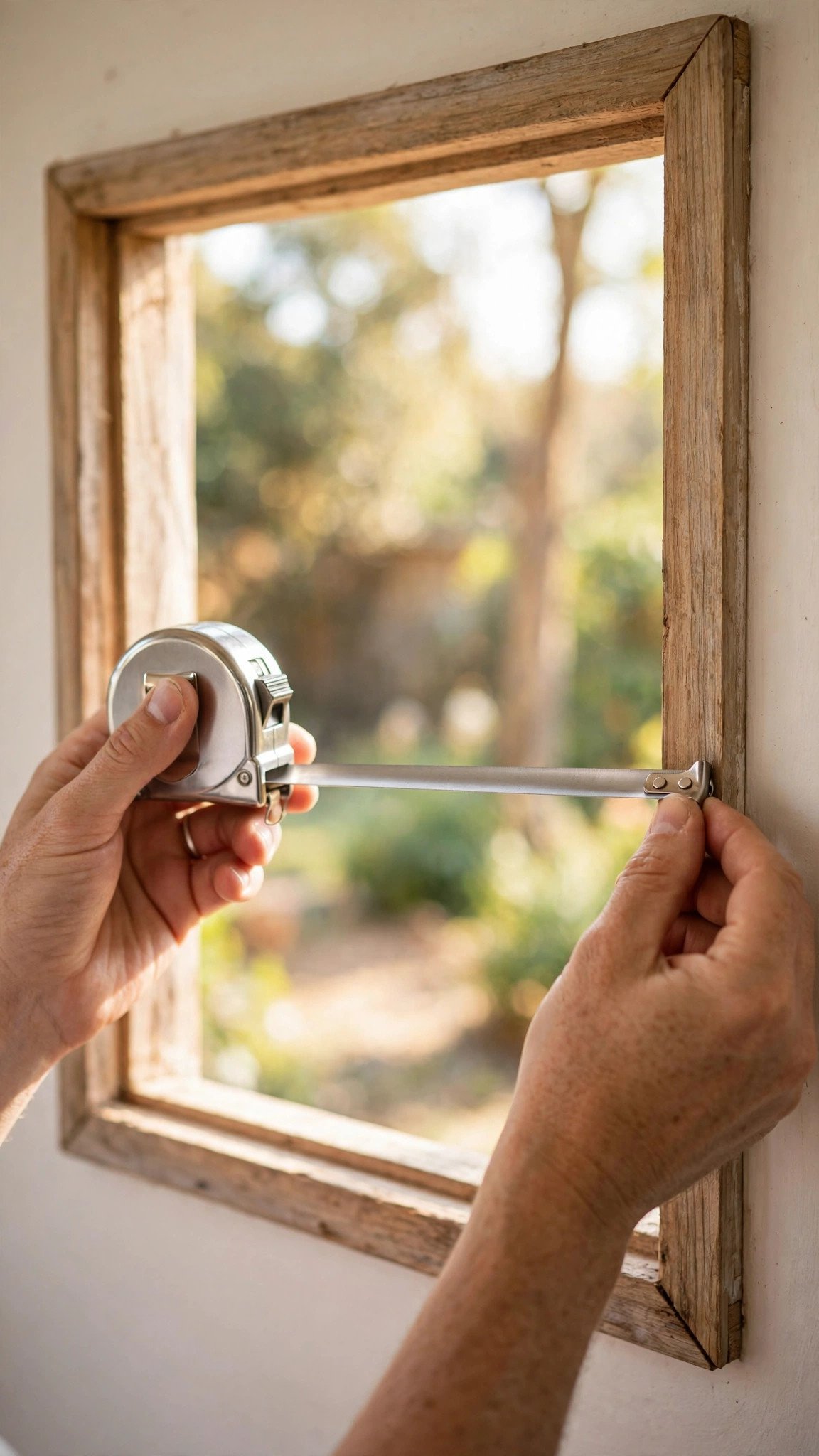
Rod placement is the single most important decision, and you need to make it before you measure anything else. The classic guideline is to mount the rod 4 to 6 inches above the window frame. Higher is almost always better. Hanging curtains high draws the eye upward and makes the ceiling feel taller, which costs you nothing but a few extra minutes with a drill.
Width matters just as much. The rod should extend 6 to 12 inches past each side of the frame, so when the curtains are open they clear the glass completely and let the light pour in. Nothing makes a window look smaller than a rod that barely clears the frame.
If you are installing brackets now, do it before you take your length measurements. Your actual installed hardware height, not the height you planned, is the only number that guarantees the right drop. Measure twice at this stage, because every inch here becomes inches of fabric later.
How to Measure Windows for Curtains: Width and Fullness
Here is the core of how to measure windows for curtains, and the part most people get wrong. Do not measure the window opening and call it a day. Measure the full length of your installed rod, end to end. That rod length is your base number for everything width related.
Curtains need more fabric than the rod is wide, or they hang flat and skimpy. Multiply the rod length by 2 for a standard full look. Multiply by 2.5 for a very full, luxurious look. For light, casual styles you can go as low as 1.5. That multiplier is your fullness ratio, and it is the secret to curtains that look rich instead of starved.
Now divide that total fabric width by the number of panels you want. Panels usually hang in pairs, so round up to an even number. Write the result down as the finished width of each panel. This number is what you will use at the cutting table, after you add seam and hem allowances. If you are planning to cut your fabric on grain, this is also when you figure out whether each panel needs one or two fabric widths sewn together.
Measure the Length: Pick Your Drop Style
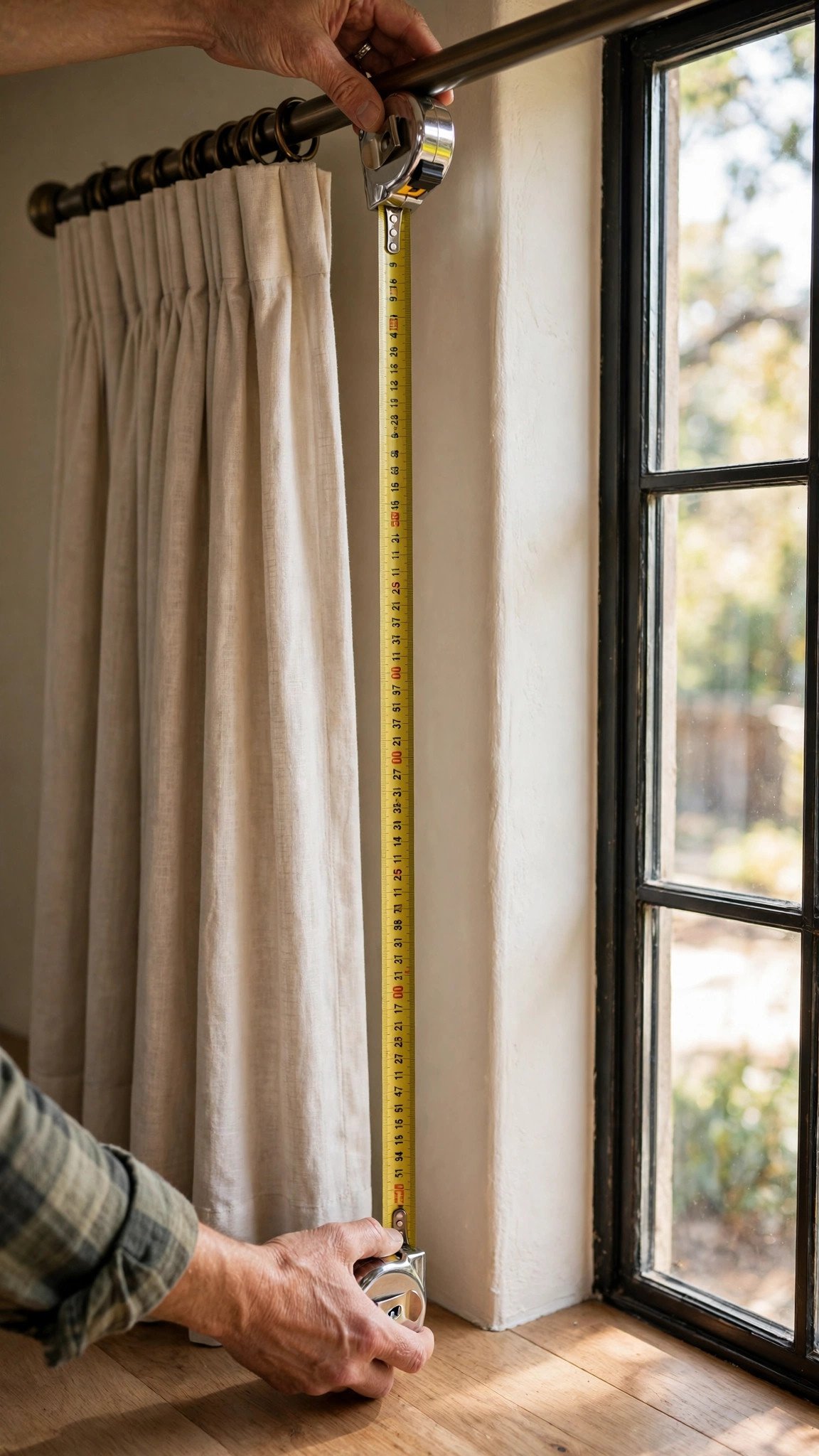
Length is measured from the hardware down, never from the window frame up. Hook your tape at the top of where the curtain will actually sit: the rod pocket, the rings, or the clips. Measure down to your chosen drop point. Write the number to the nearest quarter inch. Precision matters here, especially for floor length styles.
There are four classic lengths. Sill length ends right at the windowsill, practical for kitchens and bathrooms. Apron length ends a few inches below the sill and works almost anywhere. Floor length just grazes the floor for that tailored, elegant look. Puddle length adds several extra inches that pool on the floor, gorgeous in formal rooms but a dust magnet in busy ones.
For floor length curtains, I aim for the hem to hover about half an inch above the floor, easy to vacuum around. For a kiss finish, let them just barely touch. If your floors are uneven, measure at the highest point of the floor so the curtains do not puddle by accident on one side.
Turn Measurements Into Fabric Math
Now translate your numbers into a cutting list. Take your finished panel width, add side hem allowances on both sides, and that is your cut width. If your fabric is not wide enough for one cut width, plan to join two widths together with a seam, and add that seam allowance too.
For length, take your drop measurement, add the top hem or rod pocket allowance, and add the bottom hem allowance. A generous bottom hem of 4 to 6 inches gives curtains a lovely weight and lets you adjust the length later if you need to.
One more thing before you buy: account for shrinkage. If you plan to wash your curtains, prewash your curtain fabric first, or add a little extra length to your cut to allow for it. There is no sadder sight than curtains that fit perfectly until their first wash.

Common Measuring Mistakes to Avoid
The number one mistake is measuring the window instead of the rod. The rod is the boss of this project. Once it is installed, the window frame measurement is irrelevant.
The second mistake is mixing up width and height. Always write measurements in width by height format and label them clearly. I write the room name, the window, and both numbers, because three weeks later those numbers in your phone notes will mean nothing.
The third mistake is assuming all your windows are the same size. Measure every single window individually, even the ones that look identical. Builders and settle shifts have a way of making two windows differ by an inch, and an inch is plenty to ruin a matched pair.
Finally, never round to the nearest half inch or whole inch on length measurements. That casual rounding is how curtains end up floating an inch above the floor looking accidental. Measure to the nearest quarter inch and trust the number.
FAQ
How high above the window should I mount the curtain rod?
Mount the rod 4 to 6 inches above the window frame as a baseline, or go higher toward the ceiling to make the room feel taller. Just remember that every inch you raise the rod adds an inch to the panel length you need, so finalize the rod height before you measure the drop.
How much wider than the window should the rod be?
Extend the rod 6 to 12 inches past each side of the frame. This lets the curtains stack off the glass when open so you get full daylight, and gives you proper coverage when they are closed.
What is the fullness ratio for curtain panels?
Multiply your rod length by 2 for a standard full look, or 2.5 for a very full look. For casual, lightweight styles, 1.5 can work. Then divide by the number of panels to get each panel’s finished width.
Should I measure each window separately?
Yes, always. Windows that look identical often differ by an inch or more. Measuring each one individually is the only way to guarantee every pair of curtains fits its own window.

Written by June Carter
I am June, a sewing enthusiast who loves turning simple fabric into things people actually use. I test every technique and product I write about at my own machine before it lands here.