

Learning how to sew with oilcloth and vinyl opens up a whole shelf of practical projects, from wipe clean tablecloths and lunch bags to rain covers and outdoor cushions. These fabrics are waterproof, cheerful, and wonderfully useful, and they are also unlike any woven fabric you have sewn before.
I learned that the hard way, pinning an oilcloth bag the way I pin cotton and finding a neat row of holes along every seam. Oilcloth and vinyl need a different approach, with clips instead of pins, a different foot, and a seam that is sewn once and left alone, because there is no unpicking without a trace.
In this guide I will show you how to choose oilcloth and vinyl, what needle and foot to use, how to cut and sew it without sticking, and how to finish seams so they stay waterproof and neat. Your next wipe clean project will be much easier than your first.
How to Sew with Oilcloth and Vinyl: Know Your Fabric
Oilcloth is a cotton fabric coated with a waterproof finish, while vinyl is a plastic sheet, sometimes backed with fabric and sometimes not. Oilcloth feels like a coated cotton, with a little give and a fabric back, while vinyl feels smoother and stiffer, and it can be clear, coloured, or printed.
Check the weight before you buy. Lightweight oilcloth is good for tablecloths and bags, while heavy vinyl is better for outdoor covers and aprons that need to stand up to hard use. Hold the fabric up to the light and check the coating for cracks or thin spots, because a damaged coating will not stay waterproof.
Store oilcloth and vinyl rolled, never folded, because a fold can crack the coating and leave a permanent crease. If your fabric arrives folded, lay it flat in a warm room for a day, and the creases will often relax on their own. Do not iron oilcloth or vinyl directly, because heat can melt the coating.
Needles, Feet, and Machine Settings
Use a sharp needle made for vinyl or leather, usually a size 14 or 16, and a polyester thread that is strong enough for the layers you are sewing. A universal needle can work for lightweight oilcloth, but a leather needle, with its wedge shaped point, cuts a cleaner hole in vinyl and stops the fabric from puckering.
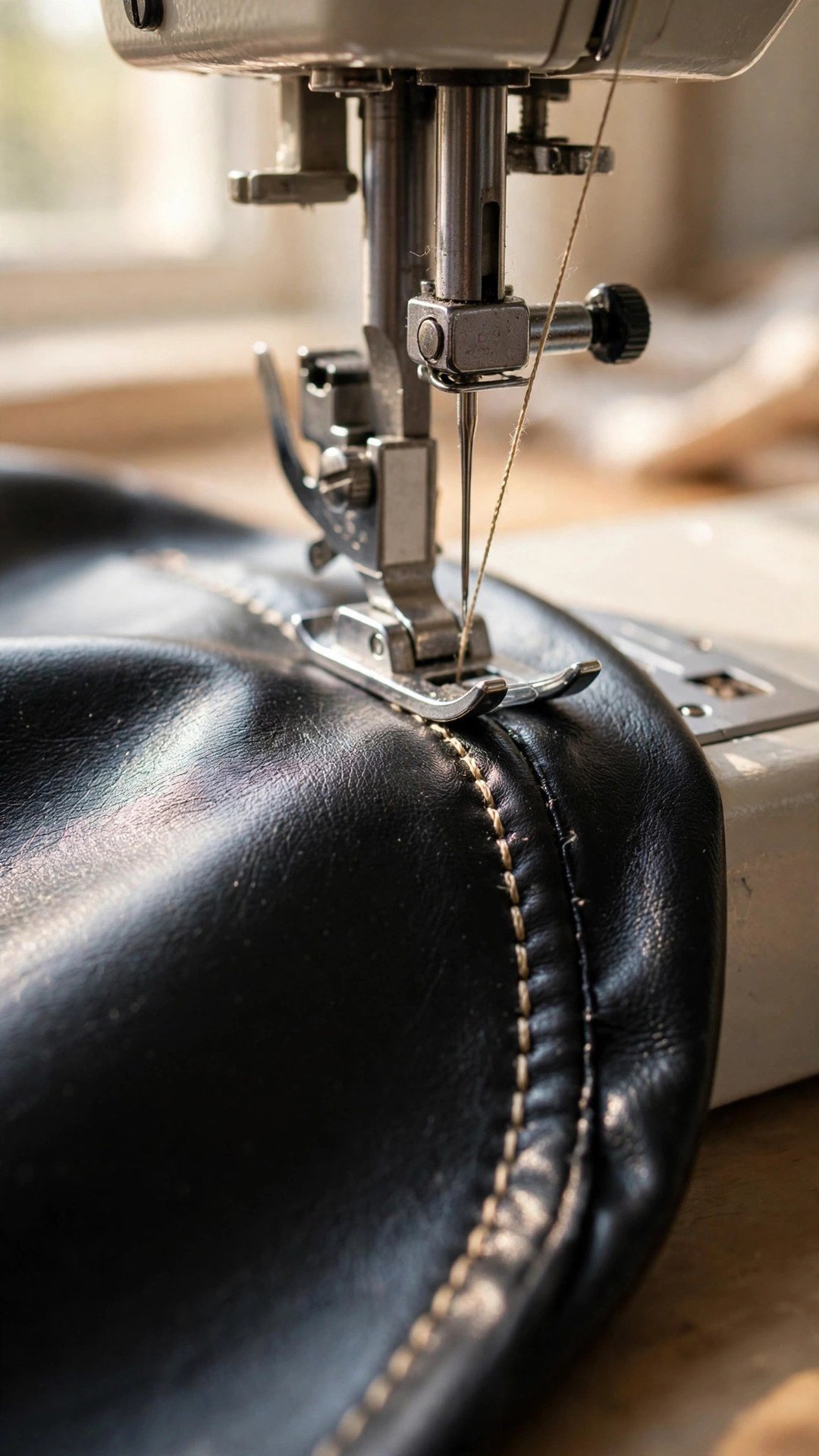
The most important tool is a non stick foot, often called a Teflon foot, or a walking foot. A standard metal foot will stick to the shiny surface of oilcloth and vinyl, and the fabric will not feed smoothly. A Teflon foot glides over the surface, and a walking foot feeds the top and bottom layers together. My guide to how to use a walking foot explains how the walking foot works.
Lengthen your stitch a little, to about three millimetres, because a short stitch length will perforate the fabric like a tear off notepad, and the seam can tear along the stitching line. Test on a scrap with the same layers you will sew, and check that the stitches look even and the fabric feeds without sticking.

Cutting and Handling Without Pin Holes
Never use pins on oilcloth or vinyl, because every pin leaves a permanent hole. Use clips instead, and place them on the seam allowance, where they will not show in the finished project. Wonder clips, binder clips, or even small clothes pegs will hold the layers together without marking the fabric.
Cut with a rotary cutter and a ruler, or with sharp scissors, and cut on a flat surface so the fabric does not shift. Oilcloth and vinyl can be slippery, so weigh the fabric down or use a cutting mat with a good grip. Mark with chalk or a washable marker on the back of the fabric, never on the coated front.
Handle the fabric gently and avoid creasing it, because a crease in vinyl can become permanent. Roll the fabric when you store it, and roll the project when you are not sewing it, rather than folding it. If you need to press a seam, use a low heat, a pressing cloth, and a quick touch, and test on a scrap first.
Seams That Stay Flat and Waterproof
Choose a simple seam for oilcloth and vinyl, because complicated seams add bulk and extra holes. A plain straight seam, sewn once, is usually enough, and it will stay waterproof if you do not unpick it. Topstitch the seam allowance to one side to hold it flat, and use a longer stitch length so the topstitching does not weaken the fabric.
Do not use a seam finish that needs unpicking or trimming, because every extra row of stitching is another row of holes. Oilcloth and vinyl do not fray, so the raw edges do not need finishing at all. If the edge will be seen, bind it with bias binding, or fold it under and topstitch it. My notes on how to choose a seam finish cover finishes for other fabrics.
For a truly waterproof seam, you can seal it from the inside with a strip of waterproof tape, or with a thin line of seam sealant. This is worth doing on a rain cover or an outdoor cushion, where water will sit on the seam. Test the sealant on a scrap first, because some sealants can stain the coating or make it sticky.
Projects That Suit Oilcloth and Vinyl
Oilcloth and vinyl are perfect for anything that needs to wipe clean. A tablecloth, a lunch bag, a makeup pouch, a rain hat, and an outdoor cushion cover are all good first projects, because they are simple shapes with straight seams. Start with something small and flat, like a pouch.
For a bag, use a lining to hide the raw edges and to give the bag structure, because the inside of a vinyl bag can look untidy without one. Sew the lining separately, then join it to the bag at the top edge, turning it inside to hide the seam. A lined vinyl bag looks professional, and it will last far longer than an unlined one.
For outdoor projects, choose a heavy vinyl and use strong thread, because the project will face sun, rain, and wear. Check that your machine can handle the thickness, and sew slowly through the thickest layers. My guide to how to sew slippery satin covers slippery fabrics too, and many of the same tricks apply to vinyl as well.

Frequently Asked Questions
Can I pin oilcloth or vinyl?
No, pins leave permanent holes in oilcloth and vinyl. Use clips instead, placed on the seam allowance, to hold the layers together without marking the coated surface.
What needle should I use for vinyl?
Use a leather needle or a vinyl needle, usually size 14 or 16, with polyester thread. The wedge shaped point cuts a clean hole and stops the fabric from puckering.
Can I iron oilcloth or vinyl?
Do not iron it directly, because heat can melt the coating. Use a low heat with a pressing cloth for a quick touch, test on a scrap first, or finger press the seams instead.
Why does my vinyl stick to the presser foot?
A standard metal foot sticks to the shiny coated surface. Use a Teflon foot or a walking foot, which glides over the coating, or place tissue paper under the seam and tear it away after sewing.
Can I unpick a seam in vinyl?
You can, but the needle holes will stay visible. Test on a scrap first, sew slowly, and avoid unpicking if you can. If you must unpick, hide the holes under topstitching or a trim.
Clips, Not Pins, and Sew It Once
Sewing with oilcloth and vinyl is mostly about respecting the fabric: clips instead of pins, a non stick foot, a longer stitch, and no unpicking if you can help it. Learn those habits, test on a scrap, and you will have wipe clean projects that look neat, last well, and make everyday life a little easier.
Written by June Carter
I am June, a sewing enthusiast who loves turning simple fabric into things people actually use. I test every technique and product I write about at my own machine before it lands here.