

The first knit top I ever sewed looked perfectly fine until I tried it on, and then every seam rippled like a ruffled potato chip. Learning how to sew stretchy knits without the wobble took me longer than I care to admit, but once the pieces clicked, knits became some of my favorite fabrics to sew. They are forgiving, comfortable, and honestly faster than wovens once you stop fighting them.
I am June, and here is my honest take: knits do not need special equipment or some magic touch. They need the right needle, a stitch that stretches, and hands that guide instead of pull. Get those three things right and the wobble disappears. Let me walk you through exactly how I set up for knits now, after years of wavy seams and popped hems taught me every lesson the hard way.
Why Knits Wobble in the First Place
Knit fabric is made of interlocking loops, not the tight over-under grid of a woven fabric. Those loops are wonderful for comfort and terrible for staying put under a presser foot. Your feed dogs grip the bottom layer and march it along, while the presser foot drags on the top layer, so the two layers shift against each other. Add a sewist who nervously stretches the fabric as it feeds, which most of us do at first, and you get seams that are sewn in a stretched state. The moment you let go, the fabric relaxes and the seam collapses into waves.
Too much presser foot pressure makes it worse by squishing the loft right out of the knit. The good news is that every one of these causes has a simple fix, and none of them require buying a new machine. Wobble is a setup problem, not a talent problem.
How to Sew Stretchy Knits Starts With the Right Needle
This is the single biggest difference maker, and it costs almost nothing. For cotton jersey and other soft knits, use a ballpoint needle. Its rounded tip slips between the yarns instead of piercing them, which means no snags, no runs, and far fewer skipped stitches. For knits with serious stretch, like anything with spandex, Lycra, or polyurethane in the blend, switch to a stretch needle, which has a specially shaped eye and scarf designed to stop skipped stitches on elastic fabrics.
I change my needle at the start of every knit project, because a slightly dull needle will chew knit loops instead of gliding past them. If you want the full rundown on matching needles to fabrics, read my guide to choosing the right sewing machine needle. A universal needle can limp along on basic jersey in a pinch, but the correct needle turns knit sewing from a fight into a pleasure.
Pick a Stitch That Stretches With the Fabric
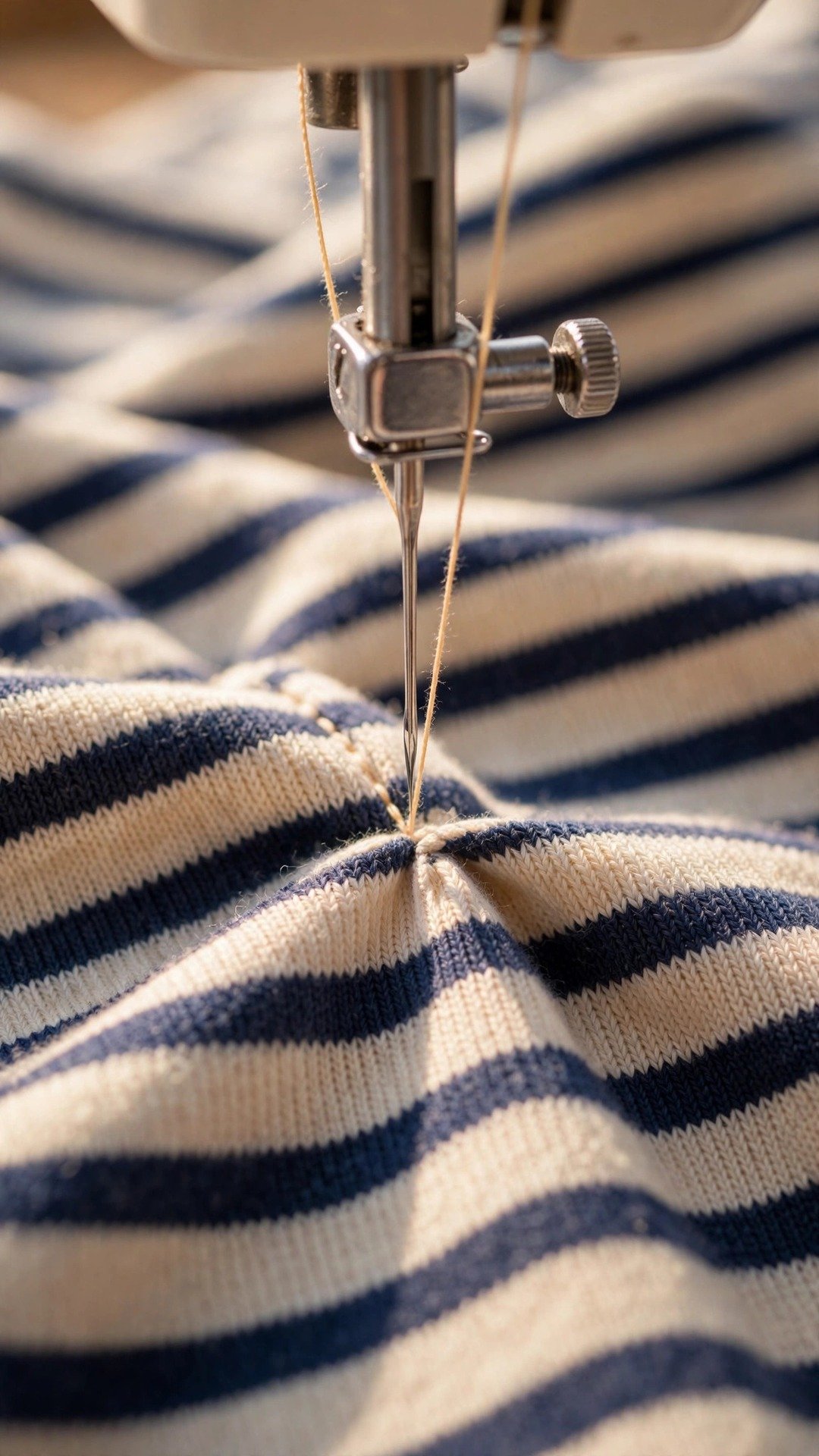
A straight stitch on a knit seam is a popped seam waiting to happen. The seam needs to give when the fabric gives, so reach for a stitch with built-in flex. My default is a narrow zigzag: about 1 to 1.5 mm wide and 2 to 2.5 mm long. That little sideways wiggle lets the seam stretch and bounce back without snapping a single thread. For thicker knits like ponte, a three-step zigzag spreads the stress even better.
Many machines also have a dedicated stretch stitch, sometimes called a lightning bolt stitch because of its icon, which is excellent for very stretchy athletic knits. Whatever you choose, spend five minutes adjusting stitch length and width on a doubled scrap of your actual fabric. Pull the test seam firmly. If threads pop, widen the zigzag slightly. If the seam tunnels or waves, shorten the length a touch. Your scrap will tell you everything.
Feed It Right: Walking Foot, Light Pressure, Hands Off
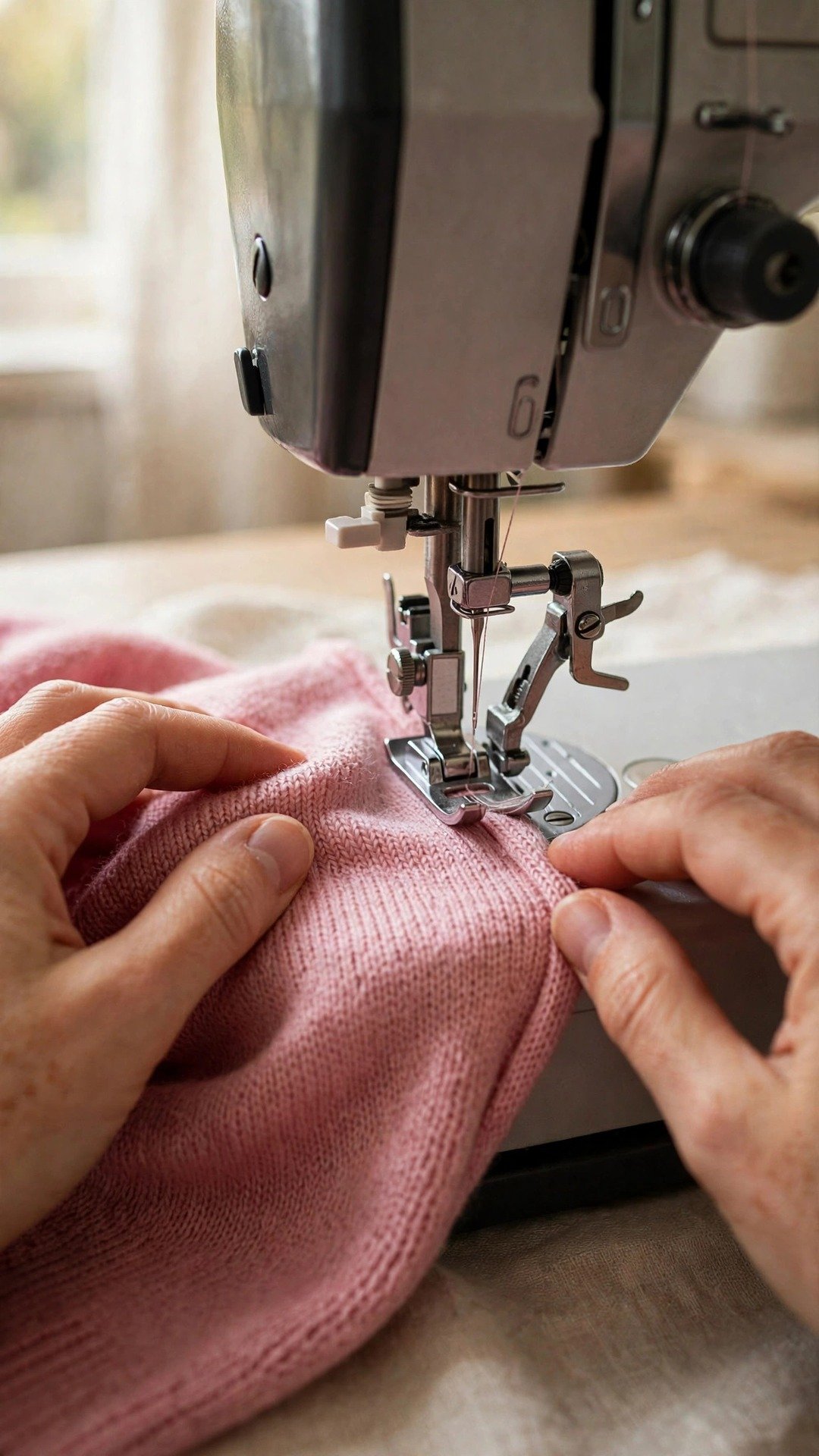
Even feeding is half the battle with knits. A walking foot, or the built-in dual feed on some machines, moves the top layer at the same pace as the feed dogs move the bottom one, which kills most waviness on the spot. If your machine lets you adjust presser foot pressure, dial it down a notch so the foot glides instead of squishing.
Then comes the hardest part: your hands. Do not pull the fabric from behind and do not push it from the front. Just guide it gently and let the machine do the feeding, supporting the weight of the fabric so it does not drag. Hold your thread tails for the first few stitches so they do not get sucked into the throat plate, and avoid starting right at the very edge, where flimsy jersey loves to get chewed into a knotted mess. Start a stitch or two inside the seam allowance instead. Sew slowly, breathe, and always test on scrap fabric first when you change any setting.
Hems That Stretch Without Popping
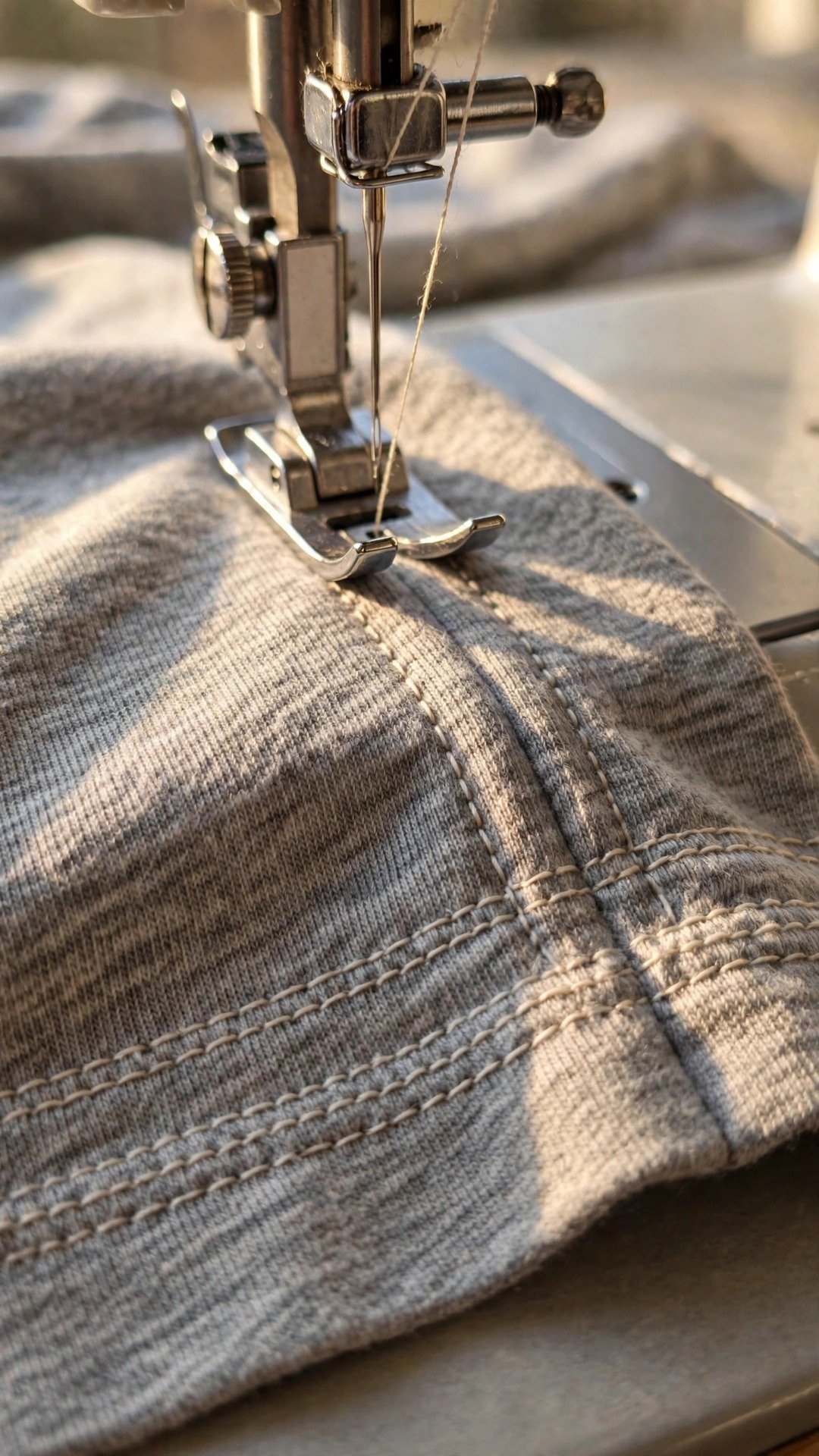
Knit hems fail when they cannot stretch, so give them the same stretchy treatment as your seams. My favorite finish is the twin needle hem: two spools threaded through a stretch twin needle create two parallel rows of topstitching with a zigzag underneath, which looks ready-made and flexes beautifully. Thread both spools carefully, test your tension on a scrap, and let the machine feed at its own pace.
No twin needle on hand? A narrow zigzag hem does the job nicely and is nearly invisible from the right side if you match your thread. For the fold itself, a single fold suits lightweight knits where bulk is the enemy, while a double fold adds welcome stability to heavier fabrics. Either way you get a stretch hem that bounces back when pulled instead of a sad row of popped stitches after the first wear.
Tame the Tricky Spots: Necklines, Shoulders, and Curly Edges
Necklines and shoulder seams are where knits misbehave most, because those areas get stretched during both sewing and wearing. My secret weapon is strips of washaway stabilizer pressed or stuck along the stitching line before I sew. It holds everything perfectly still, then vanishes in the wash. A glue stick plus washaway stabilizer works the same way for basting a neckline binding in place without pins distorting it.
For shoulder seams, which carry the whole weight of the garment, fuse narrow strips of lightweight knit interfacing to the seam allowances. It stops them stretching out over time and takes thirty seconds. And if a very unstable knit curls so badly you can barely cut it, a light mist of spray starch tames it long enough to cut and sew accurately. Press knits with a light touch and a press cloth rather than mashing them with a hot iron, and they will keep their shape.
FAQ
Can I sew knits on a regular sewing machine?
Yes, absolutely. A regular machine handles knits beautifully with a ballpoint needle, a narrow zigzag stitch, and lighter presser foot pressure. A serger makes the overlock finish faster, but it is not required for great-looking knit garments.
Why are my stitches skipping on knit fabric?
Skipped stitches on knits almost always mean the needle is wrong for the fabric. Switch to a ballpoint needle for jersey or a stretch needle for spandex blends, rethread carefully, and test again. If skipping persists, my guide to fixing skipped stitches walks through the other usual suspects.
Do I need a serger to sew knits well?
No, though a serger is genuinely lovely for knits because the overlock stitch stretches and finishes the edge in one pass. Everything in this article works on a standard machine. If you are curious about adding one later, here are my thoughts on choosing a serger for home use.
What thread tension should I use for knit fabric?
Start with balanced, normal thread tension and adjust from your test scrap, not from theory. If the seam puckers, loosen the top tension slightly. If loops show on top, tighten a touch. Small changes make a big difference on knits, so move the dial in tiny steps.
Written by June Carter
I am June, a sewing enthusiast who loves turning simple fabric into things people actually use. I test every technique and product I write about at my own machine before it lands here.