
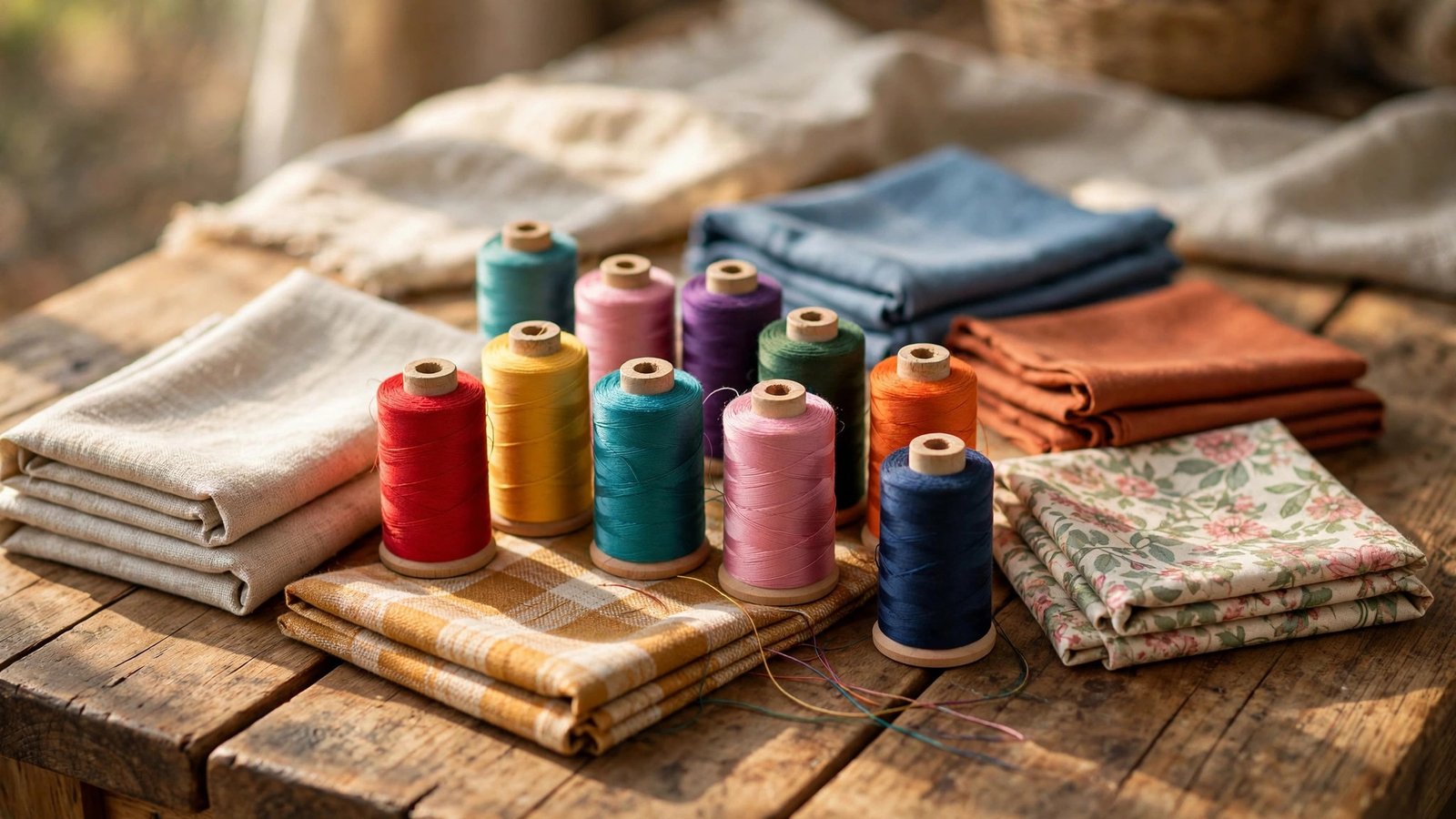
Learning how to match thread to fabric is one of those quiet skills that separates okay sewing from really good sewing. For years I just grabbed whatever thread was closest, usually white, and wondered why my seams puckered, my dark fabrics showed pale stitching lines, and my knit tops popped their seams the first time I stretched. The thread was wrong every single time, and I had no idea thread could even be wrong.
Thread is not just the stuff that holds fabric together. The wrong fiber, weight, or color can pucker a seam, weaken it, or make it glow like a neon sign against your fabric. The right thread disappears into the work and lets the fabric shine. And matching it correctly is mostly a matter of three simple decisions: fiber, weight, and color.
In this guide I will walk you through each decision with plain rules you can use at the fabric store today. No textile degree required, just a little thread wisdom that will improve every project you sew from here on.
Why Thread Choice Changes Everything
Here is my strong opinion: most sewing frustrations blamed on the machine are actually thread problems. Shredding thread, skipped stitches, seams that pucker no matter how you adjust the tension, thread that snaps every few inches. Before you take your machine apart, look at the spool. Old, weak, or mismatched thread causes an astonishing share of bad sewing days.
The good news is that one spool of quality all-purpose thread handles the majority of everyday projects. If you sew mostly quilting cotton and medium-weight wovens, a good all-purpose polyester thread in a neutral color will serve you well for months. But the moment you sew knits, silks, denim, or anything at the extremes of weight, matching the thread deliberately is what keeps your seams strong and your sanity intact. My overview of the best thread for sewing machines covers the workhorse options worth keeping in your drawer.
How to Match Thread to Fabric: The Fiber Rule
The first rule I teach every sewist is this: match thread fiber to fabric fiber, unless you have a specific reason not to. Cotton thread with cotton fabric, polyester thread with synthetics and knits, silk thread with silk. When the fibers match, the thread and fabric shrink, stretch, and age together, and the seam behaves like part of the cloth instead of fighting it.
In practice, polyester thread is the great exception, because it works beautifully with almost everything. It is stronger than cotton, it has a slight stretch that suits knit fabrics, and it resists weakening from sunlight and washing. For cotton and linen wovens, cotton thread gives a lovely matte seam that presses beautifully, but polyester thread is stronger and will outlast the fabric itself. For anything stretchy, polyester thread is non-negotiable: a cotton seam on a knit garment will snap the first time the fabric stretches, while polyester gives just enough to move with it.
For silk and delicate fabrics, a fine polyester or genuine silk thread glides through without chewing the fibers. For heavy duty work like bags and outdoor gear, look for heavy-duty polyester or nylon thread built for the load. The fiber decision is the foundation, so get this right and the rest is easy. If you are still learning your fabrics, my guide to the best fabrics for beginner projects pairs nicely with this one.
Matching Thread Weight to Fabric Weight
Thread weight works backwards from what you would expect: the higher the number, the finer the thread. Standard all-purpose thread is usually 50 weight, which suits most quilting cottons and medium wovens. For lightweight fabrics like lawn, voile, and silk, step up to a finer 60 to 80 weight thread so the seam does not pucker or show bulky stitching. For denim, canvas, and upholstery, drop down to a heavier 30 to 40 weight thread that can handle the load.
Getting this wrong has visible consequences. Thread that is too heavy for the fabric causes puckering and stiff, rope-like seams that will not press flat. Thread that is too light for heavy fabric produces weak seams that can snap under stress. When in doubt, hold the thread against the fabric: the thread should look proportional to the cloth, not dramatically thicker or thinner. And whenever you change thread weight, check your needle too, because heavy thread needs a larger needle eye, which is exactly what my guide to choosing a sewing machine needle explains.
Getting the Color Right
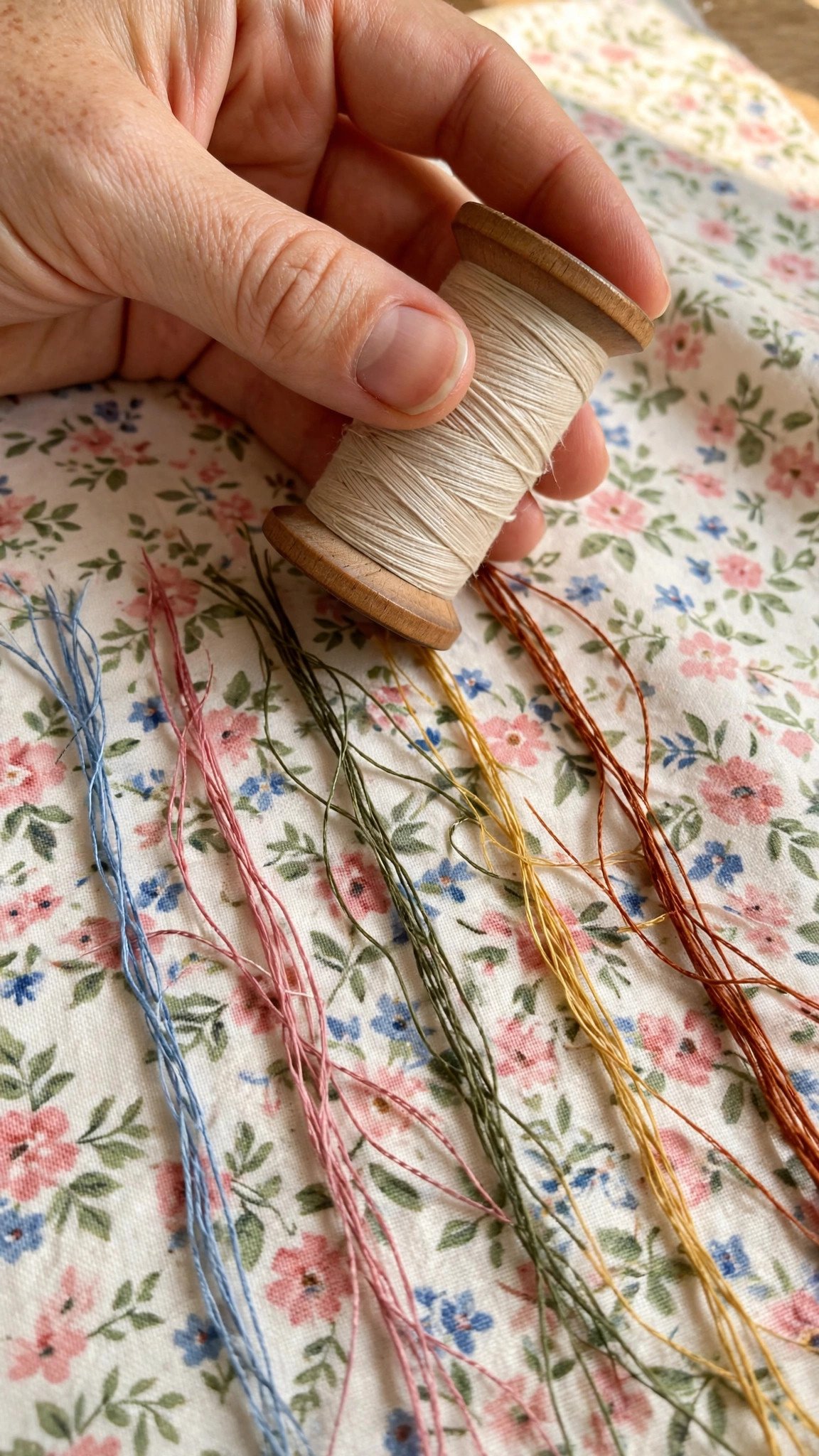
Color matching has one golden rule: choose thread one shade darker than your fabric. Thread always looks lighter once it is stitched than it does on the spool, so that slightly darker spool melts invisibly into the seam. Hold the spool against the fabric in natural daylight, not under yellow indoor bulbs, and unwind a few inches so you are judging the thread itself, not the wound spool.
For multicolor prints, match the background color or the dominant color, depending on where the seam will sit. For a seam joining two different fabrics, match the thread to the fabric that shows most, or pick a neutral like medium gray, which famously blends into almost everything. Navy and charcoal are the other great neutrals for dark fabrics. And when you want the stitching to show, as with topstitching on denim or decorative quilting, break the rule on purpose and choose a bold contrast. Matching is for invisible seams; contrasting is a design decision.
Pairing Thread with the Right Needle
Thread and needle are a team, and they need to suit each other. The needle’s eye must be large enough for the thread to pass through without fraying, but not so large that it punches visible holes in the fabric. As a rough guide: fine 60 to 80 weight thread pairs with a 70/10 needle, standard 50 weight thread with an 80/12 or 90/14, and heavy 30 to 40 weight thread with a 90/14 to 100/16.
Specialty threads need specialty needles. Metallic thread is beautiful and notoriously fragile, so use a metallic or topstitch needle with a larger, polished eye, lower your tension slightly, and sew slowly. Silk thread sews best with a sharp microtex needle that pierces cleanly instead of pushing fibers aside. If your thread keeps shredding at the needle, the needle is the first suspect, not the thread. Change it before you change anything else.
Test Stitching Before You Commit
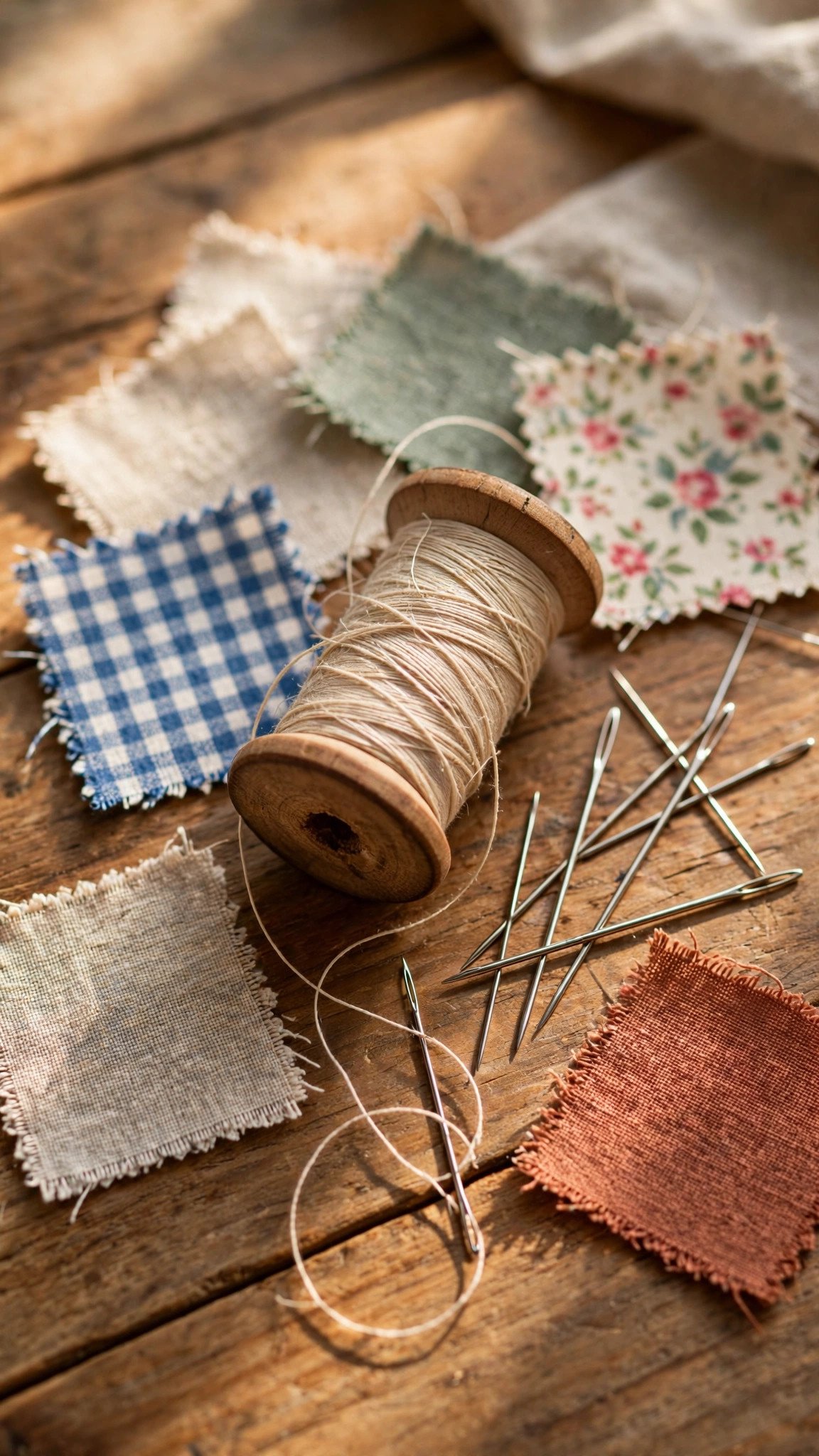
Here is the habit that will save more projects than any other tip in this article: test on a scrap. Before you sew your real seams, stitch a few inches on a doubled scrap of your actual project fabric, using the thread and needle you plan to use. Then look closely. Are the stitches balanced, with no loops on either side? Does the seam lie flat without puckering? Does the color disappear into the fabric the way you hoped?
Then press the test seam and give it a firm tug. If the thread snaps while the fabric holds, your thread is too weak for the job. If the fabric tears before the thread gives, your thread is overkill, though that is rarely a practical problem. This two minute test stitch tells you everything, and it is the reason I keep a little stack of labeled swatches next to my machine. A quick refresher on threading your sewing machine properly also belongs in this routine, because even perfect thread sews badly through a badly threaded machine.

FAQ
Can I just use polyester thread for everything?
Honestly, for most modern sewing, yes. Quality all-purpose polyester thread works with wovens, knits, and synthetics, and it is stronger and more wash-resistant than cotton. The main exceptions are heirloom sewing and historical garments where cotton thread is preferred for authenticity, and situations where you want the matte look of cotton.
Should thread be lighter or darker than the fabric?
One shade darker. Thread reads lighter once stitched, so the slightly darker spool blends in seamlessly. This is the single most useful color rule in sewing, and it works for nearly every fabric.
What thread should I use for stretchy knit fabrics?
Polyester all-purpose thread, without question. Its slight stretch lets the seam move with the knit instead of snapping. Pair it with a ballpoint or stretch needle and a narrow zigzag or stretch stitch for seams that survive actual wearing.
Does old thread go bad?
Yes. Thread weakens with age, sunlight, and heat. If a spool has been sitting in a sunny window for years, test it by pulling a length firmly between your hands. If it snaps easily or sheds lint, retire it to hand basting or the trash. Your seams deserve fresh thread.
Written by June Carter
I am June, a sewing enthusiast who loves turning simple fabric into things people actually use. I test every technique and product I write about at my own machine before it lands here.