
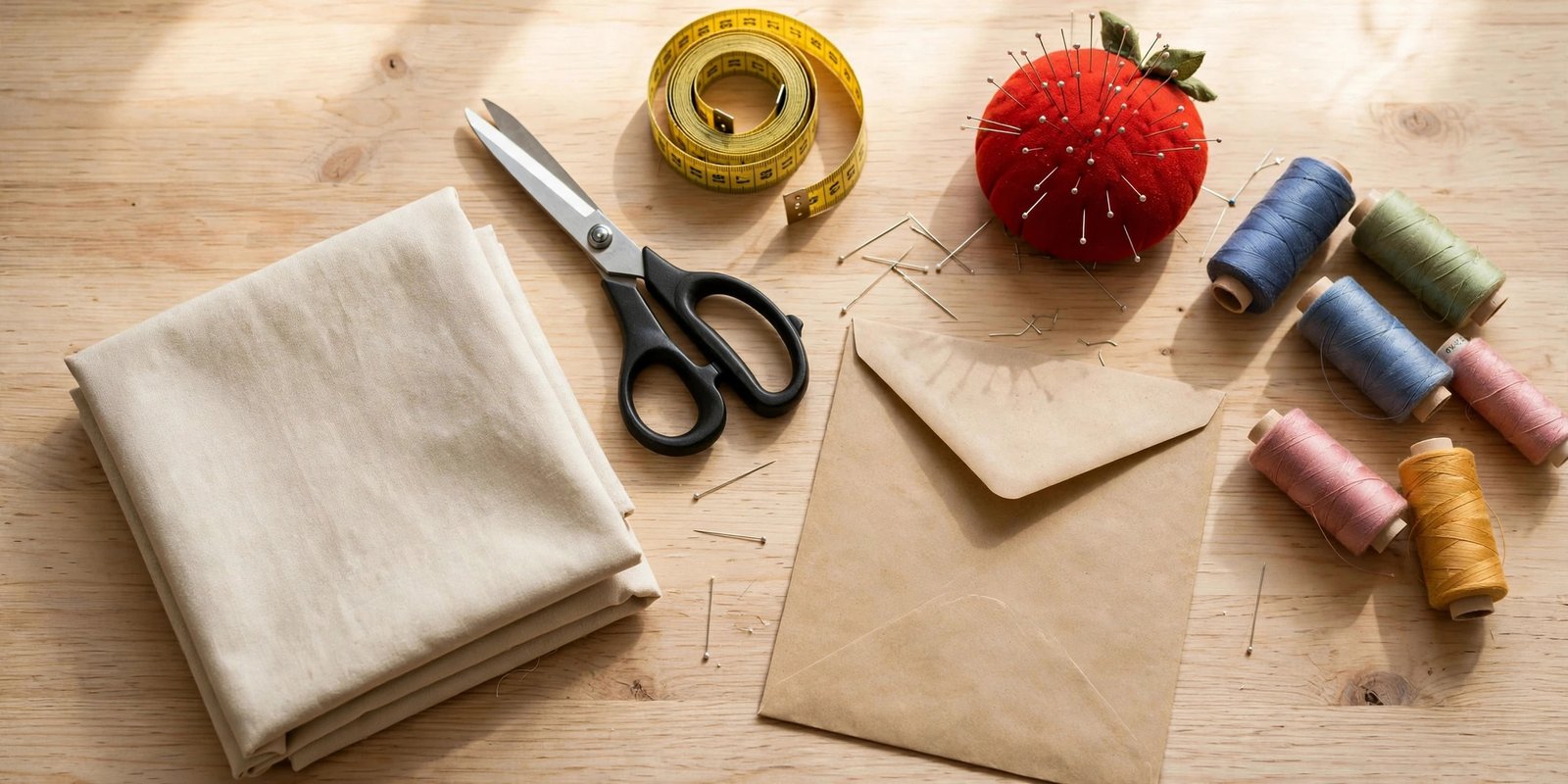
Learning how to plan a first sewing project is the real first skill of sewing, and I say that as someone who learned it the hard way. My first project was a lined jacket. A lined jacket! I had never sewn a straight seam in my life, and I chose a lined jacket because I liked the photo. It took three weeks, two crying sessions, and it never got worn. If someone had sat me down and helped me plan a proper first project, I would have been sewing happily years sooner.
Here is the truth nobody puts on the pattern envelope: beginners do not fail because they lack talent. They fail because they pick the wrong project, the wrong fabric, or they skip the boring preparation steps that make sewing enjoyable. This guide walks you through planning a first project you will actually finish, from choosing the project and fabric to practicing on scraps and pacing yourself. Do this once, and every project after it gets easier.
The Uncomfortable Truth About First Projects
Most first projects die from ambition, not inability. The pattern looked simple in the photo. The fabric was gorgeous in the store. Then reality arrived: seventeen pattern pieces, words like understitch and ease that might as well be another language, and fabric that slid around like it was greased. The project went into a bag, the bag went into a closet, and the machine gathered dust for a year.
I am opinionated about this because I have watched it happen so many times. Your first project has exactly one job: to get finished. Not to impress anyone, not to be worn to a wedding, just to be completed. A finished pillowcase teaches you more than an abandoned dress ever will, because finishing is where all the learning lives. Plan for a finish, and the skills stack up naturally from there.
Choose a Project You Will Actually Finish
The best first projects are small, useful, and mostly straight lines. A pillowcase, a simple tote bag, a drawstring pouch, or an unlined cushion cover. These projects teach cutting, straight seaming, pressing, and hemming without asking you to also learn curves, zippers, or fitting at the same time. One new skill cluster at a time is the whole secret.
Use a real pattern, and choose one labeled easy or beginner, not one that merely looks easy. Pattern companies grade difficulty honestly because returns hurt them too. Read my guide to choosing your first sewing project for the full breakdown of what to look for, and browse easy sewing projects for beginners for ideas that real beginners have actually finished. Boring is a feature here. The plain tote you finish beats the fancy dress you abandon every single time.
How to Plan a First Sewing Project, Step by Step
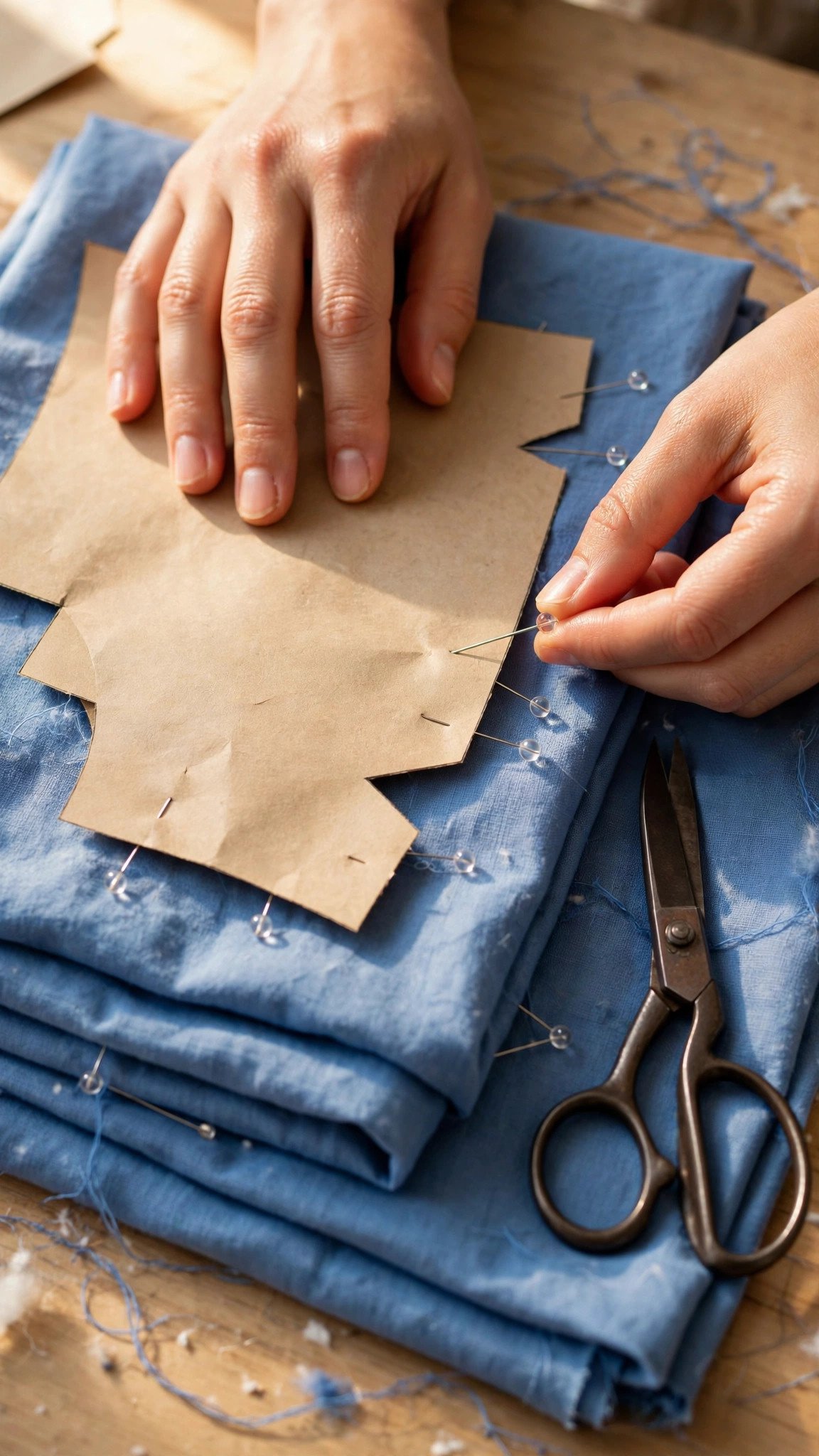
Start by reading the entire pattern before you buy anything. Yes, the whole thing, including the scary parts. You are looking for the fabric requirements, the notions list, and any technique words you do not know. If the instructions mention three techniques you have never heard of, that is useful information: either learn each one on a scrap first or pick a simpler pattern. Ten minutes of reading now saves hours of confusion later.
Next, learn to read the sewing pattern symbols on your pieces: grainlines, notches, fold lines, and seam allowance markings. You do not need to memorize them forever, just understand what your particular pattern is telling you. Then gather every tool and notion on the list before you cut. Nothing kills momentum like discovering mid-project that you are short one zipper or out of matching thread.
Now plan your sewing order loosely. Most patterns give one, but read it and picture each step in your head. Where does pressing happen? When do pieces get joined? Which seams are sewn before others? If any step confuses you, that is your cue to practice it on a scrap first. Finally, schedule real time. A simple first project takes an afternoon, not twenty spare minutes between errands. Give yourself an unhurried block of time and permission to go slowly.
Choose Fabric Like Your Success Depends on It
It does. Fabric choice makes or breaks first projects more than any other decision. For your first project, choose a stable, medium-weight woven cotton, like quilting cotton or a light canvas. It presses crisply, it does not stretch or slide, the feed dogs grip it perfectly, and your stitches will look good with minimal effort. Save the slippery satin, the stretchy jersey, and the loosely woven linen for project number five.
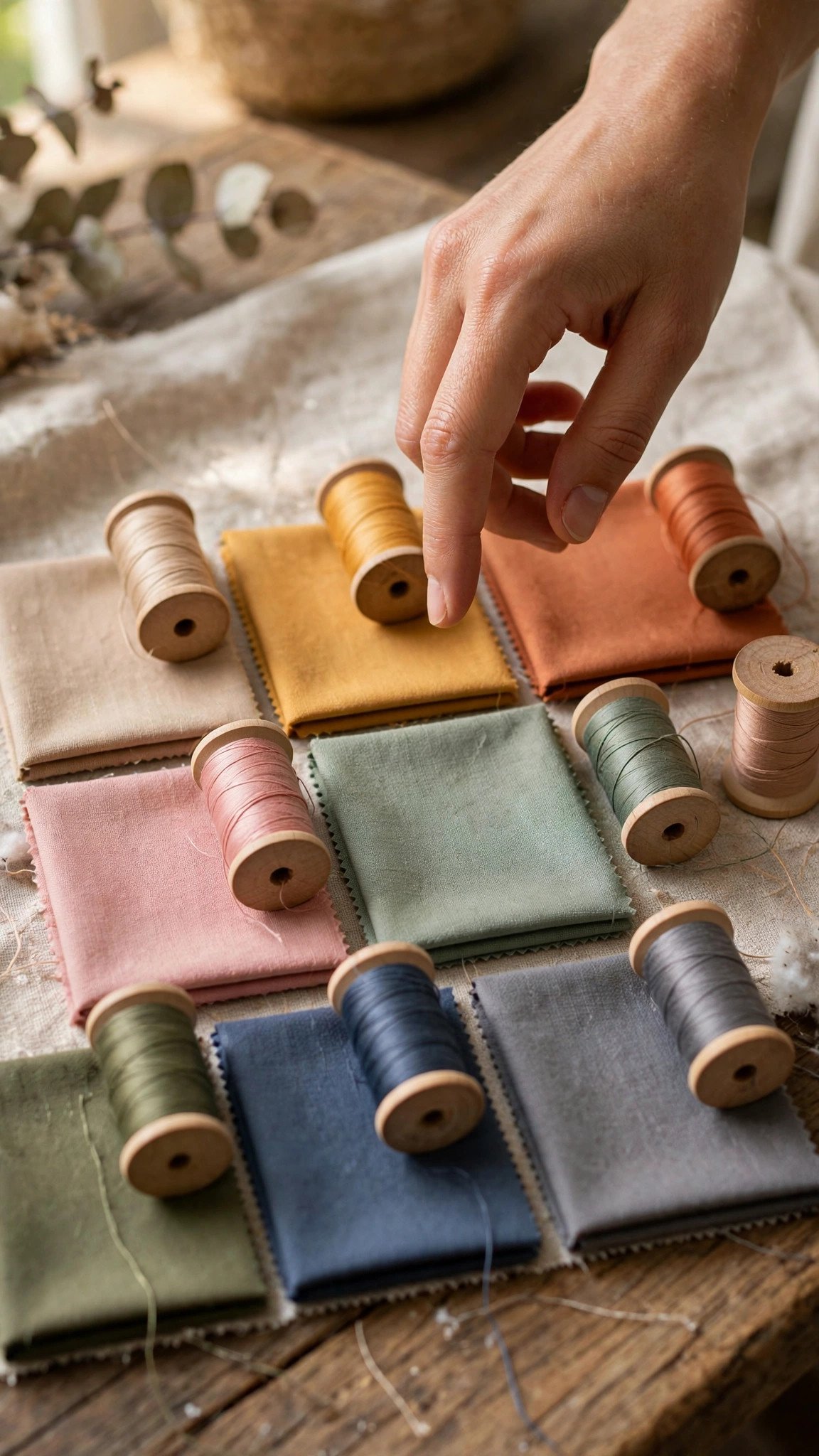
Buy a little more than the pattern asks for, because beginners need room for recutting a miscut piece without panic. And choosing fabric for a beginner project gets much easier when you know what to avoid: anything you cannot press flat, anything that frays if you look at it, and anything so precious you are afraid to cut it. Wash and dry your fabric exactly as you will wash the finished item before you cut a single piece. Skipping the prewash is how finished projects come out of the laundry two sizes smaller.
Practice on Scraps Before You Touch the Good Fabric
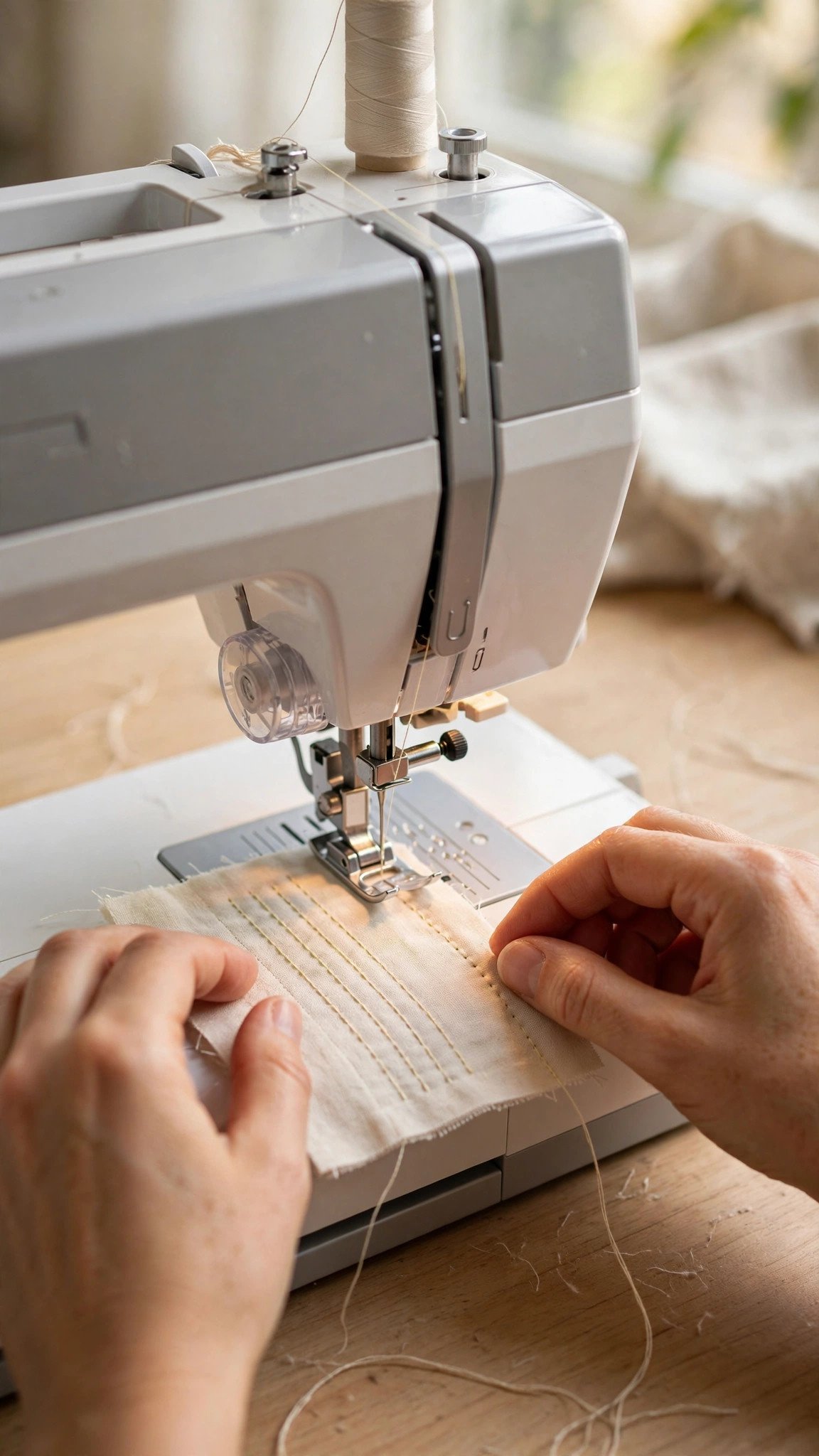
This is the step everyone skips and everyone regrets skipping. Before you sew your project, sew on scraps of your actual project fabric. Sew straight lines. Sew a few curves. Test your seam allowance against a ruler. Check that your tension looks balanced on both sides. This fifteen-minute rehearsal catches nearly every problem: wrong needle, wrong thread, tension issues, and the simple unfamiliarity of guiding fabric.
Press as you go, from the very first seam. Pressing is not a finishing step, it is a construction step, and seams that are pressed open or to the side behave completely differently from unpressed ones. Keep your seam ripper on the table without shame. Unpicking is not failure, it is part of the plan. Every experienced sewist rips seams regularly. The difference is that they planned time for it and you should too.
FAQ
How long should my first sewing project take?
Plan for one unhurried afternoon, roughly three to four hours, for a simple project like a pillowcase or tote. Rushing is the enemy. If you only have short windows of time, break the project at natural stopping points like after cutting or after the main seams, and press everything before you walk away.
Should I use a pattern for my first project?
Yes. A beginner-rated pattern gives you cutting layouts, fabric amounts, and a tested order of operations, which removes dozens of small decisions you are not ready to make yet. Free tutorials are fine too, as long as they are written for true beginners and include the same information.
What should I do when I make a mistake?
Expect mistakes and plan for them. Keep a seam ripper within reach, remember that almost every error is fixable by unpicking and redoing, and never try to fix a mistake when you are tired or frustrated. Walk away, come back fresh, and fix it calmly. The project will wait.
Do I need an expensive sewing machine to start?
No. Any basic machine that sews a reliable straight stitch and zigzag is enough for your first several projects. Spend your energy on good fabric, sharp scissors, and an iron you will actually use. The machine matters far less than the planning.
Written by June Carter
I am June, a sewing enthusiast who loves turning simple fabric into things people actually use. I test every technique and product I write about at my own machine before it lands here.