
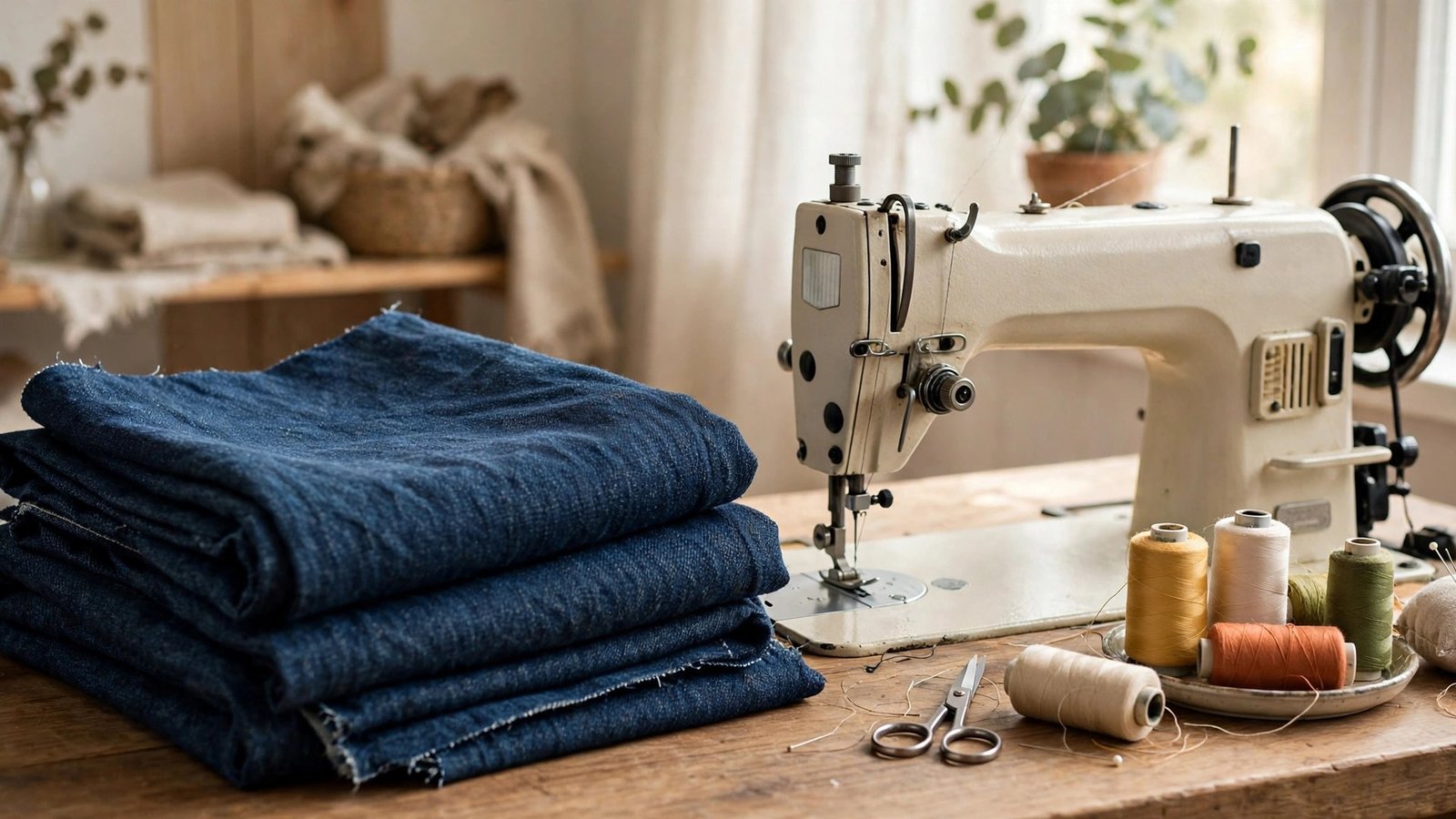
If you want to know how to wash denim before sewing, here is the routine I use every time: wash it inside out in cold water, twice if it is very dark, and dry it the way you will dry the finished garment. Denim shrinks, it bleeds dye, and it softens with washing, and all three of those things need to happen before you cut, not after you have sewn a pair of jeans or a jacket that will never fit the same way twice.
I learned this on a denim skirt that I cut with great care and washed with great confidence, and it came out of the dryer a full inch shorter and a shade lighter than the fabric I had started with. Every one of those problems would have been solved by a proper prewash.
This guide covers why denim needs washing, the exact wash routine I use, how to handle dark and raw denim, drying and pressing, and the mistakes that ruin denim before you sew a stitch. By the end, you will know how to get all the shrinking and bleeding over with before your scissors ever touch the fabric.
Why Denim Needs Washing Before You Cut
Denim is a sturdy cotton twill, and it behaves like cotton in the wash, only more so. It shrinks, usually between three and five percent, and most of that shrinkage happens on the first wash. On a pair of jeans, five percent of a thirty four inch inseam is more than an inch and a half. That is the difference between jeans that fit and jeans that are too short to wear.
Denim also bleeds dye. Indigo, the dye that gives denim its colour, sits on the surface of the yarn rather than soaking all the way through, which is why denim fades so beautifully with wear. But that also means the first few washes release a lot of loose dye. Wash a dark denim next to a light fabric and the light fabric will turn blue. Wash a finished garment and the dye can settle unevenly, leaving pale marks at the seams and folds.
Finally, washing softens denim. New denim is stiff, and that stiffness makes it harder to sew and harder to fit. A washed denim drapes better, presses better, and behaves better under the presser foot. If you are choosing denim for a project, my guide to how to choose denim needles will help you pick the right needle for the weight you are sewing.
How to Wash Denim Before Sewing Step by Step
Start by finishing the raw cut edges. Denim frays enthusiastically in the washing machine, and you can lose a surprising amount of fabric to frayed threads. Run a zigzag stitch or a serged edge along both cut ends before the fabric goes in the wash. The selvedges do not need it.
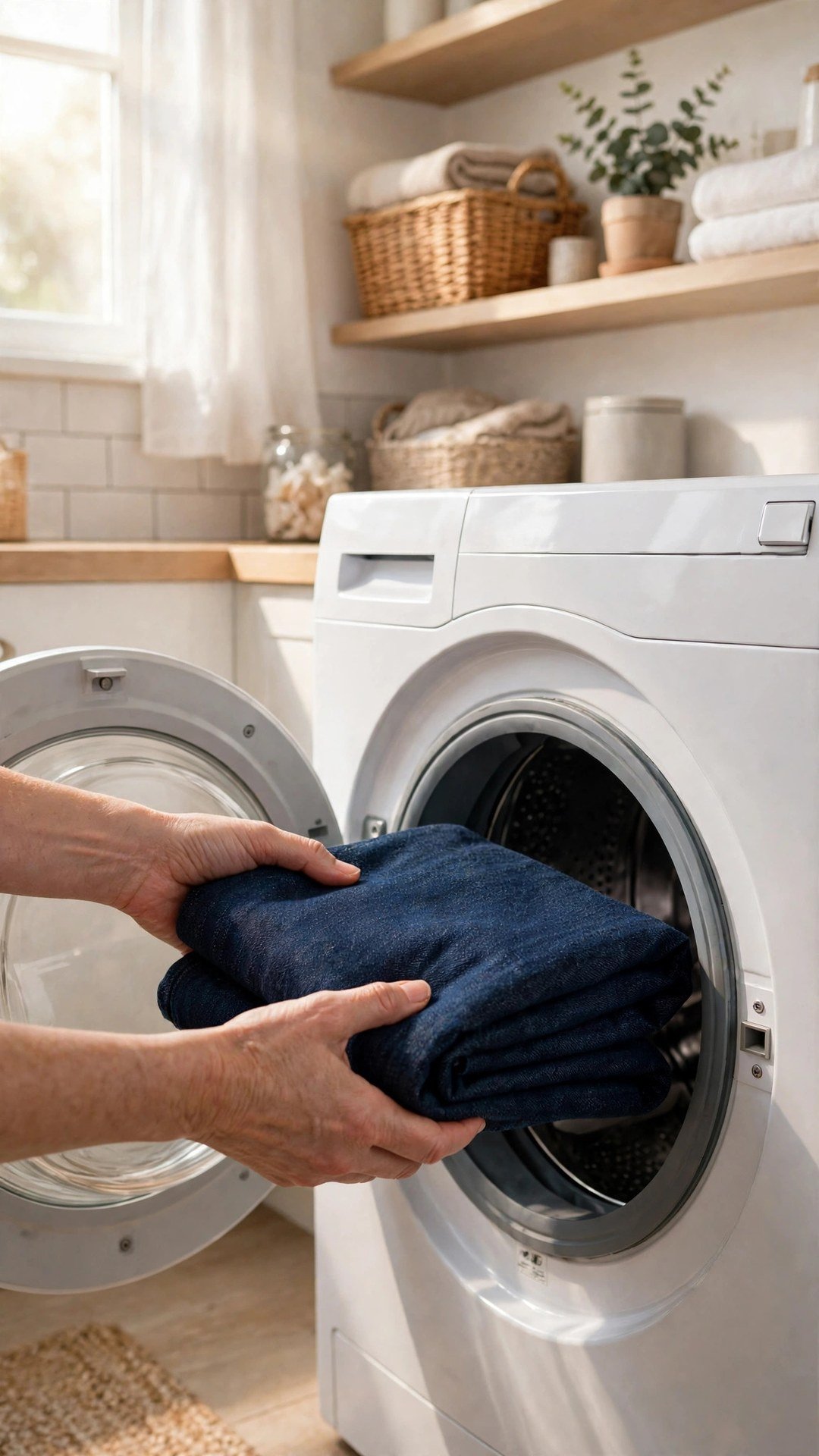
Turn the fabric inside out, or fold it so the right sides face in, and wash it alone in cold water on a normal cycle with a mild detergent. Skip the fabric softener, which coats the fibres and can make the denim harder to sew.
For very dark denim, wash it twice. The first wash removes the most loose dye, and the second wash confirms that the rinse water runs clear. If the water is still running blue after two washes, wash it a third time, or accept that the finished garment will keep fading and should be washed alone for its first few outings. After washing, dry the denim the way you will dry the finished garment, because the drying method affects shrinkage just as much as the wash.
Drying and Pressing Denim After the Wash
If you will machine dry your finished jeans or jacket, tumble dry the fabric on medium heat. If you will line dry, line dry the fabric. Matching the future matters more than the specific method, because the point of prewashing is to get all the shrinking over with under the same conditions the garment will face later. Pull the denim out of the dryer promptly, while it is still slightly damp, and shake it out to reduce wrinkles.
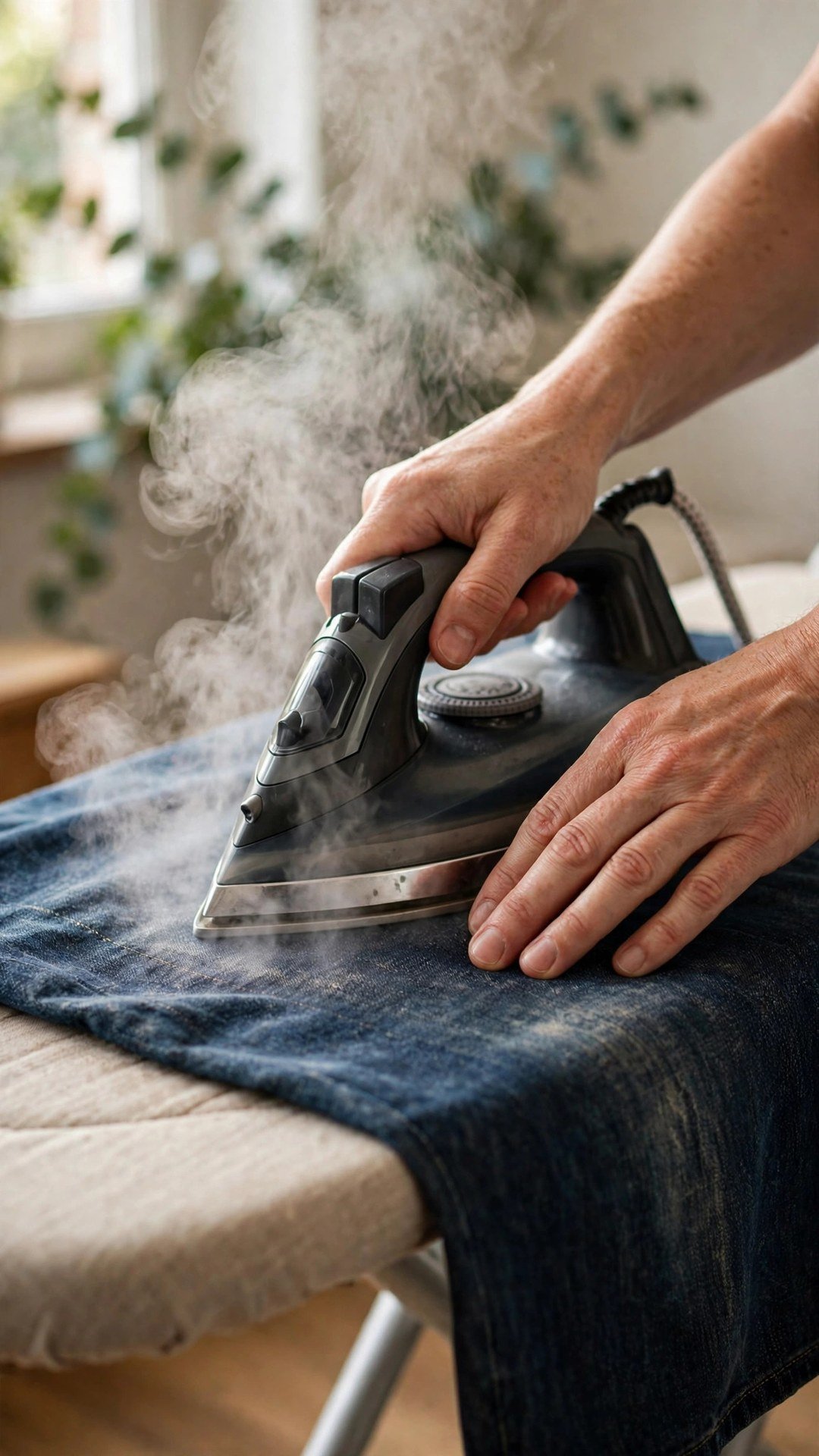
Press the denim while it is still slightly damp, using a hot iron and plenty of steam. Press the full length before you lay out your pattern, because wrinkles are lies your cutting line cannot afford. A flat, pressed length of denim is a pleasure to cut, and your pattern pieces will be far more accurate.
Check the grain after pressing. Washing and drying can shift the grain on denim, especially on a loosely woven batch. If the fabric comes out skewed, pull the corners gently on the diagonal while the fabric is damp, until the threads run square again. Then press it flat. A denim that is off grain will twist at the leg seam of a pair of jeans, and that twist will show every time you wear them.

Dark Denim, Raw Denim, and Special Cases
Dark denim deserves extra care. Wash it inside out, in cold water, alone, and add a cup of white vinegar to the rinse if you like the old sewist trick for setting dye. The real protection is washing dark denim alone and keeping it out of hot water.
Raw denim, the stiff, dark, unwashed denim that denim enthusiasts love, is a special case. Some people never wash raw denim, because they want the fades to develop from wear alone. If you are sewing with raw denim and you plan never to wash the finished garment, you can cut it unwashed. But be honest with yourself. If the garment will ever be washed, prewash the fabric, because the shrinkage will happen eventually and it is better that it happens before you cut. For patching and repairs on finished denim, my guide to how to add a patch to denim covers matching washed and unwashed denim.
Stretch denim needs the same routine, with one extra check. Stretch denim contains elastane, and hot water and high dryer heat can damage the elastic fibres. Wash it cold, tumble dry low or line dry, and never use a hot iron directly on the fabric without a press cloth. If the stretch feels different after washing, that is normal, and it is another reason to wash before you cut.
Mistakes That Ruin Denim Before You Sew
The biggest mistake is skipping the prewash entirely. I understand the temptation. Denim is expensive, the fabric is beautiful, and you want to start cutting. But an unwashed denim garment that shrinks after its first wash is a garment you will not wear, and that is a far worse outcome than an hour of waiting.
The second mistake is washing in hot water. Hot water maximises shrinkage and fading, and it can set wrinkles into the denim that you will press out for the rest of the garment’s life. Cold water is enough. The third mistake is washing dark denim with light fabrics, which is how white shirts turn blue. Wash darks alone, always. If you want the general routine for washable fabrics, my guide to how to prewash cotton and linen covers the same principles for cotton and linen.
The fourth mistake is forgetting that prewashing changes your yardage. Denim shrinks, so the length you bought is now slightly shorter. Buy a little extra, about ten percent more than the pattern asks for, or buy the next eighth yard up. Cheap insurance, and it means you will not run short because the fabric shrank in the wash.
Frequently Asked Questions
Should I wash denim before sewing jeans?
Yes, always, unless you are working with raw denim that will never be washed. Prewashing removes the first shrinkage and most of the loose dye, so the jeans fit after washing the way they fit when you made them.
What water temperature should I use for denim?
Cold water. It removes sizing, triggers the first shrink, and protects the colour. Hot water shrinks denim more and fades it faster, and it can damage the elastane in stretch denim.
How many times should I wash dark denim before cutting?
Twice is usually enough. Wash it alone, inside out, in cold water, and check the rinse water. If it still runs blue after two washes, wash it once more, or plan to wash the finished garment alone for its first few outings.
Can I put denim in the dryer before sewing?
Yes, if you will machine dry the finished garment. Dry the fabric the way you will dry the garment, so all the shrinking happens now. If you will line dry the garment, line dry the fabric instead.
Does vinegar really stop denim from bleeding?
It helps a little, but it does not stop bleeding entirely. A cup of white vinegar in the rinse can reduce loose dye, but the real protection is cold water, washing darks alone, and accepting that indigo denim will always fade a little.
Denim rewards a little patience before you cut. Wash it cold, wash it twice if it is dark, dry it the way you will dry the garment, and press it while it is damp. Then cut with confidence, knowing the jeans or jacket you sew will fit just as well after its tenth wash as it does on the day you finish it.
Written by June Carter
I am June, a sewing enthusiast who loves turning simple fabric into things people actually use. I test every technique and product I write about at my own machine before it lands here.