

A torn knee, a worn-out elbow, a jacket that needs personality: learning how to add a patch to denim is one of those skills that pays you back for years. Patches rescue favorite jeans, personalize jackets, and turn mending into something you actually look forward to. Best of all, you can finish a patch in a single sitting, even if you have never mended anything before.
I am firmly on team visible mending. A well-placed patch tells a story, and denim is the perfect canvas for it because the fabric is sturdy enough to hold stitches beautifully. In this guide I will walk you through the three ways to attach a patch, iron-on, machine-sewn, and hand-sewn, plus how to make it stay put through years of washing.
Pick Your Patch: Iron-On, Sew-On, or Handmade
Start by choosing the right patch for the job. The classic iron-on patch denim combination is popular for a reason: it is fast, tidy, and great for decorative patches on jackets and bags. Sew-on embroidered patches give you the same look with a sturdier attachment, and a simple rectangle of denim cut from old jeans makes the toughest repair patch of all.
My honest opinion: iron-on adhesive alone is never enough for a patch that gets washed. I always add stitching around the edges, and I will show you how below. If you are covering damage, cut your patch at least an inch larger than the hole on every side, and round the corners so they do not peel up. A patch with square corners is a patch that starts lifting at the corners.
Where to Place a Patch on Denim
Good patch placement on jeans makes the difference between a repair that looks intentional and one that looks like an accident. For knees and thighs, center the patch over the worn area and extend well past the damage in every direction. For decorative patches on a denim jacket, lay the jacket flat and audition positions: chest pocket, upper back, sleeves, and the yoke all work. Step back and look from a distance before you commit.
Pin the patch in place and try the garment on if you can. A patch that looks perfect on the table can sit oddly once the garment is worn. And here is a rule I never break: when pinning or sewing, work with only one layer of the garment under your needle. If you are still building confidence with the basics of pinning and clipping fabric, take your time here, because a pinned patch is a patch that stays where you put it.
How to Add a Patch to Denim with an Iron
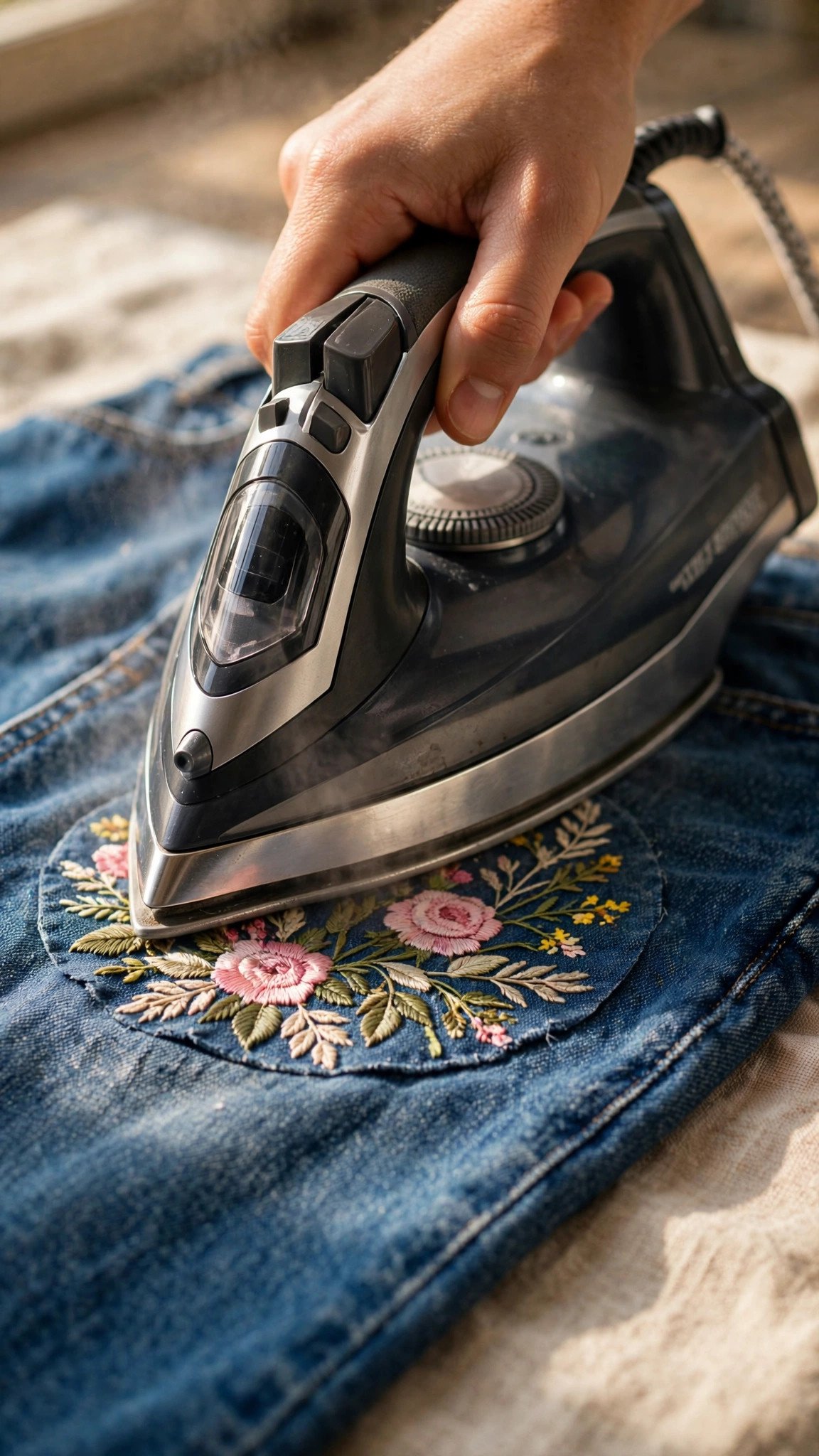
To apply an iron-on patch, start with clean denim: wash and dry the garment first so sizing and residues do not interfere with the adhesive. Preheat your iron to its hottest dry setting, no steam. Position the patch, cover it with a thin cotton press cloth, and press down firmly for 25 to 30 seconds without sliding the iron around. Sliding is the enemy here; it wrinkles the adhesive layer.
Flip the garment over and press from the back for another 20 seconds, then let everything cool completely before you touch it. The bond sets as it cools, so patience matters. If an edge lifts, press it again with the cloth. And remember my rule: iron-on gets you placement, but stitching gets you permanence. Even a quick row of hand stitches around the edge transforms a temporary patch into a lasting one.
How to Sew a Patch onto Jeans by Machine
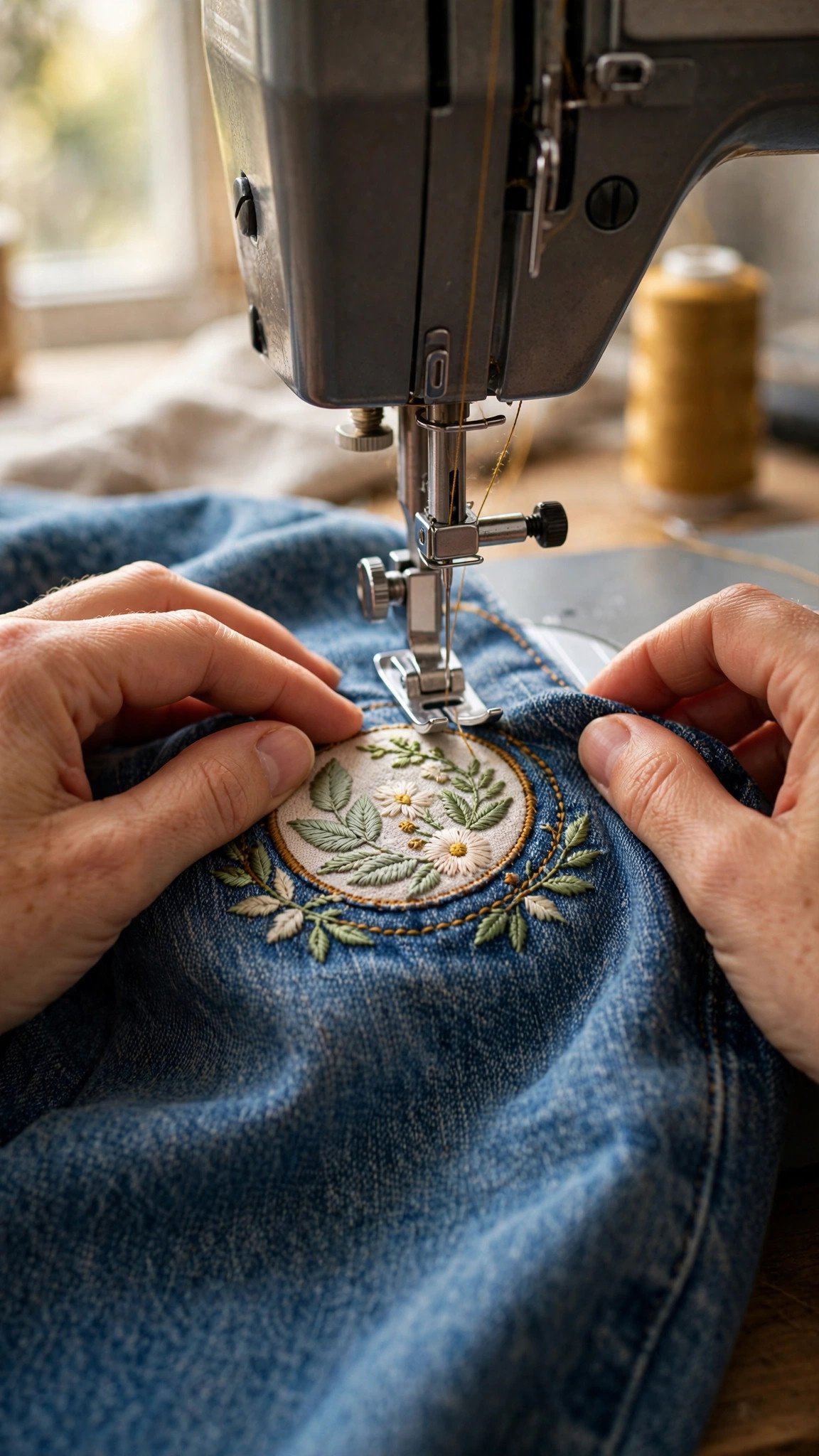
For the strongest attachment, sew the patch onto jeans with your machine. Use a denim sewing needle, size 90/14 or 100/16, which punches through thick layers without deflecting. For thread, choose a heavy-duty thread denim sewists trust, in a color that matches the denim or a contrast color if you want the stitching to show as decoration. If your machine starts skipping over the thick sandwich, my guide to fixing skipped stitches will sort it out.
Pin or baste the patch in place, then stitch close to the edge of the patch all the way around, pivoting at corners. I machine sew patch borders with a straight stitch set slightly longer than usual, around 3 to 3.5 mm, which handles thick layers more gracefully than a tiny stitch. For a repair patch on the inside of jeans, a zigzag over the raw edges keeps them from fraying. Backstitch at the start and finish, and you have a patch that will outlast the jeans. Once you learn to sew patch onto jeans by machine, torn knees stop being emergencies.
Hand Sew a Patch for Maximum Control
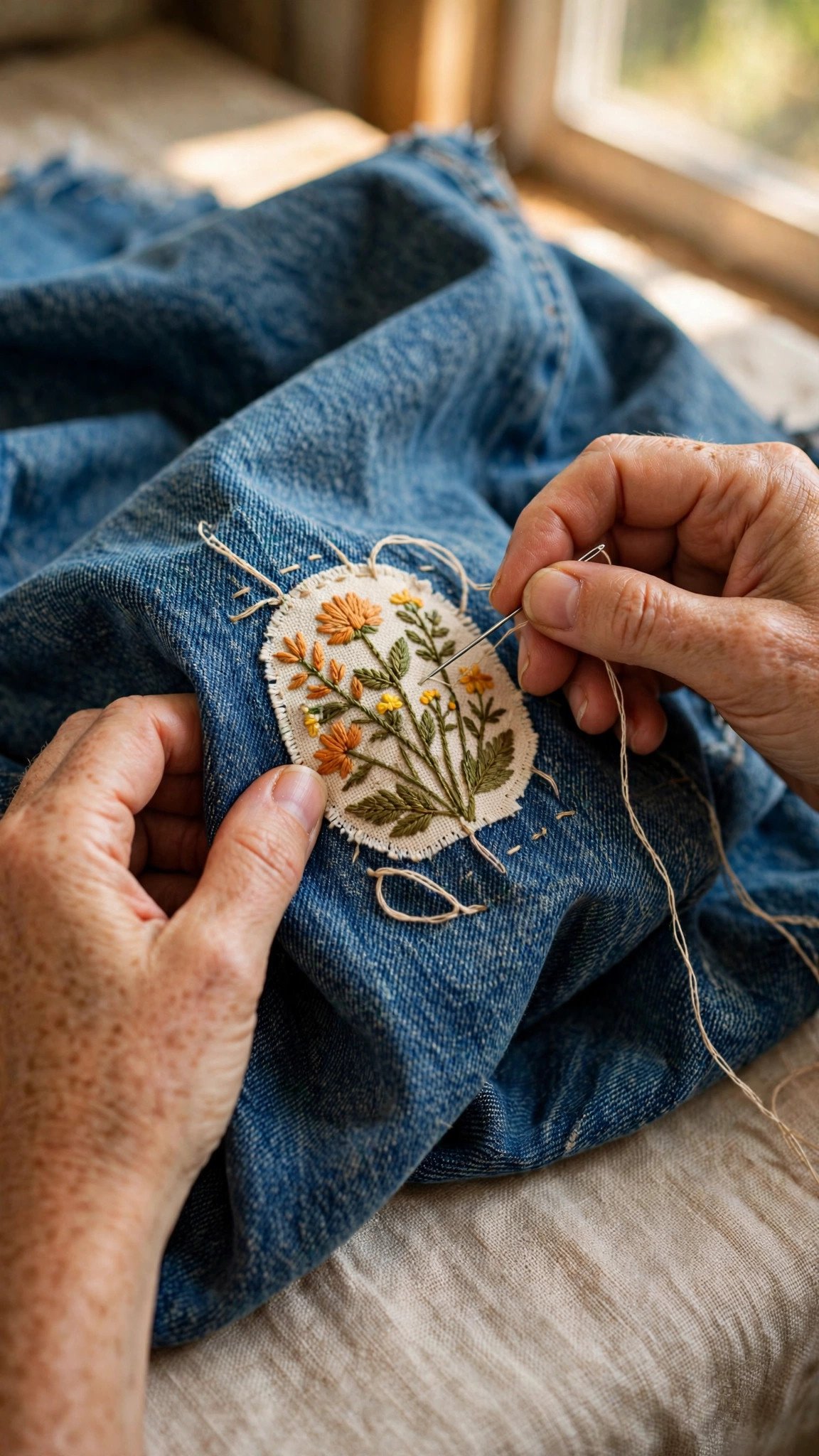
Sometimes the machine cannot reach where the patch needs to go, like a tight sleeve or the seat of jeans. That is when you hand sew a patch, and honestly, I often prefer it for decorative work. Thread a sturdy needle with heavy-duty thread, knot the end, and use a backstitch or a neat running stitch around the patch edge, keeping stitches small and even.
A thimble is your best friend here, because pushing a needle through denim and a patch takes real effort. Work from the inside when you can so your knots hide, and hand stitch patch edges with about eight to ten stitches per side for a secure hold. If you want to sharpen your technique first, review these essential hand stitches before you start. Slow, even stitches look better than fast, wobbly ones, and nobody is timing you.
Make It Last: Reinforcement and Care
To reinforce patch edges, stitch a second row inside the first on high-wear areas like knees and elbows. If you used fusible adhesive, that second row of stitching is not optional in my book, it is what stops patch peeling after washing. Trim loose threads, press the finished patch flat, and you are done.
Care for patched denim gently and your work will last for years. Wash inside out on a cool cycle, skip the hot dryer when you can, and never scrub directly over an embroidered patch. If an edge ever starts to lift, do not wait: press it back down and add a few stitches right away. A two-minute fix now saves a lost patch later.
FAQ
Will an iron-on patch stay on denim through the wash?
It will hold for a while, but adhesive alone eventually gives up, especially on areas that flex. Always add stitching around the edge of an iron-on patch if you want it to survive regular washing.
What needle should I use for sewing patches on denim?
Use a denim or jeans needle in size 90/14 or 100/16. These have a reinforced shaft and a sharp point designed to pierce dense twill without breaking. If you are unsure, read my guide to choosing the right sewing machine needle.
Can I patch jeans from the inside so the patch does not show?
Yes. To patch holes in jeans invisibly, place a denim patch behind the hole on the inside and stitch around the damage from the right side. The repair blends in, especially if the patch denim matches the jeans.
Do I need to sew an iron-on patch too?
You do not strictly need to, but I strongly recommend it. A few minutes of stitching is the difference between a patch that lasts a season and one that lasts for years.

Written by June Carter
I am June, a sewing enthusiast who loves turning simple fabric into things people actually use. I test every technique and product I write about at my own machine before it lands here.