
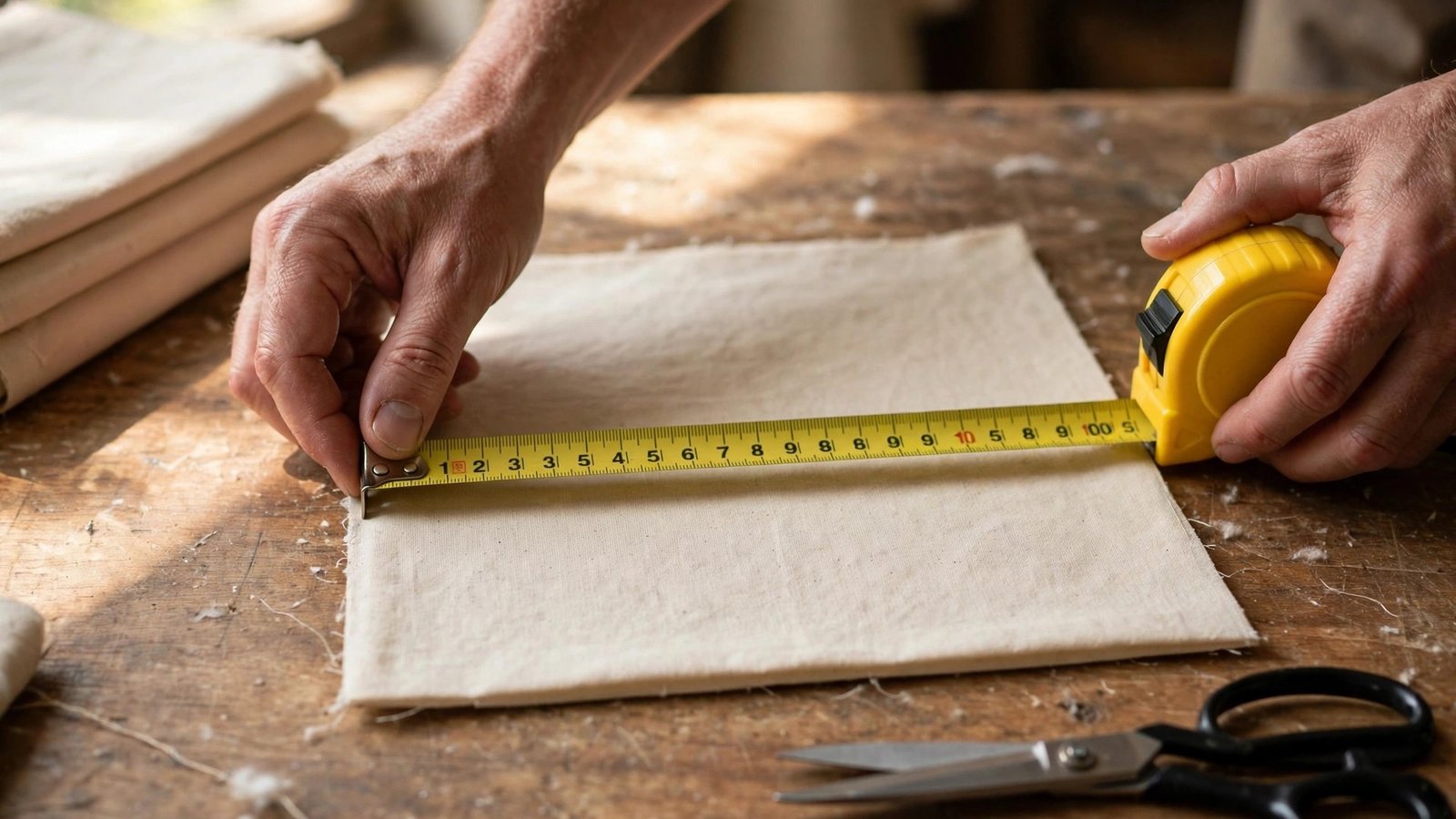
If you want to know how to test fabric shrinkage, here is the simple answer: cut a measured square, wash and dry it exactly as you will wash the finished garment, and measure it again. The difference between the two measurements tells you exactly how much that fabric will shrink, and that number tells you how much extra to buy and whether you must prewash before cutting. It takes ten minutes of work and an hour of waiting, and it saves you from a garment that fits on day one and fits someone smaller on day thirty.
I test shrinkage on every new fabric I buy, because the label is only a rough guide. Two cottons from the same shop can shrink by different amounts, and a linen can surprise you by shrinking more in length than in width. The test square is cheap insurance.
This guide shows you the square test step by step, what the numbers mean, how shrinkage differs between common fabrics, and what to do when a fabric shrinks more than you expected. I will also show you how to use your test result when you buy yardage, so you never run short.
Why You Should Test Before You Cut
Fabric shrinks because the fibres relax and tighten when they first meet water and heat. The mill stretches fabric as it weaves and finishes it, and the first wash lets all that tension out. Cotton usually shrinks between three and five percent, linen can shrink more, and rayon can shrink dramatically, sometimes more than ten percent. Knits shrink too, and they can also change shape, growing longer while they grow narrower.
The problem is not just the amount of shrinkage. It is that shrinkage is rarely even. A fabric might shrink four percent in length and only two percent in width, which changes the proportions of your pattern pieces. It might shrink unevenly across the width if the fabric was stretched unevenly at the mill. You cannot see any of this on the bolt. You can only see it after a wash, which is why the test square matters.
How to Test Fabric Shrinkage Step by Step
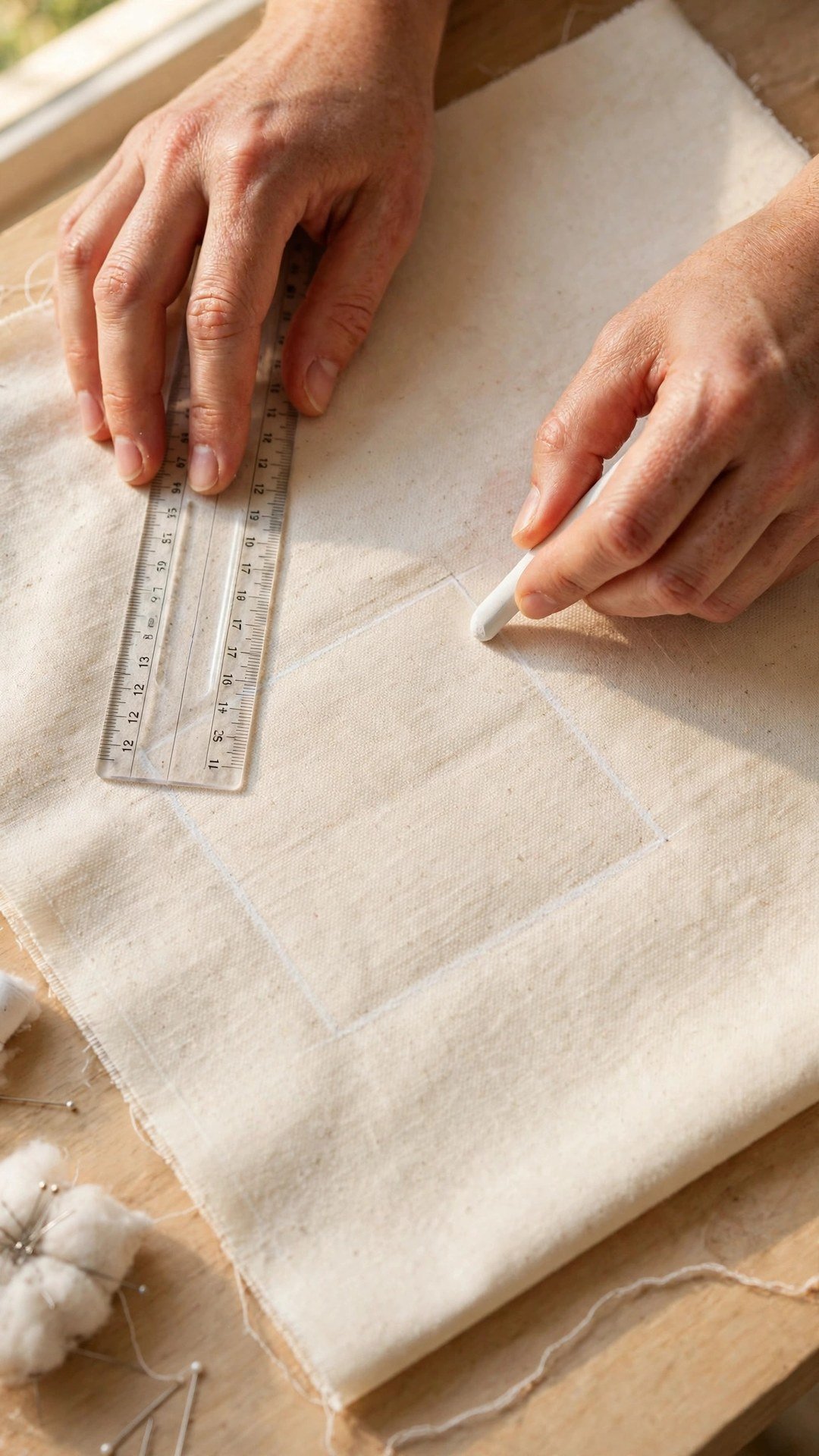
Cut a square that measures ten inches by ten inches, on grain, from the fabric you plan to use. Ten inches is a good size because the maths is easy: every tenth of an inch of shrinkage equals one percent. Mark the square clearly on the wrong side with a fabric marker, noting the grain direction with an arrow so you know which measurement is length and which is width. Finish the raw edges with a zigzag stitch or a serged edge, so fraying does not confuse your measurements.
Wash the square exactly as you will wash the finished garment. Same water temperature, same detergent, same cycle. If the garment will be tumble dried, tumble dry the square. If it will be line dried, line dry the square. This matching matters more than anything else in the test, because a fabric washed in cold water and line dried will shrink far less than the same fabric washed hot and tumble dried. You are testing the real conditions, not the gentle ones.
Let the square cool and rest flat for a few hours, then press it lightly and measure it again in both directions. Write both measurements down. A square that measures nine and a half inches in length has shrunk five percent in length. A square that measures nine and three quarter inches in width has shrunk two and a half percent in width. Those two numbers are your shrinkage rates, and they are specific to that fabric and that wash routine.

What the Numbers Mean for Your Yardage
Once you know the shrinkage rate, you can buy the right amount of fabric. The simple rule is to add the shrinkage percentage to your yardage, plus a little extra for safety. If your pattern needs two yards and your fabric shrinks five percent, buy at least two yards plus four inches, and in practice I would buy two and a quarter yards.
If the fabric shrinks more than five percent, always prewash the full length before cutting, and buy extra. A linen that shrinks eight percent will lose nearly three inches per yard, which is enough to ruin a pattern layout if you cut first. For a fabric that shrinks more than ten percent, like some rayons, I prewash twice, because the second wash often removes a little more shrinkage, and I buy generously. My guide to how to calculate fabric yardage shows you how to work out yardage for common projects before you add the shrinkage allowance.
Keep a notebook or a simple note on your phone with the shrinkage rate for each fabric in your stash. Write the fabric name, the shop, the wash routine, and the two percentages. I keep a small swatch stapled to each note, so I can feel the fabric again and remember what it became after washing.
Shrinkage Rates for Common Fabrics
Cotton is the most predictable fabric in my stash. Quilting cotton and cotton poplin usually shrink three to five percent on the first wash, mostly in the length. Cotton canvas shrinks a little less, because the tight weave holds its shape. After one wash and dry, most cottons are done shrinking, and a second cycle changes very little.
Linen shrinks more, often five to eight percent on the first wash, and it can keep shrinking a little on the second wash too. The good news is that linen gets softer and more beautiful with every wash, so the shrinkage is worth it. Always prewash linen, always buy extra, and never cut linen before washing unless you enjoy surprises.
Rayon and viscose are the wild cards. They can shrink ten percent or more, and they can also distort, growing in one direction while shrinking in the other. Test a square, wash it gently, and handle it with care. Wool shrinks by felting if it is agitated in hot water, which is a different problem entirely, so wash wool gently or dry clean it. For choosing between fabrics for a first project, see my guide to how to choose fabric for a beginner project, which covers which fabrics behave best for beginners.

When Shrinkage Surprises You
If your test square shrinks far more than expected, do not panic. First, check your wash routine. Did you use hotter water than you planned for the finished garment? Did you tumble dry on high when you meant to line dry? Re-test a fresh square with the gentler routine and see if the numbers improve. Sometimes the fix is as simple as washing cooler.
If the fabric still shrinks heavily, you have two honest choices. You can prewash the full length twice, buy extra yardage to cover the loss, and cut with confidence. Or you can choose a different fabric for the project and save this one for something less fitted, like a loose top or a cushion cover, where a little shrinkage will not matter. There is no shame in the second choice. A fabric that shrinks twelve percent is not a bad fabric, it is just a fabric that needs a different project.
The worst choice is to ignore the test and cut anyway. A fitted dress cut from untested rayon will not fit after its first wash, and no amount of pressing or easing will bring it back. The test square is your friend. Trust it, even when it tells you something you did not want to hear.
Frequently Asked Questions
How big should a shrinkage test square be?
Ten inches by ten inches is ideal, because the maths is easy. Every tenth of an inch lost equals one percent of shrinkage. Finish the raw edges so fraying does not affect your measurements, and mark the grain direction on the wrong side.
Do I need to test every fabric I buy?
Yes, if the finished item will be washed and fit matters. Two fabrics that look identical can shrink differently. The test takes ten minutes and it is the only way to know for certain what a specific fabric will do.
Does prewashing remove all shrinkage?
One full wash and dry cycle removes the vast majority of shrinkage in cotton and linen. Rayon and loosely woven fabrics may shrink a little more on a second wash.
Can I skip the test if the label says pre-shrunk?
I still test. Pre-shrunk means the fabric was treated at the mill to reduce shrinkage, not that it will not shrink at all. A quick test square will confirm whether the label is telling the truth for your wash routine.
What if my fabric shrinks unevenly?
Press it back into shape while it is damp, pulling the corners gently on the diagonal until the grain runs square. Then prewash the full length and press it flat before cutting. If it will not press square, use it for a project where grain matters less.
A ten inch square, a wash, and a ruler. That is all it takes to know your fabric before it knows your garment. Test first, buy a little extra, prewash with confidence, and cut knowing the size you cut is the size you will keep.
Written by June Carter
I am June, a sewing enthusiast who loves turning simple fabric into things people actually use. I test every technique and product I write about at my own machine before it lands here.