
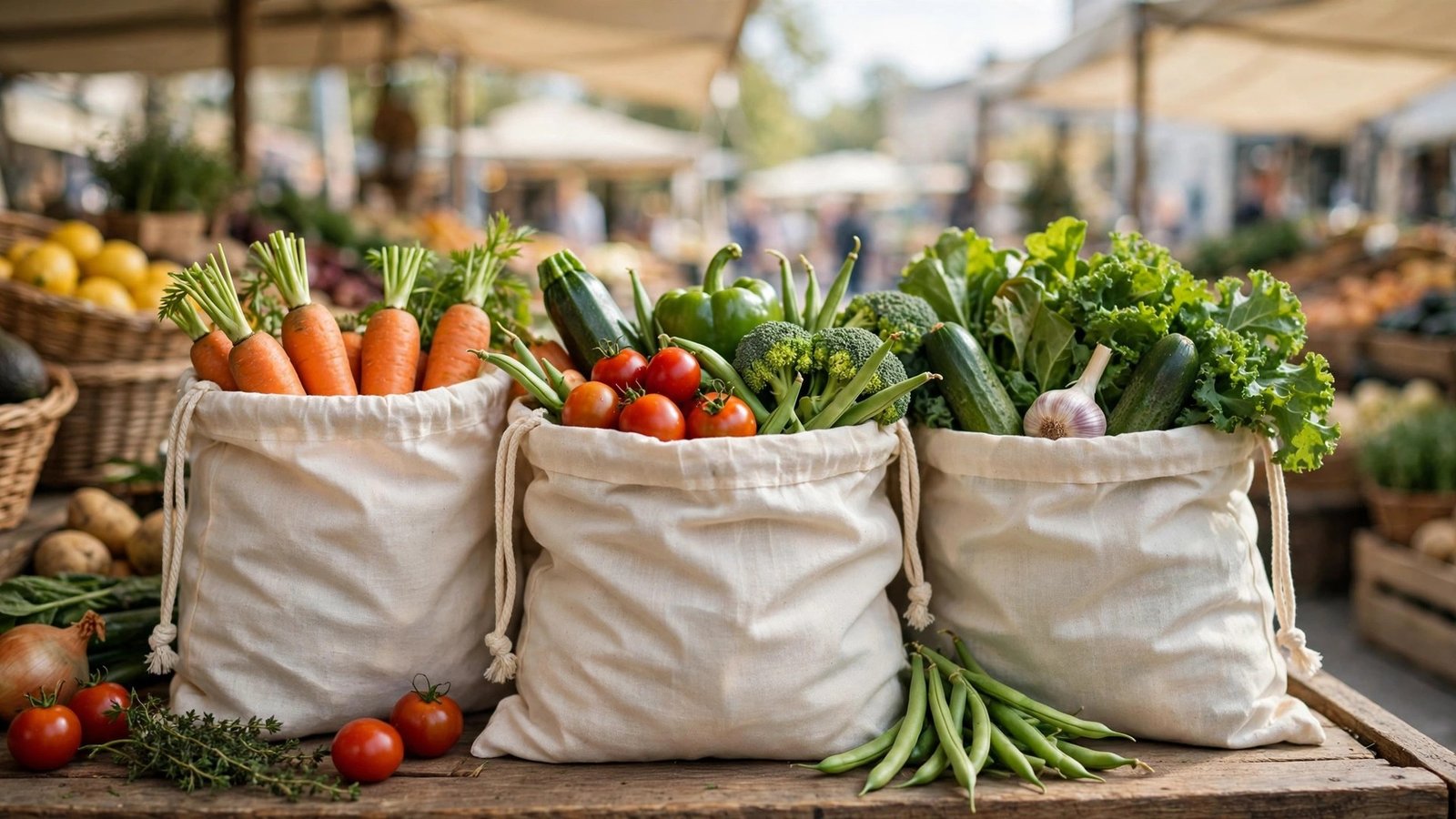
If you are learning how to sew reusable produce bags, you are making one of the easiest and most useful sewing projects there is. A produce bag is a simple drawstring bag made from lightweight, washable fabric, used instead of a single use plastic bag for fruit and vegetables. It is quick to sew, it uses a small amount of fabric, and you will use it every week.
I keep a set of these bags by my front door, in different sizes, and I take them to the market every week. They wash well, they dry fast, and they make shopping feel a little more thoughtful. In this guide I will show you how to choose fabric, sew a simple drawstring bag, and finish it so it lasts for years.
How to Sew Reusable Produce Bags Step by Step
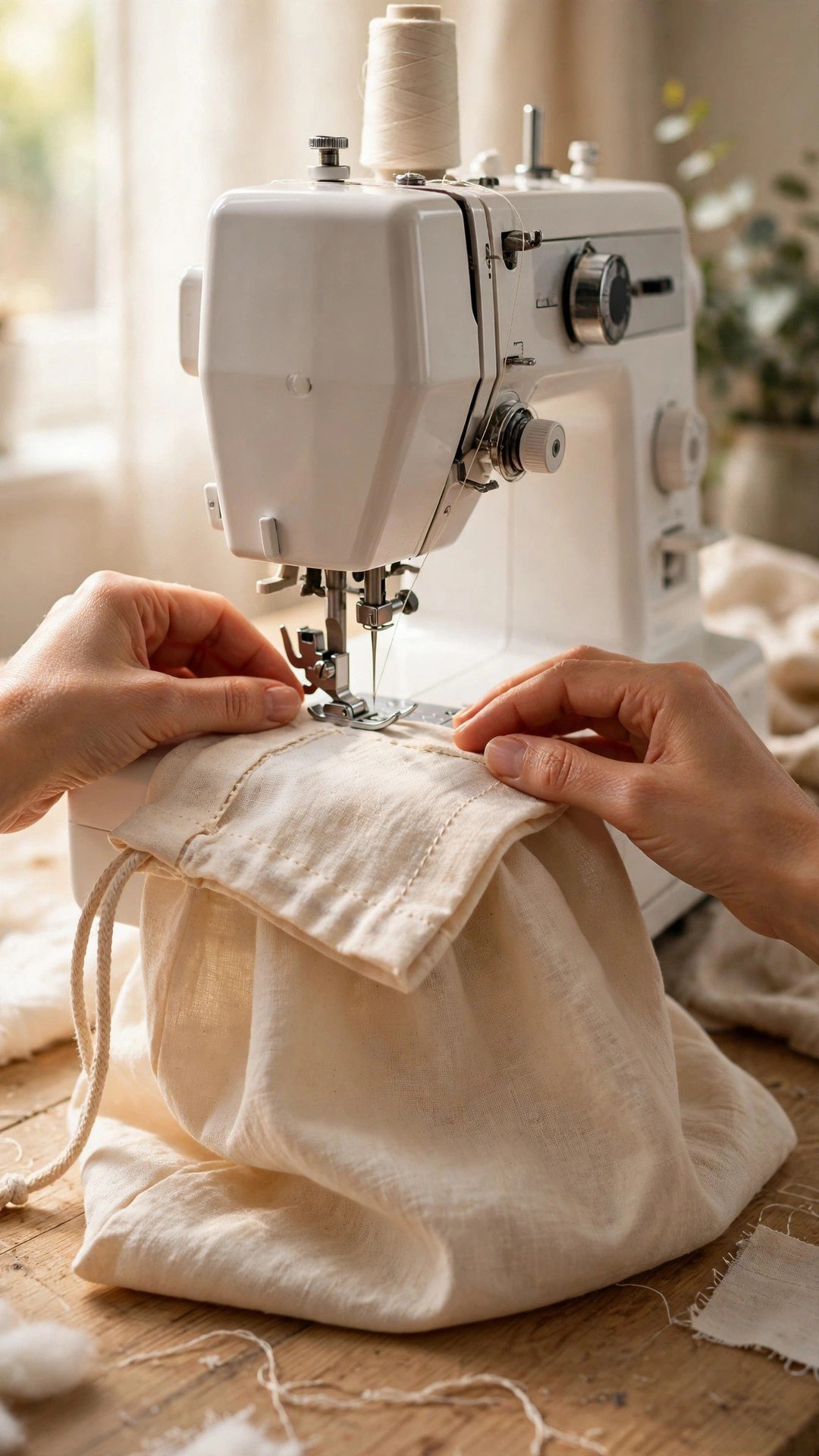
Start by cutting two rectangles of fabric, each about twelve inches wide by fourteen inches tall for a medium bag. Place them right sides together, and sew the side and bottom edges with a half inch seam allowance, leaving the top open. Finish the raw edges with a zigzag stitch or a French seam, so the bag survives many washes without fraying. Turn the bag right side out and press it flat.
For the drawstring casing, fold the top edge down by a quarter inch and press it, then fold it down again by one inch and press it. Stitch close to the lower folded edge, leaving a small gap of about one inch unstitched at the back, so you can thread the drawstring through. Thread a cord or a ribbon through the casing with a safety pin, pull it through, tie the ends together, and your bag is ready to use.
Choosing Fabric for Reusable Produce Bags
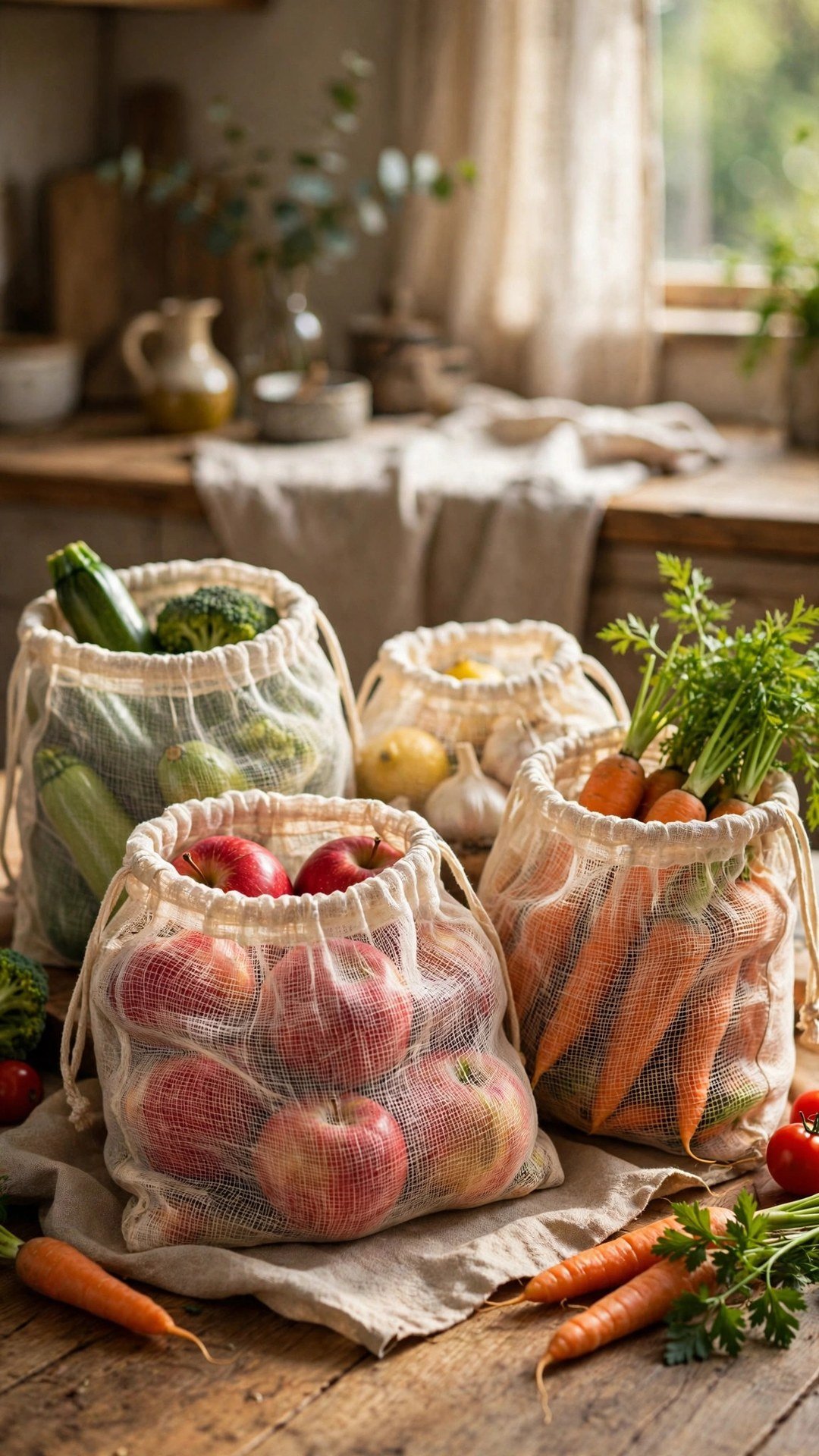
The best fabric for a produce bag is lightweight, washable, and breathable, so fruit and vegetables stay fresh. Cotton muslin, lightweight cotton, and mesh fabric are all good choices. Muslin is my favourite, because it is soft, it washes well, and you can see what is inside the bag. A lightweight cotton with a small print is also lovely, and it makes the bags easy to tell apart.
Avoid heavy fabric, because it adds weight and bulk, and avoid fabric that cannot be washed, because produce bags need washing often. If you want a bag for heavier items such as potatoes, choose a slightly stronger cotton canvas, but keep it light enough to fold small. For a mesh bag, use a fine mesh that lets air through but keeps small items inside. My guide to how to prewash cotton and linen shows how to prepare the fabric before you cut.
Sizing Your Produce Bags for Different Foods
One size does not fit all produce, so I make my bags in three sizes. A small bag, about eight inches wide by ten inches tall, is perfect for herbs, garlic, and a few lemons. A medium bag, about twelve inches wide by fourteen inches tall, holds leafy greens, apples, and carrots. A large bag, about fourteen inches wide by eighteen inches tall, holds a whole cabbage, a bag of potatoes, or a loaf of bread.
Label each size with a small tag or a different fabric print, so you can grab the right bag quickly at the market. A colour coded system works well: a light print for small items, a medium print for everyday produce, and a strong solid for heavy items. Sew a set of six bags, two of each size, and you will have enough for a full weekly shop without running out.
Finishing Seams So Produce Bags Last
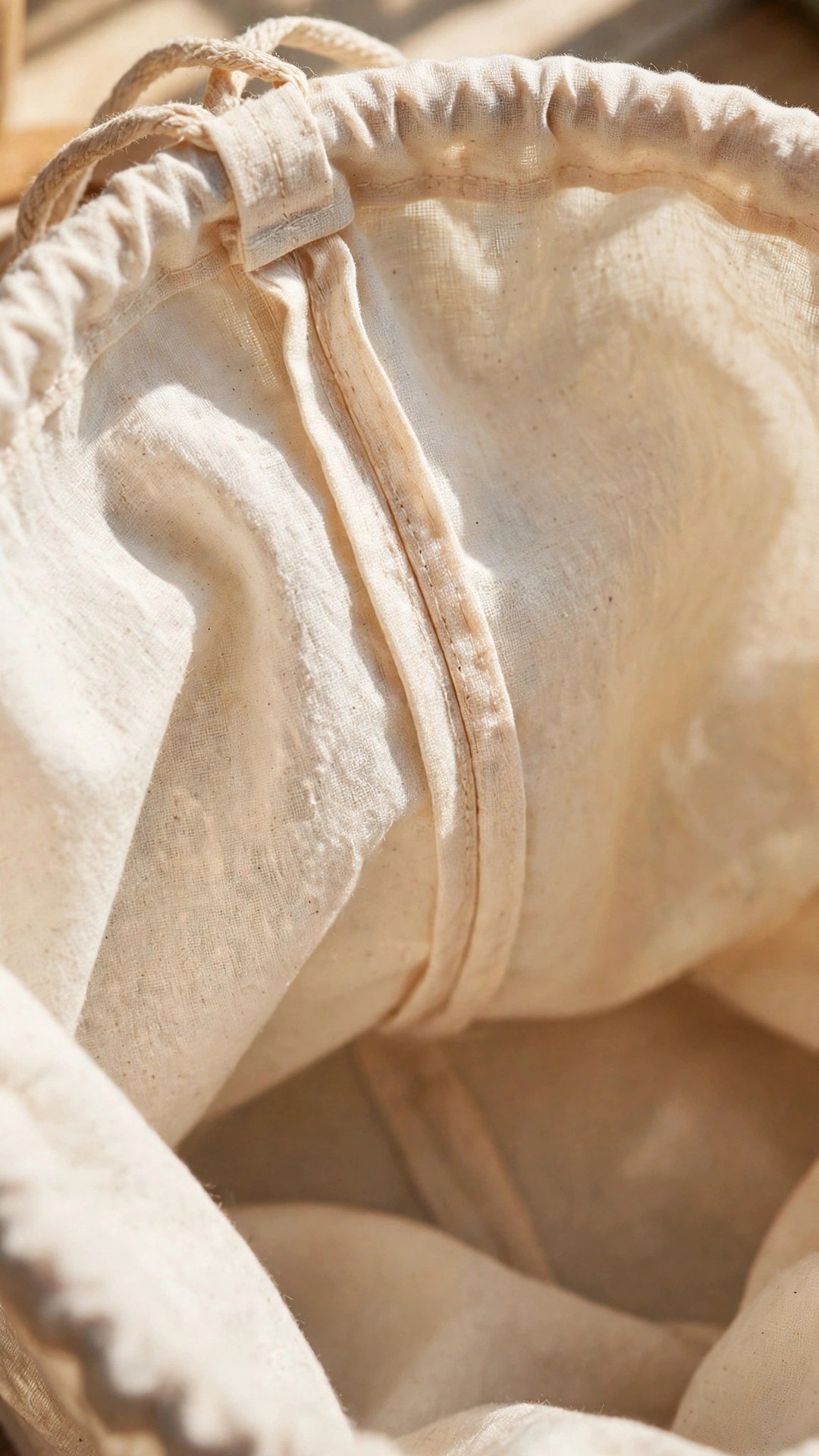
Produce bags are washed often, so the seams need to be strong. A French seam is my favourite finish here, because it encloses the raw edges completely and looks neat inside and out. To sew a French seam, sew the side and bottom edges wrong sides together first with a narrow seam, trim it, turn the bag, press it, then sew again with right sides together to enclose the first seam. It takes a little longer, but the bag will last much longer.
If you prefer a simpler finish, use a zigzag stitch along the raw edges, or sew with a serger if you have one. Either way, backstitch at the start and end of every seam, because the bag will be pulled and tugged as you fill it. My guide to how to finish raw edges compares the main finishes, and my tutorial on how to sew a drawstring backpack uses the same casing technique on a larger scale.
Caring for and Using Your Produce Bags
Wash your produce bags in warm water with a mild detergent, and let them dry fully before you fold them away. A damp bag folded into a drawer will smell musty, so hang them on a hook or a rail to dry. If a bag gets stained by beetroot or berries, soak it in warm water before washing, and most marks will lift. Keep a set of clean bags by the door, so you remember to take them when you go out.
Use the bags for more than produce if you like. They are handy for storing onions and garlic at home, for carrying small items on a trip, and for keeping craft supplies sorted. A drawstring bag is one of the most versatile things you can sew, and once you have made a set for the market, you will start making them for everything else too. That is the sign of a good beginner project: it teaches a skill you will use again and again.
Frequently Asked Questions
What is the best fabric for reusable produce bags?
Lightweight, washable, breathable fabric such as cotton muslin, lightweight cotton, or fine mesh is best. Muslin is my favourite, because it washes well, dries fast, and lets you see what is inside the bag.
How big should a reusable produce bag be?
Make three sizes: small, about eight by ten inches, for herbs and garlic, medium, about twelve by fourteen inches, for everyday produce, and large, about fourteen by eighteen inches, for potatoes, cabbage, and bread.
How do I wash reusable produce bags?
Wash them in warm water with a mild detergent, and let them dry fully before folding them away. Soak stained bags in warm water before washing, and hang them to dry so they do not smell musty.
Can I use a serger for produce bags?
Yes. A serged edge is a strong, neat finish for produce bags, and it survives many washes. A French seam is also excellent, because it encloses the raw edges completely.
Sew a Set, Then Take Them to Market
Reusable produce bags are a quick, useful project that teaches measuring, straight seams, and a drawstring casing. Choose a light, washable fabric, sew a set in three sizes, and finish the seams well. Take them to the market this week, and enjoy using something you made yourself. Sew an extra set for a friend too, because a handmade bag is a lovely gift that gets used every single week. It is a small gift with a big, practical payoff, and one your friend will truly appreciate.
Written by June Carter
I am June, a sewing enthusiast who loves turning simple fabric into things people actually use. I test every technique and product I write about at my own machine before it lands here.