

Learning how to sew a laundry bag is a quick project with a daily payoff. A laundry bag holds a full load of clothes, closes with a drawstring so nothing spills, and hangs on a hook or sits in a basket. It beats a plastic bag in every way, and it looks far better than a pile of clothes on the floor.
I sewed my first laundry bag for a small flat with no laundry room, where the bag lived on the back of the bedroom door. It held a whole wash, it kept the room tidy, and it survived years of weekly washing because the fabric and the drawstring were chosen well. That is the standard this guide aims for.
In this guide I will show you how to choose fabric, sew the bag, add a drawstring casing, and give it a flat bottom so it stands up. If you like drawstring sewing, my guide to how to sew a drawstring backpack uses the same casing technique on a smaller scale.
Choosing Fabric for a Laundry Bag
Choose a sturdy, washable fabric for a laundry bag, because it will be washed as often as the clothes inside it. Medium weight cotton, canvas, or a cotton linen blend all work well. The fabric needs to be strong enough to hold a full load without tearing at the seams, and it needs to survive the washing machine.
Avoid very lightweight fabric, which can rip under a heavy load, and avoid fabric that cannot be washed, because a laundry bag that cannot be washed defeats its own purpose. A fun print makes the bag look cheerful hanging on a door, so choose something you enjoy seeing every day.
For the drawstring, use cotton cord, twill tape, or a fabric tube made from the same fabric as the bag. The drawstring needs to be strong and smooth enough to slide through the casing easily. Avoid ribbon, which frays and tangles, and avoid elastic, which does not close a heavy bag well.
Cutting and Sizing the Bag
A good laundry bag size is about fifty centimetres wide by seventy centimetres tall, which holds a full machine load. Cut two rectangles of fabric to that size, plus seam allowances, and cut a matching lining if you want the bag to be reversible or extra sturdy. A single layer bag is fine for most uses.
If you want the bag to stand up on its own, plan a boxed bottom. This means the bottom corners are sewn across to create a flat base, just like a tote bag. A boxed bottom of about ten centimetres across gives the bag a stable base that sits flat in a basket or on the floor.
Mark the top of the bag where the drawstring casing will go, usually about four centimetres below the top edge. Mark the side seam lines clearly, and if your fabric has a directional print, check that the print runs the right way up on both pieces.
Sewing the Bag Body
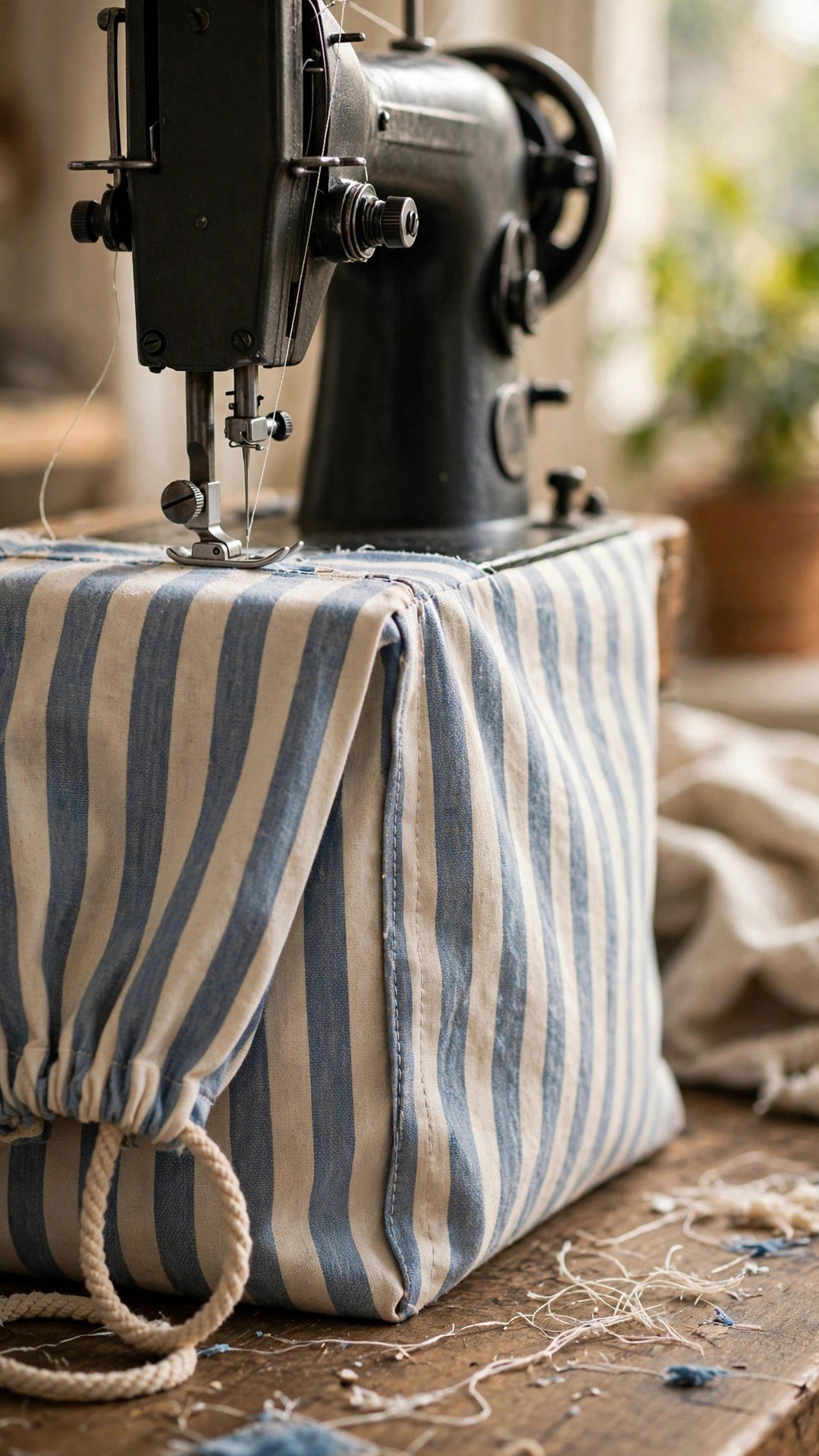
Place the two fabric pieces right sides together and stitch the side seams and the bottom seam, using a seam allowance of about one and a half centimetres. Finish the raw edges with a zigzag stitch or an overlock stitch, because the inside of a laundry bag gets a lot of handling and the seams need to be strong.
Press the side seams open and the bottom seam open, then turn the bag right side out and check that the seams lie flat. If you are boxing the bottom, do it now: pinch each bottom corner flat, measure across, and stitch straight across the triangle. This creates the flat base that lets the bag stand up.
French seams are a lovely option for a laundry bag, because they enclose the raw edges completely and the inside of the bag looks as neat as the outside. They take a little longer, but for a bag that gets washed weekly, the extra durability is worth it.
How to Sew a Laundry Bag Drawstring Casing
Fold the top edge of the bag down by about one centimetre and press it, then fold it down again by about three centimetres to form the casing and press again. Stitch close to the lower fold, leaving a gap of a few centimetres in the stitching where the drawstring will enter.
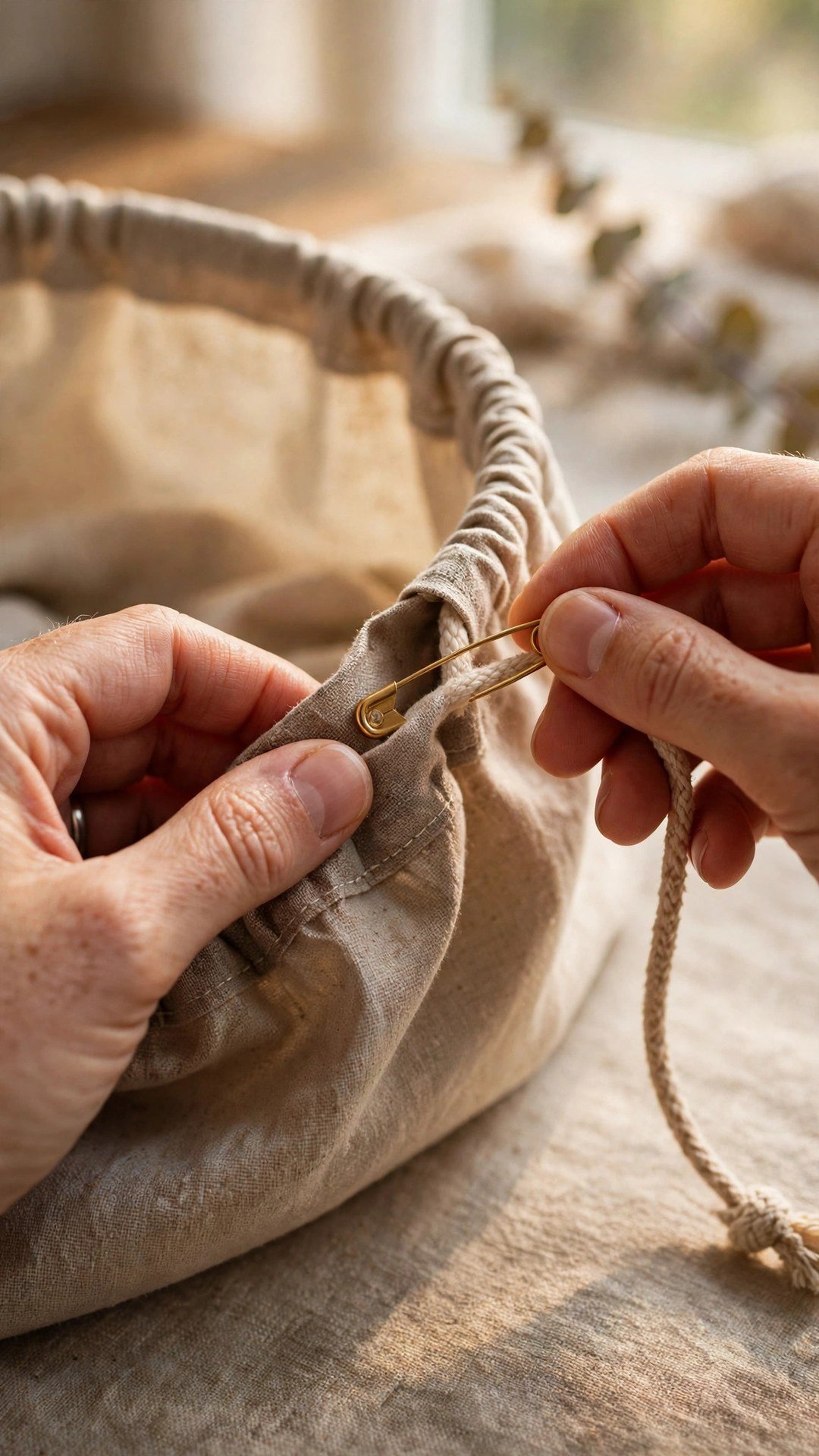
Cut the drawstring to about twice the width of the bag plus extra for tying. Thread it through the casing using a safety pin or a bodkin, feeding it in through the gap and all the way around until it comes out again. Tie the two ends together in a knot, or add cord ends for a tidy finish.
Close the gap in the casing with a few hand stitches, or stitch it closed by machine if you can do it without catching the drawstring. Pull the drawstring to close the bag and check that it slides smoothly. If it catches, the casing may be too narrow, and you can open the stitching and widen it slightly.
Using and Caring for Your Laundry Bag
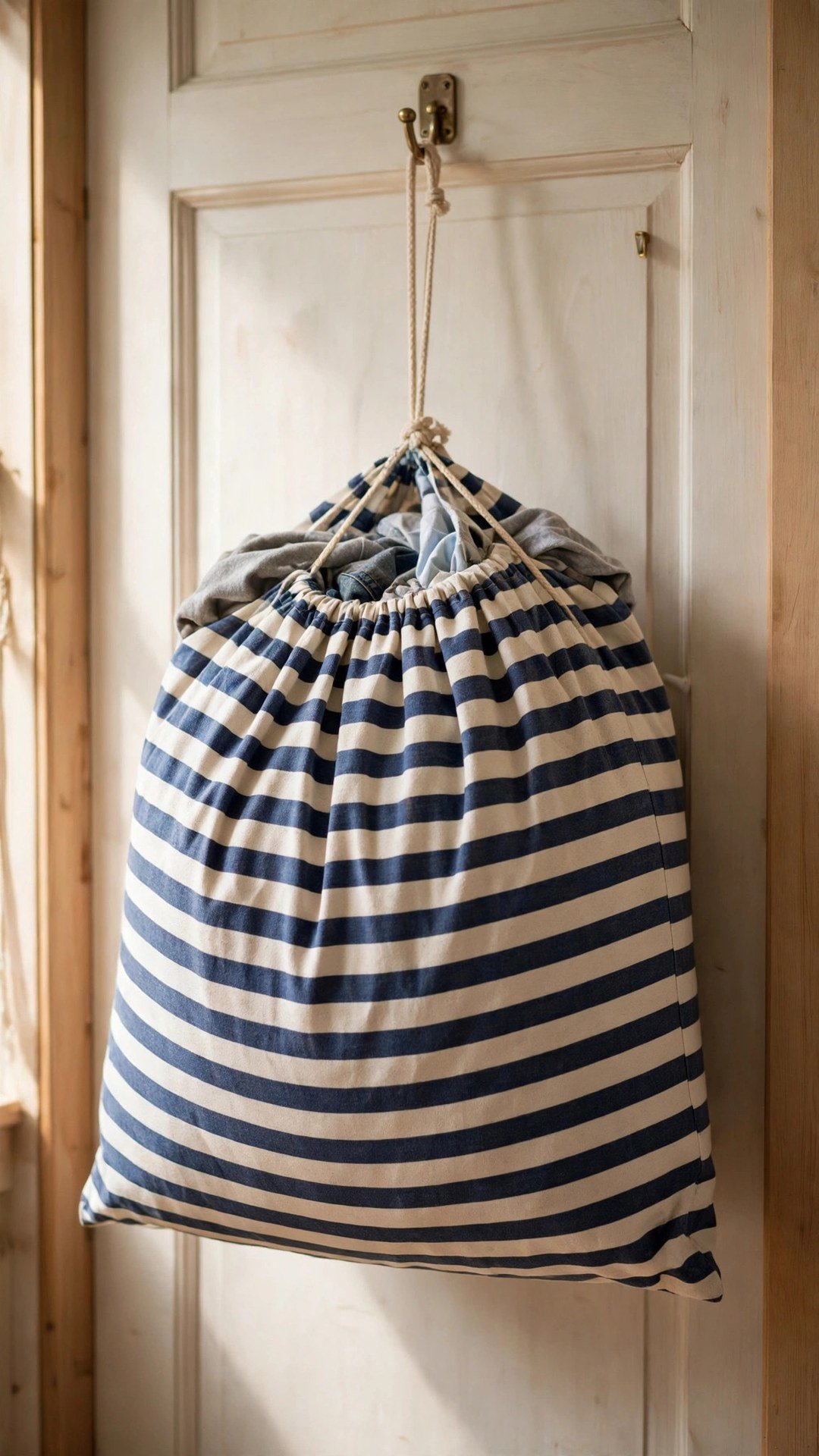
Hang the laundry bag on a hook behind a door or on the side of a wardrobe, where it is easy to drop clothes in. Fill it through the week and carry it to the machine by the drawstring, which doubles as a handle when the bag is closed. The drawstring closure keeps clothes contained in transit, which is half the point of the bag.
Wash the bag with the laundry inside it if you like, or empty it and wash it separately. Turn it inside out before washing so the inside gets clean, and air dry it so the drawstring does not shrink in the dryer. A cotton bag will soften with every wash and last for years.
Make a second bag if you sort laundry by colour or by person. Two bags on two hooks make sorting automatic, and they take up no floor space at all. My guide to how to prewash cotton and linen is worth reading before you cut, because prewashed fabric will not shrink after the bag is made.
Frequently Asked Questions
What size should a laundry bag be?
About fifty centimetres wide by seventy centimetres tall holds a full machine load. Adjust the size to fit your space and your washing habits.
What fabric is best for a laundry bag?
Sturdy washable cotton, canvas, or a cotton linen blend. It needs to hold a heavy load and survive weekly washing.
How do I make a laundry bag stand up?
Box the bottom corners by stitching across each corner to create a flat base. A boxed bottom of about ten centimetres works well.
What should I use for the drawstring?
Cotton cord, twill tape, or a fabric tube. Avoid ribbon, which frays, and elastic, which does not close a heavy bag well.
Can I wash the laundry bag with the clothes inside?
Yes. Turn the bag inside out first so the inside gets clean, and air dry it so the drawstring does not shrink.
A Bag That Makes Laundry Easier
A laundry bag is a simple rectangle with a drawstring, and it makes the weekly wash noticeably easier. Choose washable fabric, sew strong seams, box the bottom so it stands, and thread a smooth drawstring. Hang it on a hook, fill it all week, and carry it to the machine by the cord. Small project, daily reward.
Written by June Carter
I am June, a sewing enthusiast who loves turning simple fabric into things people actually use. I test every technique and product I write about at my own machine before it lands here.