

If you want to know how to sew thick layers without breaking needles, the short answer is that needle breakage is rarely about strength. It is about the needle hitting something it cannot pierce, bending as the fabric shifts, or being forced through a bulk it was never meant to cross. Change the needle, slow down, and level the foot, and thick layers become manageable instead of frightening.
I have broken needles on denim hems, canvas bags, and quilt bindings, and each break taught me something. A broken needle is a warning, not a failure. It tells you the needle was too fine, the layers shifted, or the foot was tilted on a thick seam. Listen to that warning, and the next needle will last.
In this guide I will show you which needle and thread to use for thick layers, how to prepare bulky seams, and how to sew slowly and levelly through them. My guide to best sewing machine for denim and thick fabric covers machine choice, and this one covers technique.
Why Needles Break on Thick Layers
A needle breaks when it bends and then snaps, and it bends for a few clear reasons. The most common is that the needle hits a thick seam, a pin, or a dense fold at an angle, and the fabric pushes it sideways as it tries to pierce. A fine needle bends more easily than a heavy one, which is why needle size matters so much on thick fabric.
Another cause is pulling the fabric while you sew. If you tug the layers forward to help them feed, you bend the needle with every stitch. The feed dogs should move the fabric, not your hands. Your hands guide, they do not pull. Pulling is the fastest way to snap a needle, especially on denim and canvas.
A third cause is a tilted presser foot. When the foot sits on a thick seam on one side and thin fabric on the other, it tilts, and the needle strikes the foot or the throat plate at an angle. Levelling the foot, which I explain below, fixes this. A broken needle is usually a sign of one of these three causes, not a faulty machine.

Choose the Right Needle and Thread
For thick layers, use a heavy needle: a size 16 or 18 universal or jeans needle for denim, and a size 16 or 18 for canvas and multiple layers of cotton. A jeans needle has a reinforced shaft and a sharp point that pierces dense fabric cleanly. A universal needle in a heavy size also works well for general thick sewing.
Match the thread to the needle and the fabric. A heavier thread, such as a topstitching thread or a strong polyester thread, suits thick layers, but it needs a needle with a large enough eye. If the thread is too thick for the needle eye, it will fray and break. Test the combination on a scrap before you sew the real seam.
Change the needle often when you sew thick fabric. A needle dulls faster on denim and canvas than on light cotton, and a dull needle pushes fabric instead of piercing it. If you hear a thud with each stitch, or the stitches start to skip, change the needle. My guide to how to choose denim needles explains needle sizes in more detail.
Prepare Thick Seams Before You Sew
Grade and trim bulky seams before you sew over them. Trim the seam allowances in layers, so they step down instead of stacking up in one thick lump. Clip curves and trim corners, and press the seam allowances open or to one side so they lie as flat as possible. Every bit of bulk you remove before sewing is bulk the needle does not have to cross.
Hammer thick seams flat with a tailor’s clapper or a rubber mallet, with a cloth between the hammer and the fabric. A few firm taps flatten denim seams and quilt bindings, and make them much easier to sew over. This old trick works wonders, and it is gentle on the fabric if you use a cloth.
Pin or clip the layers together carefully, and remove pins before the needle reaches them. Sewing over a pin is a classic way to break a needle, and it can also damage the machine. Use clips for thick layers, because pins can be hard to push through and hard to remove.
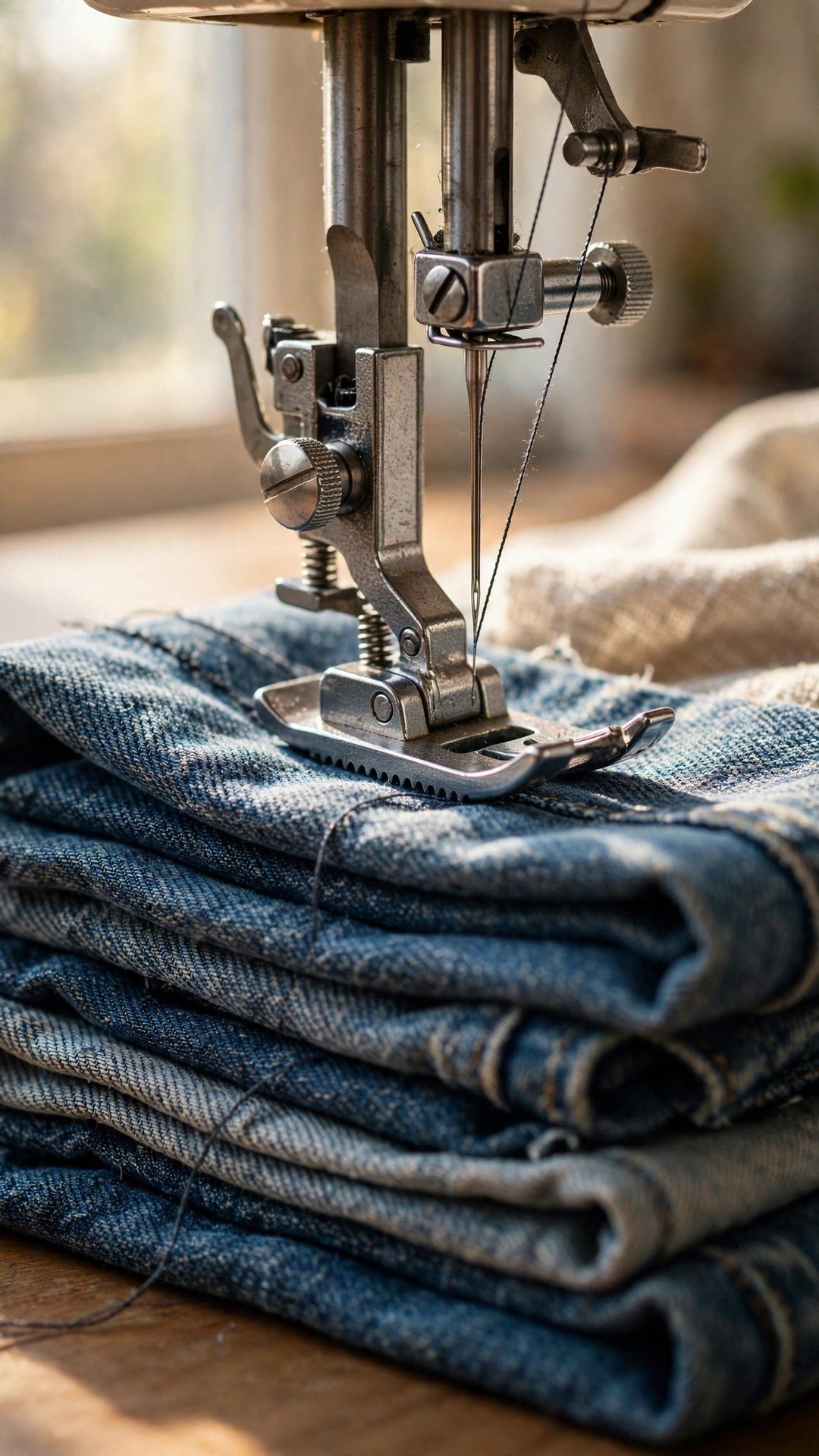
How to Sew Thick Layers Without Breaking Needles
Start by sewing slowly, with the handwheel if needed, over the thickest part. Turn the handwheel towards you by hand for the first few stitches over a bulky seam, so you can feel if the needle is struggling. If it resists, stop, check the layers, and level the foot before you continue.
Level the presser foot with a hump jumper, a folded scrap of fabric, or a small wedge placed behind the foot. This lifts the back of the foot to the same height as the front, so the foot sits level on the thick seam instead of tilting. A level foot feeds evenly, and the needle goes straight down instead of at an angle.
Use a walking foot for thick layers if you have one. It feeds the top layer along with the bottom layer, so the layers do not shift and push the needle sideways. Sew with a longer stitch length, usually three to three and a half millimetres, which suits thick fabric better than a short stitch. Keep your hands guiding, not pulling, and let the machine do the work.
Aftercare: Check Stitches and Needles
After sewing thick layers, check the stitches from the front and the back. They should be even, with no skipped stitches and no loops on the underside. If the stitches skip, change the needle, check the threading, and test again on a scrap. Skipped stitches on thick fabric often mean the needle is dull or the wrong size.
Check the needle itself after a thick project. Look at it under good light: is the point still sharp, is the shaft straight? Replace it if there is any doubt. A needle is cheap, and a fresh needle is the simplest insurance against the next break. I change my needle at the start of every thick project, without exception.
Clean the machine after sewing thick fabric, because denim and canvas shed lint and fibres that build up in the bobbin area. Brush out the lint, and oil the machine as your manual directs. A clean machine sews thick layers more smoothly, and it will thank you with fewer jams and fewer broken needles.

Frequently Asked Questions
What needle size should I use for thick layers?
Use a size 16 or 18 universal or jeans needle for denim, canvas, and multiple layers. A jeans needle has a reinforced shaft and a sharp point that pierces dense fabric cleanly.
Why do needles break on denim hems?
The needle hits a thick seam at an angle, bends as the fabric shifts, or is pulled sideways by tugging the fabric. Use a heavy needle, sew slowly, level the foot, and never pull the fabric.
What is a hump jumper?
A hump jumper is a small plastic tool, or a folded scrap of fabric, placed behind the presser foot to level it on a thick seam. It stops the foot tilting, so the needle goes straight down.
Should I use a walking foot for thick layers?
Yes, if you have one. A walking foot feeds the top and bottom layers together, so they do not shift and push the needle sideways. It makes thick sewing much smoother.
How do I sew over a thick seam safely?
Trim and grade the seam, hammer it flat, level the foot, sew slowly by handwheel over the thickest part, and use a heavy needle with a longer stitch length.
Slow Down, Level Up, Sew Through
Thick layers are not a fight, they are a test of preparation. Choose a heavy needle, match the thread, trim and flatten the bulk, level the foot, and sew slowly with your hands guiding, not pulling. Do that, and your needles will stay whole, your stitches will stay even, and thick fabric will stop feeling scary.
Written by June Carter
I am June, a sewing enthusiast who loves turning simple fabric into things people actually use. I test every technique and product I write about at my own machine before it lands here.