
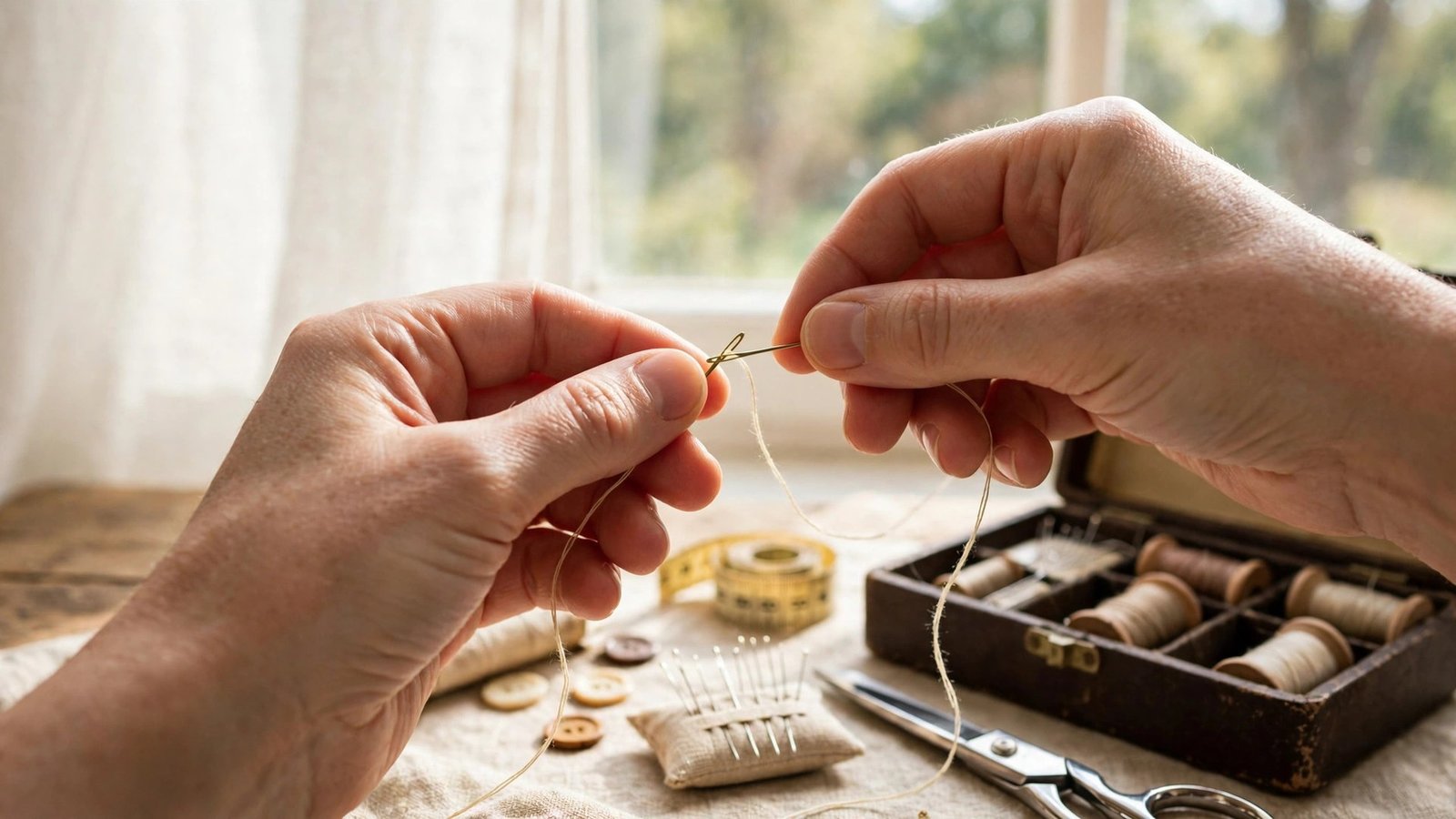
If you struggle with how to thread a hand sewing needle easily, you are not alone, and you are not doing anything wrong. Threading a needle is a small, fiddly job that frustrates almost every beginner, and it frustrates experienced sewists too when the light is poor or the thread is fuzzy. The good news is that it is a skill with a few simple tricks, and once you learn them, threading a needle becomes a ten second job instead of a five minute battle.
I spent my first year of sewing squinting at needle eyes, wetting thread ends, and wondering why everyone else made it look easy. Then a teacher showed me the fold and press trick, and everything changed. In this guide I will show you that trick, plus the needle threader, the white card method, and the right way to choose a needle and thread that actually fit each other. If you are just starting out with hand sewing, my guide to how to start sewing from zero will help you put the whole kit together.
Before we start, check your light. Most threading trouble is really a lighting problem. Sit near a window in daylight, or switch on a bright lamp behind your shoulder, and the needle eye will suddenly look twice as big. A magnifier helps too, and there is no shame in using one. Good light and a sharp needle are worth more than any amount of squinting.
How to Thread a Hand Sewing Needle Easily: The Fold and Press Trick
The fold and press trick is my favourite method, and it works with almost any needle and thread. Cut the thread end cleanly with sharp scissors, because a frayed end will never go through a small eye. Then fold the very tip of the thread back on itself for about half an inch, and pinch the fold flat between your thumb and forefinger, pressing it hard so the thread holds a sharp crease. Now, instead of pushing the loose end through the eye, push the folded crease through. The fold is stiff, it holds its shape, and it slides through the eye far more easily than a soft, floppy thread end.
Once the loop of folded thread is through the eye, pull it through until the loop is a couple of inches long, then slip the needle through the loop and pull the thread all the way through to straighten it. Or, if you prefer, just pull the fold through and let the thread follow. Either way, the trick is the same: a stiff, pressed fold behaves like a tiny wire, while a loose thread end behaves like a wet noodle. Try it three or four times and you will feel the difference immediately. If your thread still will not cooperate, check that the needle eye is not too small for the thread, because that mismatch is the most common cause of threading trouble, and my guide to how to choose a sewing machine needle explains needle sizes, which also apply to hand needles.
Needle Threaders and Other Helpers
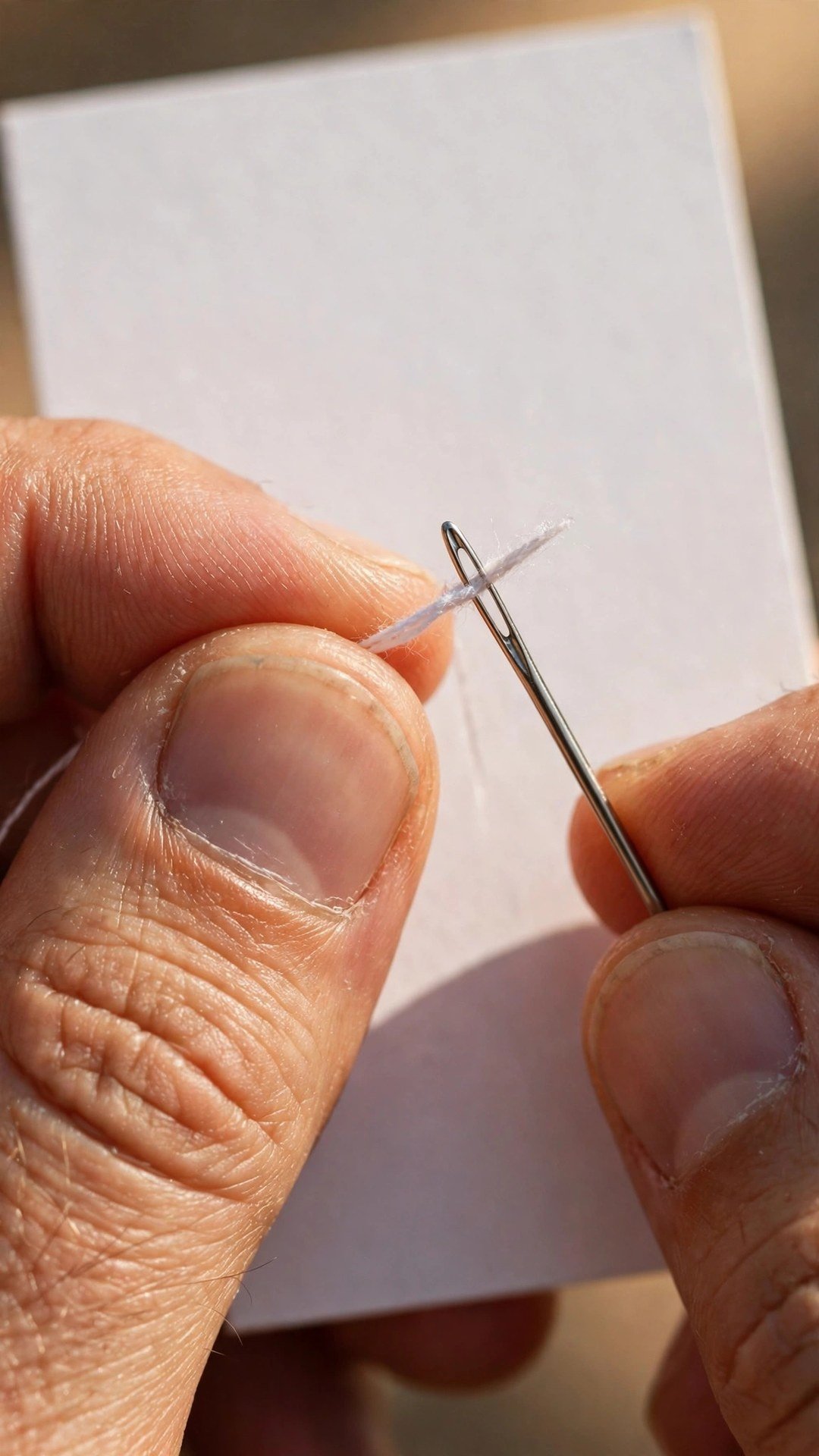
A needle threader is a tiny, cheap tool that does the fiddly work for you, and every beginner should own one. The classic wire threader is a thin loop of wire on a small metal handle. You push the wire loop through the needle eye, pass the thread through the loop, and pull the threader back out, bringing the thread with it. It takes a few seconds, it works with even the smallest eyes, and it costs almost nothing. Keep one in your sewing kit and one in your travel kit, because they are easy to lose and hard to live without once you are used to them.
There are other helpers too. A self threading needle has a tiny slot at the top of the eye, so you lay the thread across the slot and pull it down into the eye. It is a little slower to sew with, but it is a wonderful option if your eyesight or your hands make ordinary threading hard. A magnifying lamp, a white card held behind the needle, and a drop of beeswax on the thread end all help in their own way. The white card is my favourite free trick: hold a plain white card behind the needle, and the dark eye stands out clearly against it. Try a few helpers and keep the ones that suit your hands and your eyes.
Choosing a Needle and Thread That Fit
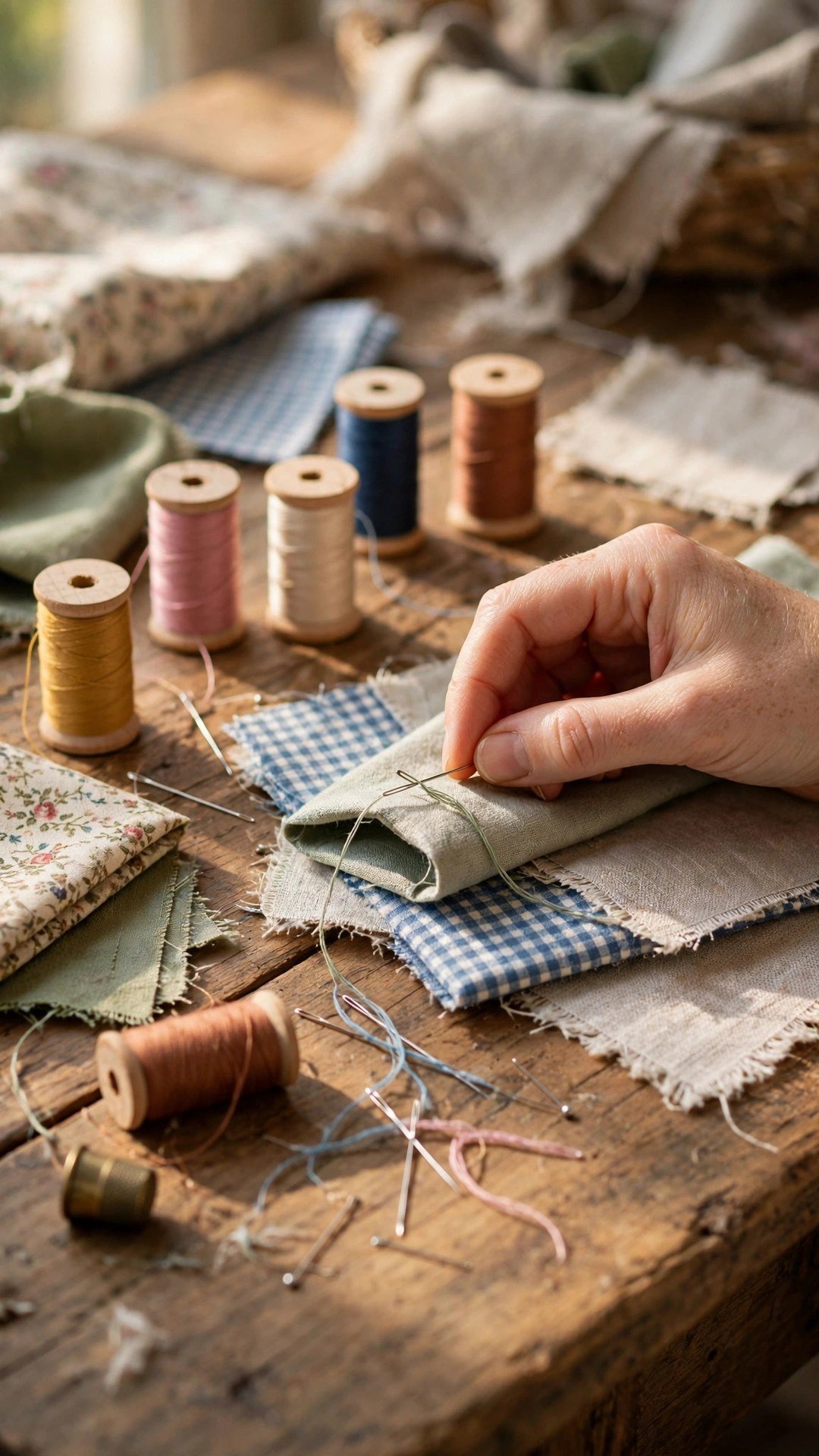
Threading trouble often starts before you pick up the needle, with a needle and thread that do not match. A thick thread will not fit through a fine needle eye, no matter how clever your technique is, and a very fine thread in a large needle eye will slip and tangle while you sew. As a rule, the thread should pass through the eye with a little room to spare, but not so much room that it rattles around. If you have to force the thread, the needle is too small or the thread is too thick. Switch one of them and try again.
For general hand sewing, a medium sharp needle and a standard polyester or cotton thread are a good starting pair. Use a shorter length of thread, about eighteen inches, because long thread twists and knots as you sew, and it tangles while you thread too. Cut the thread at an angle with sharp scissors to get a clean, pointed end, and if the end still frays, run it through a little beeswax or press it between your fingers to stiffen it. Choosing the right thread for the fabric matters as well, and my guide to how to match thread to fabric will help you pair them well.
Mistakes That Make Threading Harder
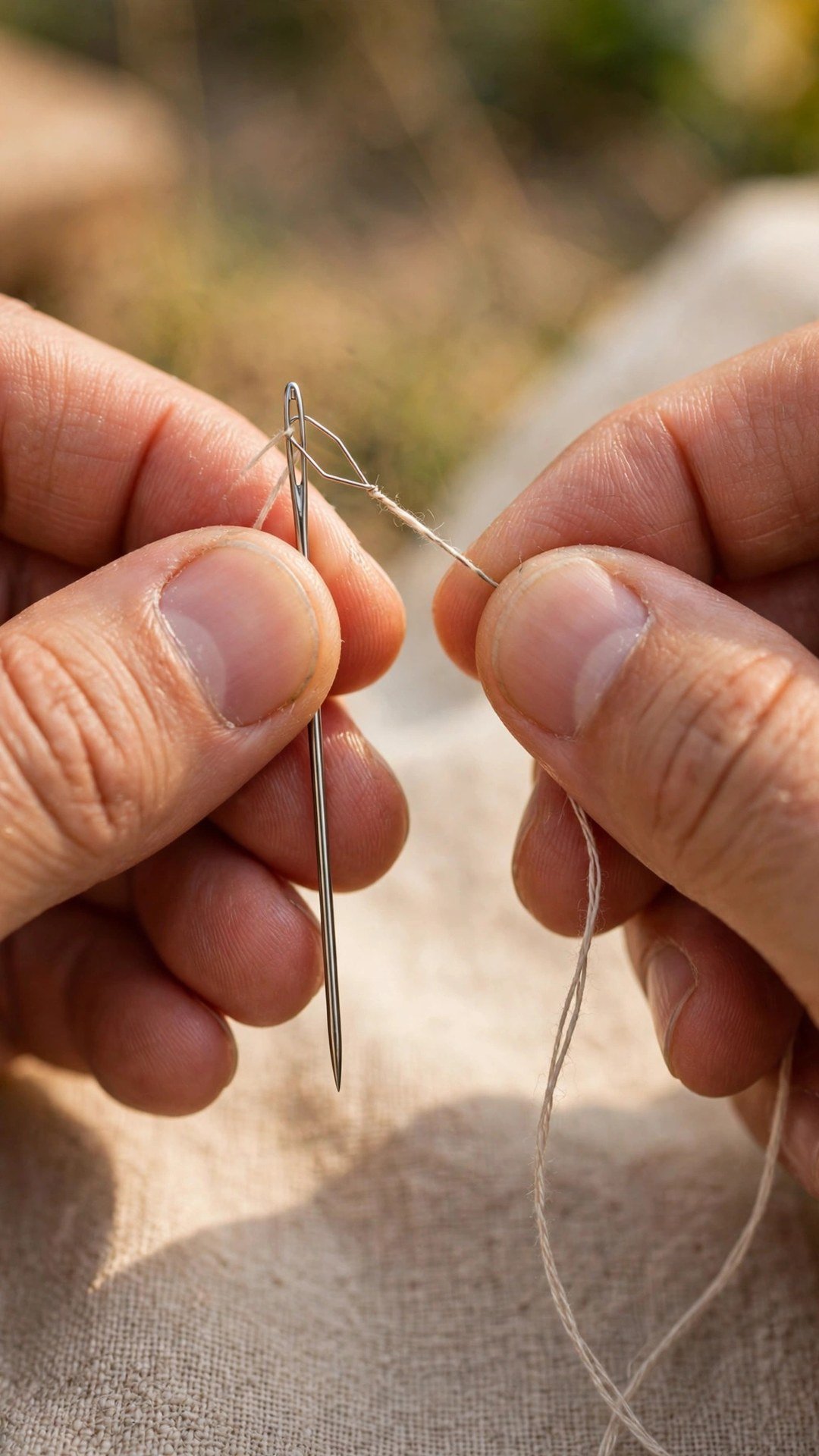
The most common mistake is wetting the thread end with your mouth. It feels like it should help, but saliva makes the fibres swell and stick together, and the end goes soft and fuzzy instead of stiff and pointed. A clean cut with sharp scissors is far better. The second mistake is using thread straight off a tangled spool, with a kinked or frayed end. Always cut a fresh end, and if the thread has been sitting in the kit for a while, cut off the first inch and start again.
The third mistake is threading in poor light, or with the needle held against a busy background where the eye disappears. Move to a window, hold a white card behind the needle, and give your eyes a fair chance. And the fourth mistake is rushing. Threading a needle is a slow, deliberate movement, and trying to hurry it is what sends the thread past the eye for the fifth time. Pause, breathe, fold the thread, press it flat, and push the fold through. It will go, and the next time it will go faster. If you are moving on to machine sewing after this, how to thread a sewing machine walks through that threading path step by step.
Frequently Asked Questions
What is the easiest way to thread a hand sewing needle?
Fold the thread tip back on itself, press the fold flat, and push the stiff fold through the eye instead of the loose end. It is the simplest trick there is, and it works with almost every needle and thread.
Do needle threaders work with all needles?
Wire threaders work with most hand needles, but very fine needles with tiny eyes can be tricky. Try a threader made for fine needles, or use a self threading needle, which has a slot at the top of the eye.
Why does my thread keep fraying at the end?
The thread end is probably old, kinked, or cut with blunt scissors. Cut a fresh end with sharp scissors at an angle, and if it still frays, run it through beeswax to stiffen the fibres.
How long should my hand sewing thread be?
About eighteen inches is ideal. Longer thread tangles and knots while you sew, and shorter thread means rethreading constantly. Eighteen inches is the sweet spot for most hand sewing.
Can I thread a needle without glasses?
Yes, with good light, a white card behind the needle, and a needle threader. A magnifying lamp helps a lot too. Choose a needle with a larger eye if threading is still hard, and use a contrasting thread color so you can see it clearly.
Thread It Once, Then Just Sew
Threading a needle should be the smallest part of your sewing, not the hardest. Cut a clean end, fold it and press it flat, use good light, and keep a threader in your kit. Once the thread is through, the real pleasure begins, and that first stitch will feel all the sweeter for it.
Written by June Carter
I am June, a sewing enthusiast who loves turning simple fabric into things people actually use. I test every technique and product I write about at my own machine before it lands here.