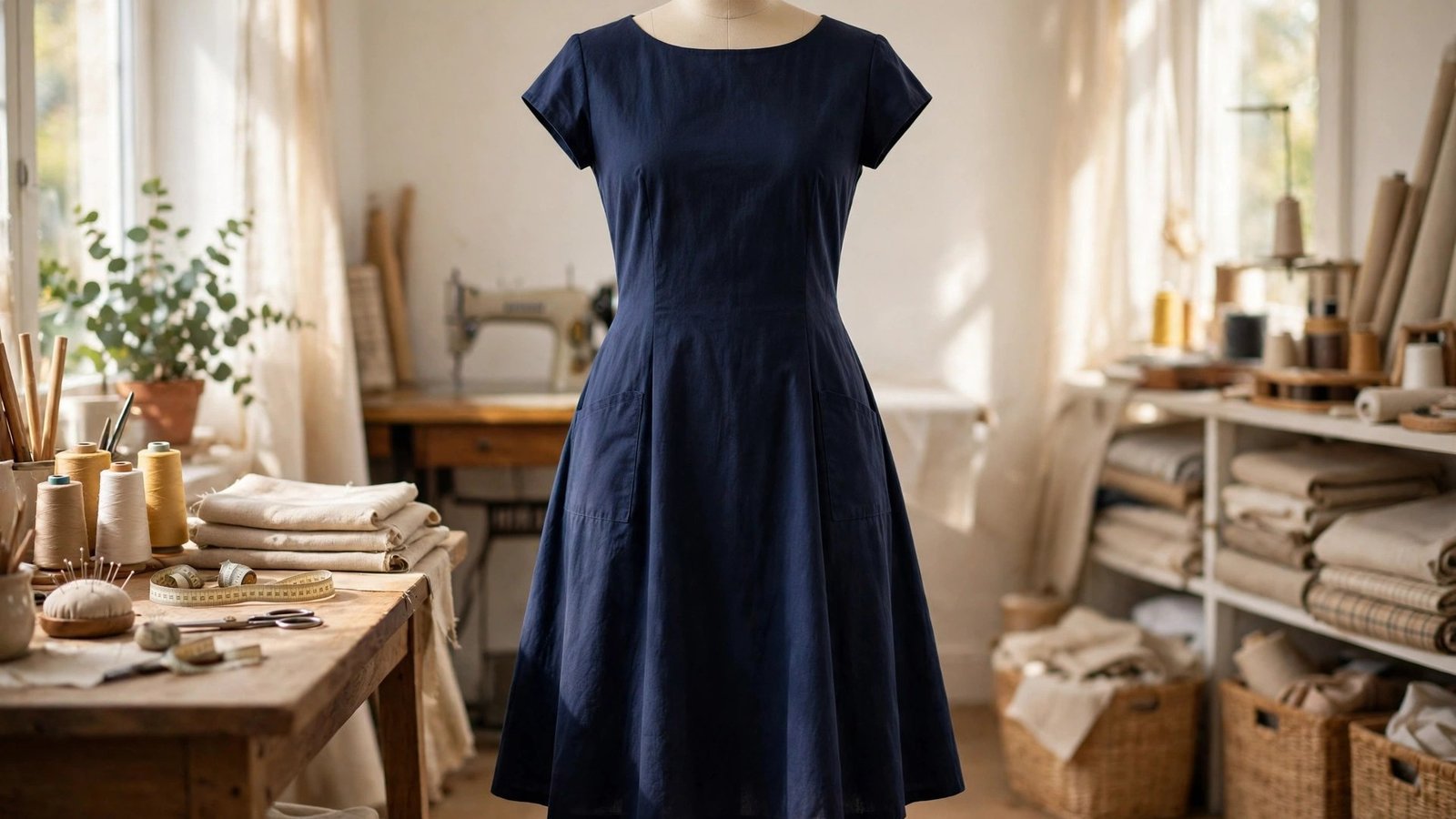
Learning how to sew an a line dress is the best first dress project I know. The A line shape is fitted at the shoulders and bust, then flares gently to the hem, which means it fits a wide range of bodies with very little fitting fuss. It is comfortable, flattering, and it sews up in a weekend.
My first A line dress was a simple sleeveless version in a navy cotton, and I wore it for years. It taught me the core dress skills in one project: fitting a bodice, setting a zipper, and hemming a flared skirt. Every dress I have made since builds on what that navy dress taught me.
In this guide I will show you how to choose a pattern and fabric, fit the bodice, sew the dress together, and finish it neatly. If you want to add pockets, my guide to how to add pockets to a dress pattern pairs perfectly with this project.
Choosing a Pattern and Fabric
Choose a simple A line dress pattern with a fitted bodice and a flared skirt, preferably one with a back zipper and a faced or lined bodice. Avoid patterns with complex sleeves or intricate seaming for your first A line dress, because the joy of this project is its simplicity.
Pick a medium weight woven fabric with a little structure, such as cotton poplin, linen, or a light denim. The fabric needs enough body to hold the A line shape, but not so much stiffness that the skirt stands away from your legs. Drapey fabrics make a softer A line, which also works, but they are harder to fit.
Check the pattern’s fabric recommendations and buy the yardage listed for your size, plus a little extra if your fabric has a directional print. Prewash your fabric before cutting, because a dress that shrinks after it is sewn is a heartbreaking waste of a weekend.
Fitting the Bodice
The bodice is the only fitted part of an A line dress, so it deserves your attention. Measure your bust, waist, and hips, and choose the pattern size that matches your bust measurement. The skirt will flare from there, so the waist and hip sizes matter less than they do in a fitted dress.
Make a muslin of the bodice before you cut your good fabric. A muslin lets you check the fit at the bust and shoulders, adjust the darts, and confirm the zipper placement without risking your fashion fabric. It takes an hour and it is the best insurance in dressmaking.
Sew the darts first, then the shoulder seams, and try the bodice on. The darts should point towards the bust point and end a couple of centimetres short of it. If the bodice pulls across the bust, you may need a full bust adjustment, and my guide to how to make a full bust adjustment walks through that step.

Cutting and Sewing the Dress
Cut the bodice front and back, the skirt front and back, and the facing pieces, following the pattern layout for your fabric width. Transfer all the markings, including the dart lines, notches, and grainlines, because those marks guide every later step.
Sew the bodice darts and the shoulder seams, then join the skirt pieces at the side seams. Join the bodice to the skirt at the waist, matching the side seams and the centre marks, and press the waist seam towards the bodice. The dress starts to look like a dress at this point, which is always a satisfying moment.
Insert the zipper at the centre back before you sew the back seam fully closed. Baste the back seam closed first, press it open, then insert the zipper using your preferred method. A centred zipper is simplest for a first dress, and an invisible zipper looks beautiful once you have practised it.

How to Sew an A Line Dress Skirt That Hangs Well
The skirt of an A line dress needs to hang evenly, and that starts with accurate cutting. Check that the side seams are the same length and that the hem is level all the way around before you sew the hem. Hang the dress on a hanger overnight and check the hem again, because fabric can stretch as it hangs.
Press the side seams open and the waist seam towards the bodice. Good pressing at this stage makes the skirt fall smoothly and stops the waist seam from creating a ridge under the bodice. Use a tailor’s ham for the curved parts of the bodice and a sleeve board for the narrow seams.
If the skirt flares more on one side than the other, check that the grainlines were cut correctly. A skirt cut off grain will twist and hang unevenly, and it is very hard to fix after sewing. This is why transferring the grainline marks and cutting carefully matters so much.
Lining, Hemming, and Finishing
Line the bodice if the pattern offers it, or at least face the neckline and armholes neatly. A lined bodice feels better against the skin and hides all the seam allowances, which makes the dress look finished from the inside as well as the outside. My guide to how to sew a dress lining covers the lining method step by step.
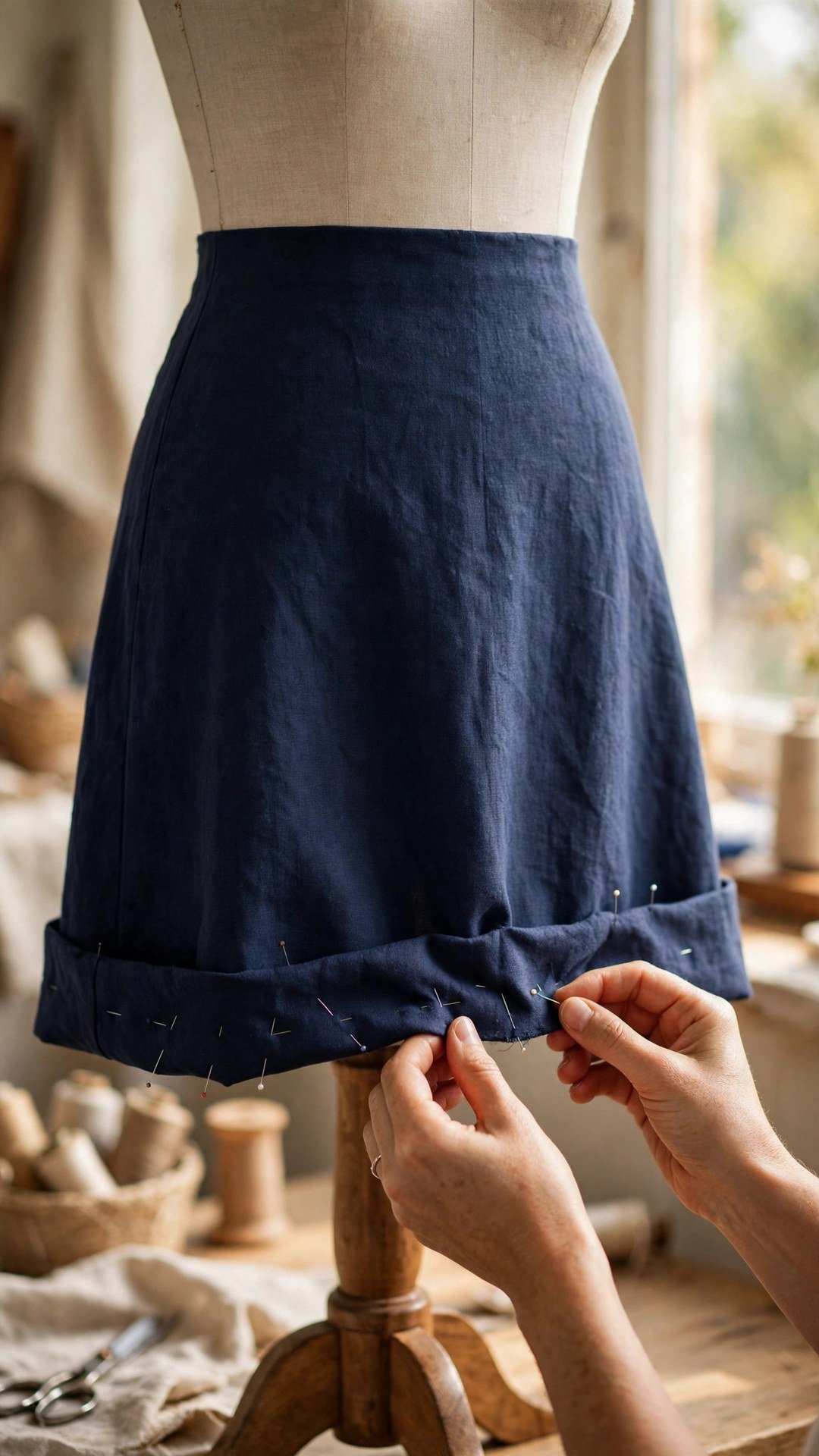
Hem the skirt with a double fold hem, pressed well and stitched close to the fold. Try the dress on with the shoes you plan to wear with it, and check the hem length in a mirror. A line hems look best when they end at or just above the knee for a classic length, or at mid calf for a longer version.
Give the finished dress a final press, check the zipper runs smoothly, and look at the inside seams. A well made A line dress should look neat inside and out, with no loose threads and no raw edges showing. That is the standard to aim for, and it is achievable on your first try.
Frequently Asked Questions
What is an A line dress?
A dress that is fitted at the shoulders and bust and flares gently from the waist to the hem, forming the shape of the letter A. It suits many body types.
What fabric is best for an A line dress?
Medium weight wovens with some structure, like cotton poplin, linen, or light denim. Drapey fabrics work too but are harder to fit.
Do I need a muslin for an A line dress?
A muslin of the bodice is strongly recommended. It lets you check the fit at the bust and shoulders before cutting your good fabric.
How do I stop the skirt hanging unevenly?
Cut on grain, match the side seam lengths, and let the dress hang overnight before hemming. Check the hem level all the way around.
Can a beginner sew an A line dress?
Yes. It is one of the best first dress projects because the fitting is simple and the construction is straightforward. Choose a pattern with a back zipper and no sleeves for the easiest version.
Your First Dress, Worn With Pride
An A line dress is a wonderful first dress because it teaches the core skills without punishing small mistakes. Choose a good pattern, fit the bodice with a muslin, sew carefully, and press as you go. When you wear the finished dress, you will understand why this shape has been a favourite for decades.
Written by June Carter
I am June, a sewing enthusiast who loves turning simple fabric into things people actually use. I test every technique and product I write about at my own machine before it lands here.