

Learning how to sew a seat cushion with ties is a practical project that makes hard dining chairs comfortable and adds colour to a room at the same time. Ties are the clever part: they hold the cushion in place so it does not slide forward when you sit down, and they let you remove the cushion easily for washing. A cushion without ties is a cushion that ends up on the floor.
I made my first seat cushions for a set of wooden dining chairs that looked lovely and felt like sitting on a plank. An afternoon of measuring, cutting, and sewing later, those chairs became the seats everyone chose first. The method is straightforward, the materials are simple, and the result gets used every day.
In this guide I will show you how to measure the chair, choose foam and fabric, sew the ties, and make a cushion cover you can remove and wash. My guide to how to sew a bench cushion covers a longer cushion in the same spirit if you need one.
Measuring the Chair Seat
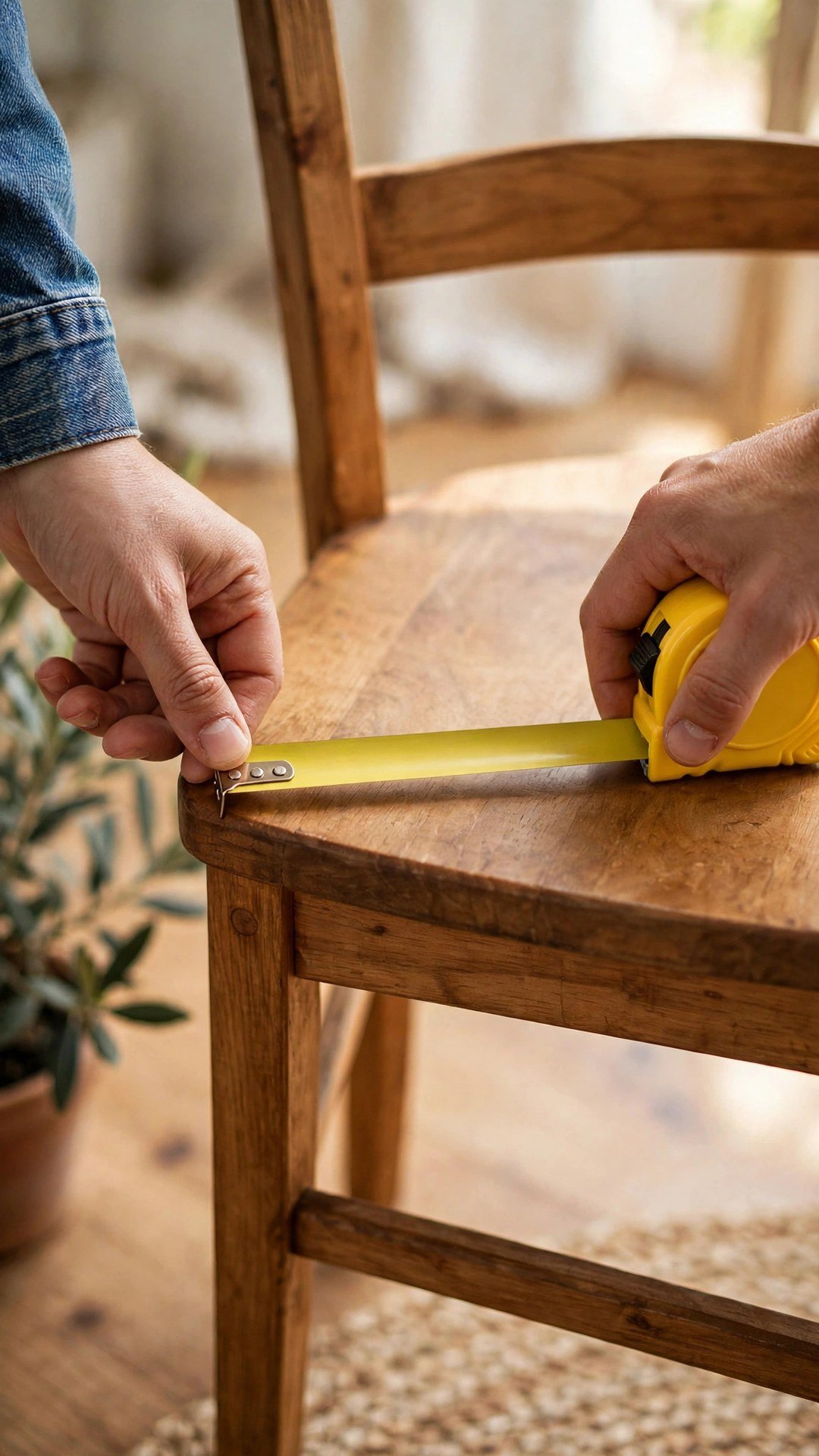
Measure the chair seat from front to back and from side to side, at the widest points. Dining chairs are rarely perfect rectangles: the back is often narrower than the front, or the seat curves at the corners. Make a paper template by tracing the seat shape onto paper, and use that template to cut your fabric and foam. A template is more accurate than numbers alone.
Decide the thickness of the cushion. Two inches of foam is a good starting point for a dining chair: thick enough to be comfortable, thin enough to look tidy. Thicker foam is softer but can look bulky, and it can raise you too high at the table. Sit on a folded towel of the thickness you are considering to test the height before you buy foam.
Note where the ties will go. Most seat cushions have two ties at the back, which fasten around the chair back or through the slats. Measure from the back edge of the cushion to the chair back, and make the ties long enough to tie in a bow with room to spare. Longer ties are easier to tie and look better than short, tight ones.
Choosing Foam and Fabric
Choose a firm foam made for seating, not soft craft foam, which flattens quickly under weight. Upholstery foam in a medium firmness holds its shape and supports you. Cut the foam with a long serrated knife or an electric knife, using your paper template, and trim the edges smooth. Wrap the foam in a thin layer of batting if you want softer edges and a fuller look.
For fabric, choose a firm woven cotton, canvas, or upholstery fabric that can take daily sitting and frequent washing. Dining chair cushions get stained, so washable fabric matters. Avoid very thin fabric, which wears through quickly, and avoid slippery fabric, which slides on the chair even with ties.
For the ties, use the same fabric as the cushion, or a coordinating solid. Ties made from fabric match the cushion and feel soft against the chair. Cut tie strips about twenty inches long and two inches wide, so they fold into a neat one inch tie. If you want a removable cover, choose a fabric that washes well and a zipper or an envelope opening for the back.
Cutting the Cushion Pieces
Cut two pieces of fabric from your template, adding a half inch seam allowance all round. Cut the foam to the template size, without seam allowance, so the cushion fits snugly inside the cover. If you are wrapping the foam in batting, cut the batting slightly larger and trim it after wrapping.
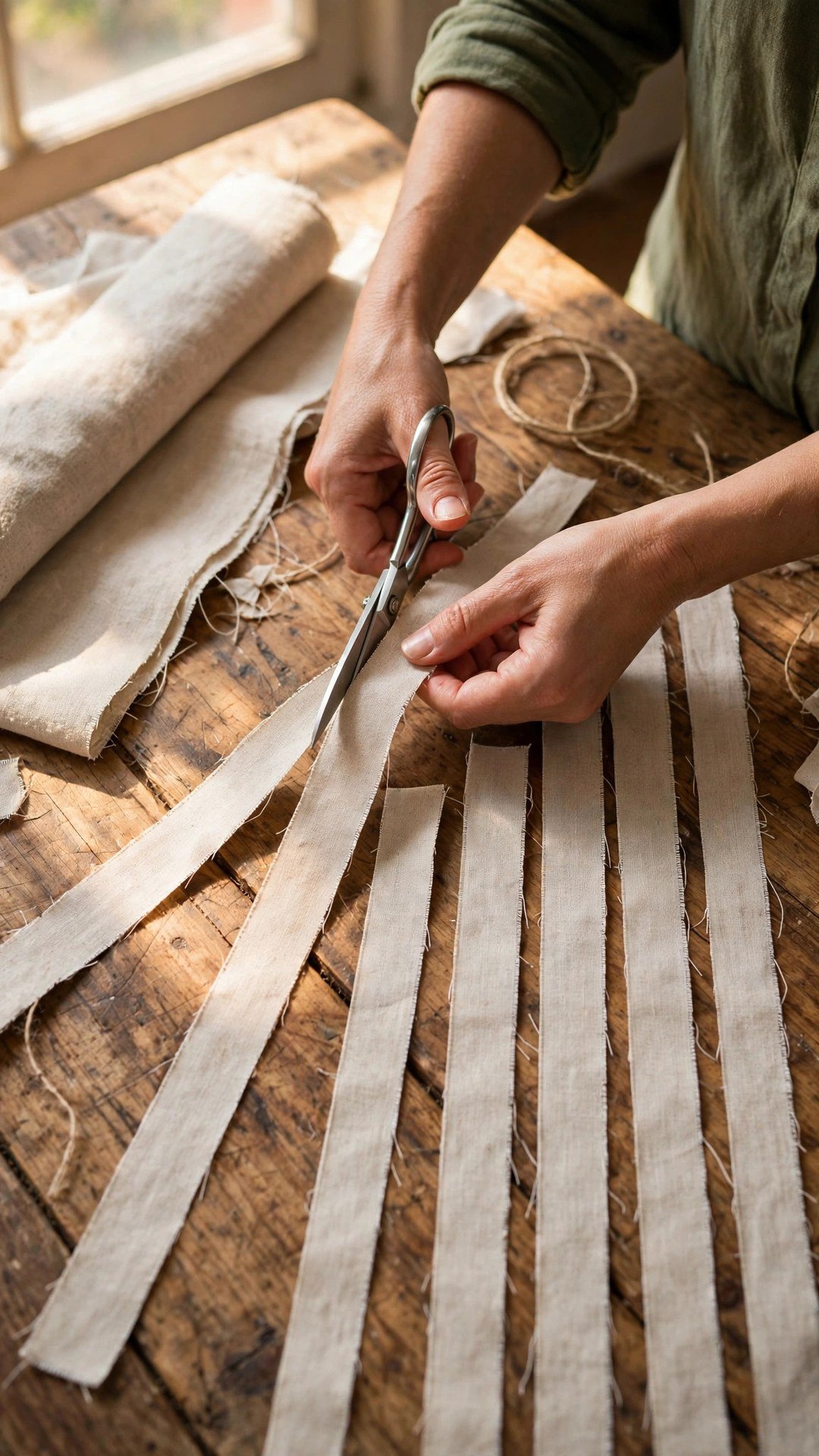
Cut four tie strips, or two long ties that will be folded, depending on your method. For separate ties, cut each strip twenty inches long and two inches wide. Fold each strip in half lengthwise, right sides together, stitch along the long edge and one short end, turn it right side out, and press it flat. You now have a neat tie, ready to attach.
Mark the tie positions on the back edge of the top fabric piece, about a quarter of the way in from each side. Pin the ties in place, with the raw ends at the edge and the ties pointing inwards across the fabric, so they do not get caught in the side seams. This placement keeps them safe while you sew the cover.
How to Sew a Seat Cushion with Ties
Start by placing the ties on the top fabric piece, pinned at the back edge as marked. Lay the bottom fabric piece on top, right sides together, with the ties sandwiched between the layers. Pin around the edges, leaving a gap of about six inches on the back edge for turning and for inserting the foam.
Sew around the cushion with a half inch seam allowance, backstitching at the start and end, and catching the ties firmly in the seam. Sew across each tie several times, because ties take a lot of pulling. Clip the corners, turn the cover right side out, and press the edges flat, turning the gap edges in as you press.
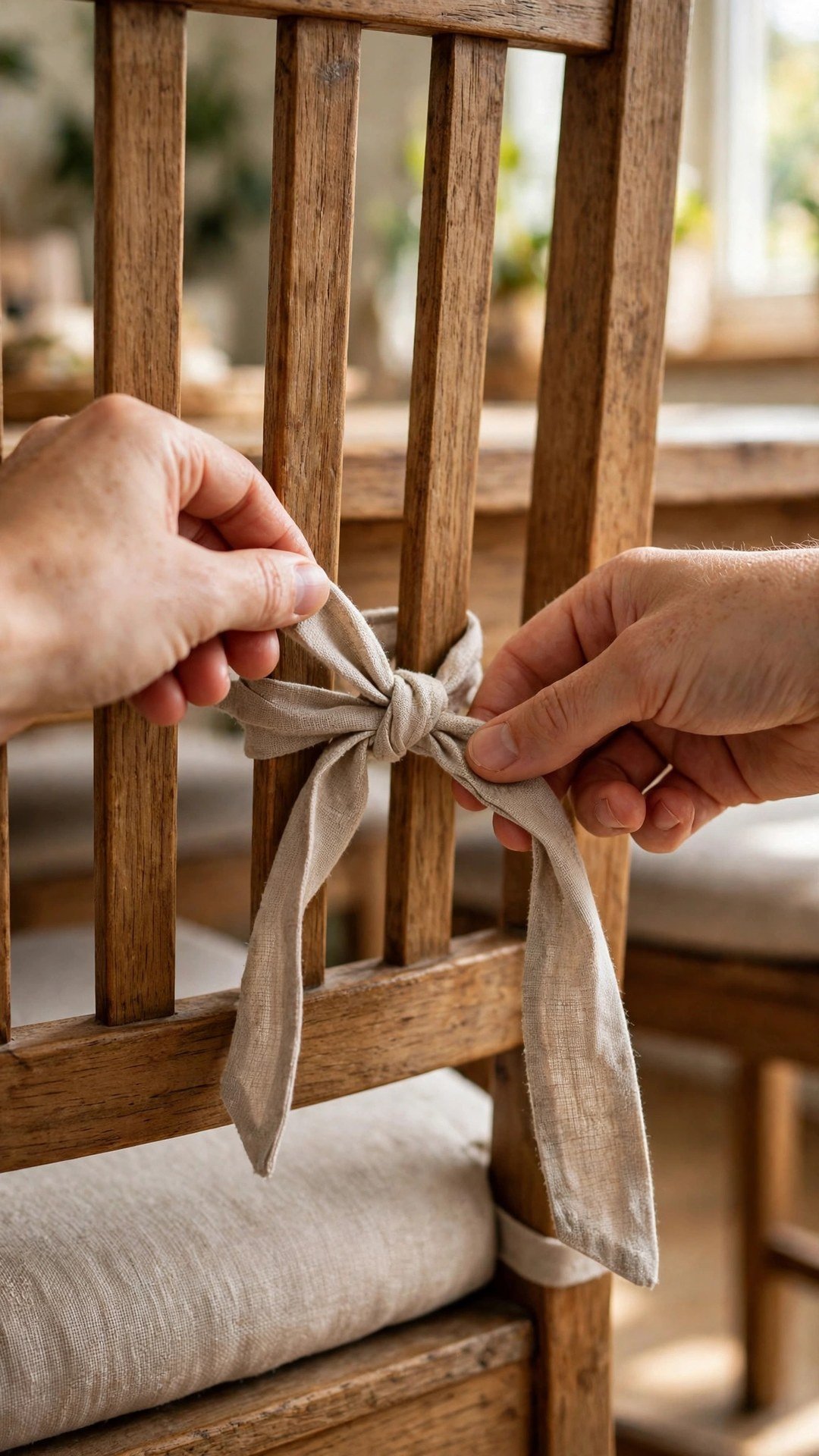
Insert the foam into the cover, easing it into the corners and smoothing the fabric over it. Slip stitch the gap closed by hand, or topstitch it if you prefer a quicker finish. Place the cushion on the chair, tie the ties around the chair back in a bow, and sit down to test it. It should stay put, feel comfortable, and look tidy from every angle.
Care, Washing, and Making a Set
A seat cushion cover should be removable if you can manage it, because dining cushions need washing. If you made a cover with a gap for the foam, you can open the slip stitching to remove the foam, wash the cover, and stitch it closed again. A zipper or an envelope opening makes this easier, and my guide to how to sew a zippered cushion cover shows how to add one.
Wash the cover in warm water and dry it on a low setting, then press it lightly before you put the foam back in. Air the foam regularly, and replace it when it stops springing back. Foam that has flattened will not recover, and a flat cushion is no more comfortable than the bare chair.
If you are making cushions for a set of chairs, cut all the pieces at once, sew them in a batch, and keep the ties the same length on every cushion. A matching set looks planned and professional, and batch sewing is faster than making one cushion at a time. Make a spare cover too, so you can wash one set while the other is on the chairs.
Frequently Asked Questions
How thick should a seat cushion be?
Two inches of firm upholstery foam is a good starting point for a dining chair. It is comfortable without looking bulky or raising you too high at the table.
How long should cushion ties be?
Make ties about twenty inches long before folding, so they tie in a bow with room to spare. Longer ties are easier to tie and look better than short, tight ones.
What fabric is best for seat cushions?
A firm woven cotton, canvas, or upholstery fabric that washes well. It should take daily sitting, resist stains, and not slide on the chair.
Can I make the cushion cover removable?
Yes. Leave a gap for the foam and slip stitch it closed, or add a zipper or an envelope opening at the back. A removable cover is much easier to wash.
Why do my seat cushions slide forward?
The ties may be too loose, too short, or placed in the wrong spot. Tie them firmly around the chair back, and add a non-slip layer under the cushion if the chair seat is very smooth.
Tie It On, Sit Down, Stay Comfortable
A seat cushion with ties is a simple project that earns its place every day. Measure the chair, choose firm foam and washable fabric, sew the ties in securely, and make the cover removable if you can. Your dining chairs will be more comfortable, your room will look warmer, and you will wonder why you sat on bare wood for so long.
Written by June Carter
I am June, a sewing enthusiast who loves turning simple fabric into things people actually use. I test every technique and product I write about at my own machine before it lands here.