

Learning how to set up a sewing table properly is one of the best investments you can make in your sewing, because a bad setup makes every project harder. If the table is too high, your shoulders ache. If it is too small, fabric falls off the edge and drags your seams. If the light is wrong, you squint at every stitch.
I sewed for years at a dining table that was too high and too cluttered, and I blamed myself for the sore neck and the wobbly seams. When I finally set up a proper sewing table, with the machine at the right height and everything within reach, my sewing improved overnight. The table did not make me a better sewist, it just stopped getting in my way.
In this guide I will show you how to choose a table, place your machine, sort your lighting, and arrange your tools so sewing feels comfortable for hours. If space is tight, my guide to how to set up a small sewing space has ideas for squeezing a good setup into a corner.
Choosing the Right Table
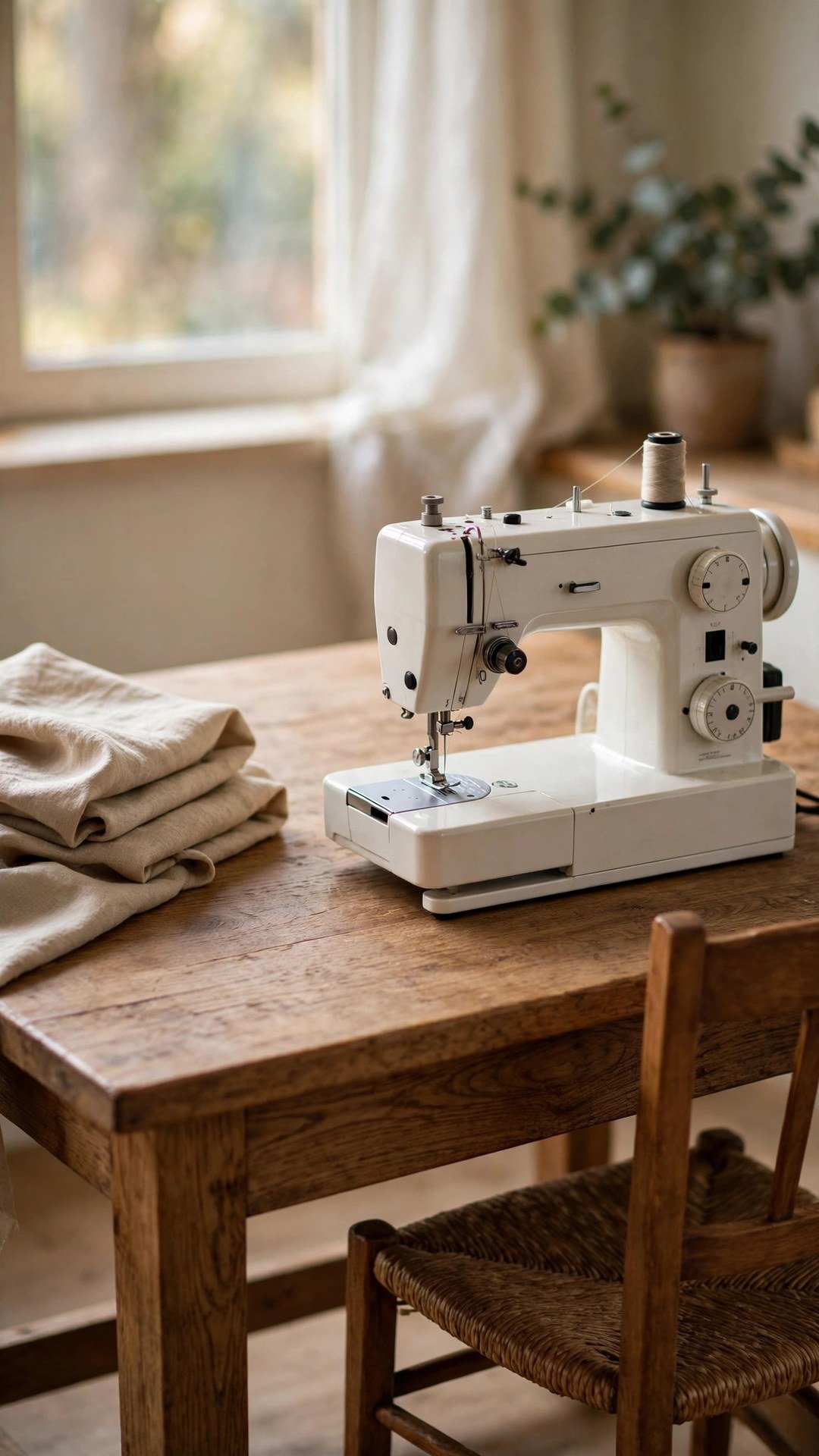
A good sewing table is sturdy, flat, and big enough for your machine plus the fabric you are working with. A wobbly table makes the machine vibrate and the stitches suffer, so test any table by pressing down on a corner and rocking it. If it moves, it is not a sewing table yet.
The table should be deep enough that your machine sits with room in front for your hands and behind for fabric to rest. A depth of around sixty centimetres works for most machines, and more is better if you sew large projects like quilts or curtains. Length matters too, because fabric needs support to the left of the needle or it will drag.
You do not need a purpose built sewing cabinet to start. A solid kitchen table, a sturdy desk, or a folding table with a firm top can all work well. What matters is stability, a flat surface, and enough space. You can always upgrade later, once you know how you like to work.
Machine Placement and Height
Place the machine so the needle sits directly in front of you, with your elbows at roughly a right angle when your hands rest on the fabric. For most people this means the table top should be a little lower than a standard desk, because sewing is a forward task and your arms reach out rather than down.
If your table is too high, raise your chair or use a cushion so your shoulders can relax. If it is too low, raise the table on blocks or use a taller chair. Your shoulders should stay down and relaxed while you sew, and your neck should not bend forward to see the needle.
Leave space to the left of the machine for the bulk of the fabric, and keep the area behind the needle clear so fabric can feed through without catching. If your machine has a slide on extension table, fit it for larger projects. It supports the fabric and stops heavy pieces from pulling your seams off line.
Lighting Your Workspace
Good light is not a luxury in sewing, it is essential. You need to see the needle, the seam allowance, and the true colour of the fabric. Natural daylight from a window to your left is ideal for right handed sewists, because your hands do not cast shadows over the needle.
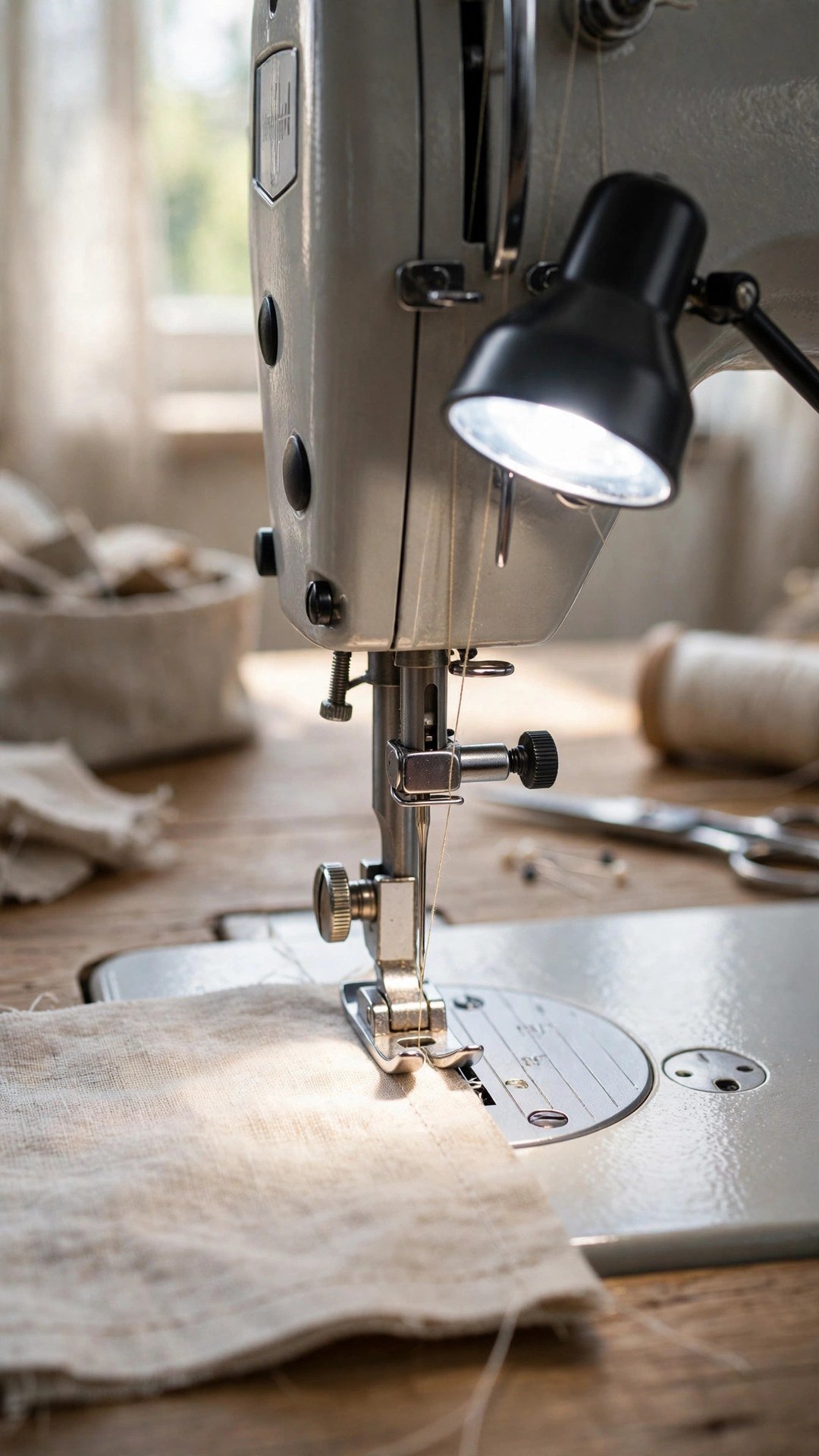
Add a task lamp with a daylight bulb that you can angle onto the needle area. Overhead room lighting alone is rarely enough, because your head and hands block it. A small clip on lamp on the machine or a desk lamp just behind the machine makes a surprising difference to accuracy and eye strain.
If you sew at night, use a lamp with a bright white light rather than a warm yellow one. Warm light makes colours look different and makes it hard to tell navy from black. Daylight bulbs are inexpensive and they change the whole feel of evening sewing.
Arranging Tools and Notions Within Reach
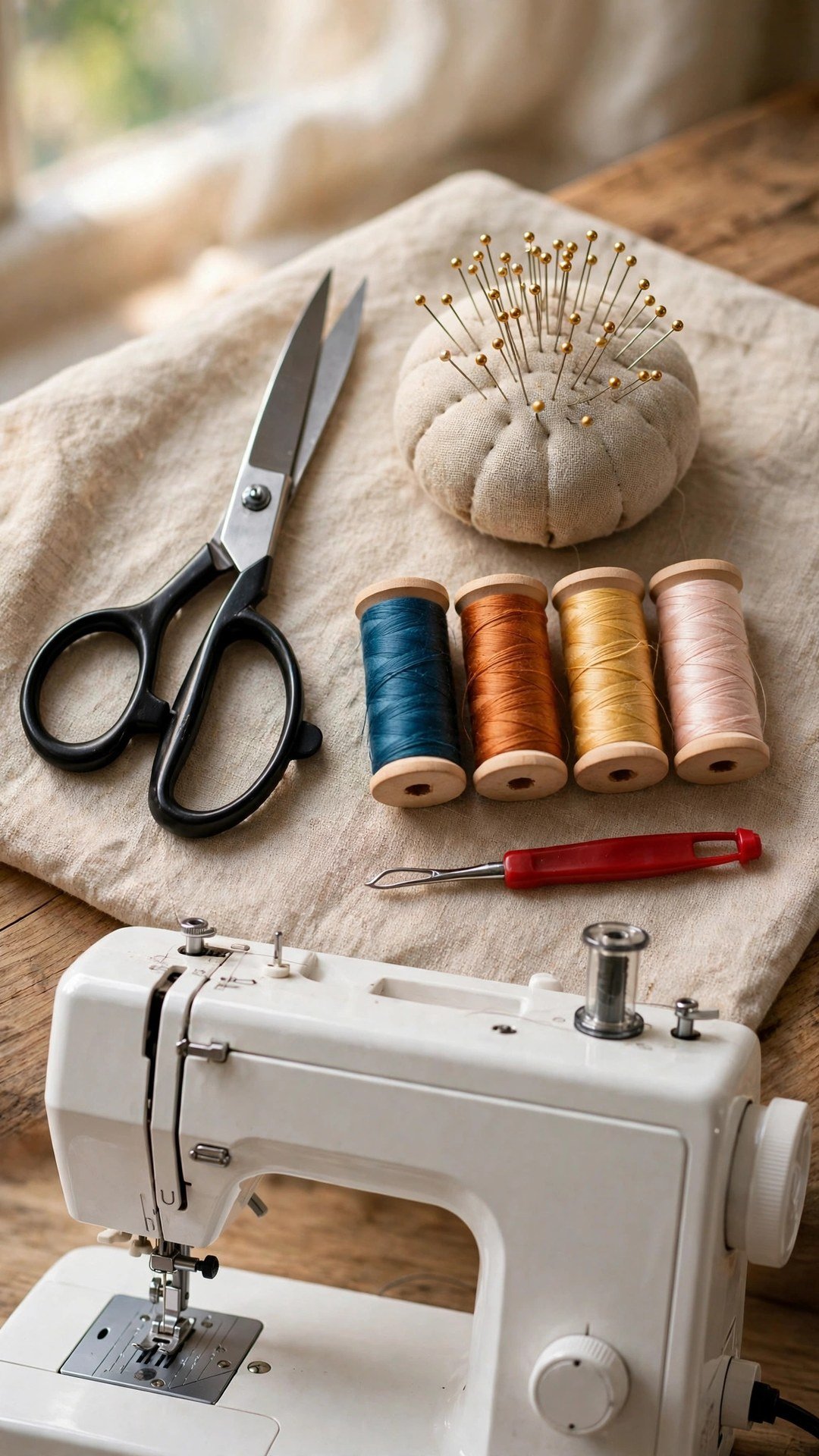
Keep the tools you use every minute within arm’s reach: scissors, seam ripper, pins, marking chalk, and a small ruler. Put them on the right side of the machine if you are right handed, and on the left if you are left handed. Reaching across the machine for scissors a hundred times a session wastes time and breaks your rhythm.
Store less used items a little further away, but still in the same room: extra thread, spare bobbins, pattern weights, and interfacing. A small tray or a mug on the table keeps pins and clips contained, and a magnetic pin holder saves you from crawling under the table after dropped pins.
Keep your ironing board close to the sewing table, because pressing as you sew is part of good sewing. If you have to walk across the room to press every seam, you will skip pressing, and your seams will show it. A small tabletop ironing board beside the sewing table is a good compromise in a small space.
Keeping Your Sewing Table Comfortable
Sit in a chair that supports your back and lets your feet rest flat on the floor. A chair with adjustable height is ideal, because you can match it to your table exactly. Add a cushion for lumbar support if your chair is flat backed, and take a short break every hour to stretch your shoulders and neck.
Keep the floor under the table clear so your feet and the foot pedal sit comfortably. A foot pedal that slides around is annoying, so put a small rubber mat under it to stop it wandering. Your knee should rest naturally on the pedal without stretching or cramping.
Tidy the table at the end of each session, even if you are mid project. Put the fabric away flat, return tools to their tray, and clear the cuttings. A tidy table invites you back, while a buried table makes starting again feel like a chore. My guide to how to store small notions has storage ideas that keep a small table organised.
Frequently Asked Questions
What size table do I need for sewing?
A sturdy table about sixty centimetres deep with room for your machine and fabric to the left of the needle. More length helps for large projects like quilts and curtains.
How high should a sewing table be?
Low enough that your elbows sit at roughly a right angle with your hands on the fabric. Most people need a table slightly lower than a standard desk, with the chair adjusted to match.
Can I use a dining table for sewing?
Yes, if it is sturdy and flat. Add a non-slip mat under the machine, use a good task lamp, and keep the ironing board nearby. It is a fine starting point.
Where should the light come from?
Daylight from the left for right handed sewists, plus a daylight task lamp angled at the needle. Avoid warm yellow light, which changes how fabric colours look.
How do I stop my foot pedal sliding around?
Put a small rubber mat or a piece of non-slip shelf liner under the pedal. It keeps the pedal in place and stops it creeping across the floor mid seam.
A Table That Invites You to Sew
Setting up a sewing table is not about buying expensive furniture, it is about arranging what you have so your body is comfortable and your tools are close. Get the height right, light the needle well, keep your tools in reach, and tidy up when you finish. A good table makes sewing feel easy, and easy sewing gets done.
Written by June Carter
I am June, a sewing enthusiast who loves turning simple fabric into things people actually use. I test every technique and product I write about at my own machine before it lands here.