
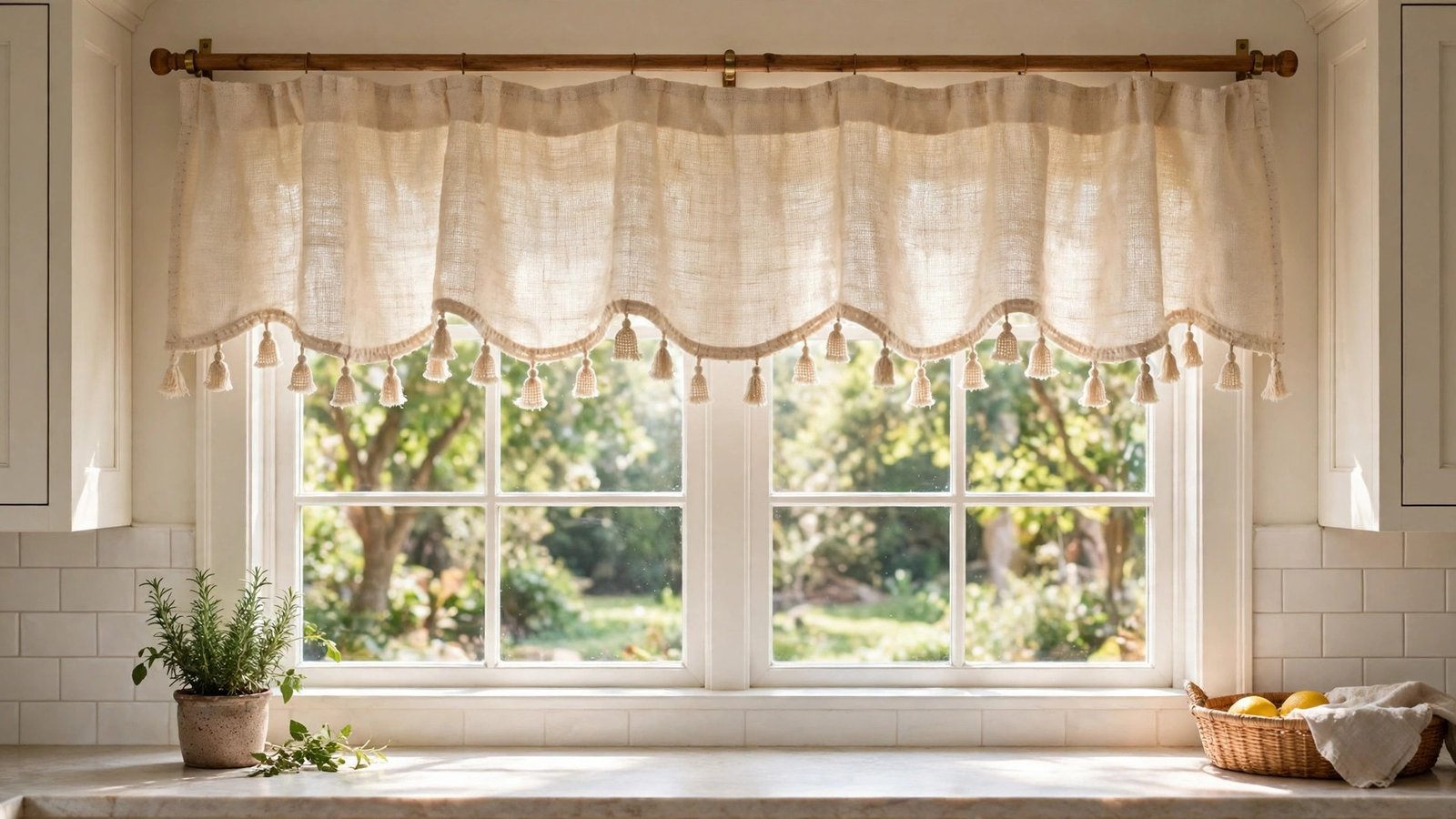
Learning how to sew a simple valance for a window is one of the quickest ways to change how a room feels. A valance is a short curtain that covers the top of a window, softening the hard line of the frame and adding colour and pattern without blocking the light. It takes one piece of fabric, a rod pocket, and two hems, and it can be finished in a single afternoon.
I made my first valance for a kitchen window that looked bare and a little stark. An hour of sewing later, the whole room felt warmer, and I have made valances for almost every window in my house since. They are forgiving for beginners, useful for using up a favourite print, and easy to change with the seasons.
In this guide I will show you how to measure the window, how much fabric you need, how to sew the rod pocket and hems, and how to hang the finished valance so it sits nicely. My guide to how to measure windows for curtains covers measuring in more detail if you want it.
Measuring the Window and the Fabric
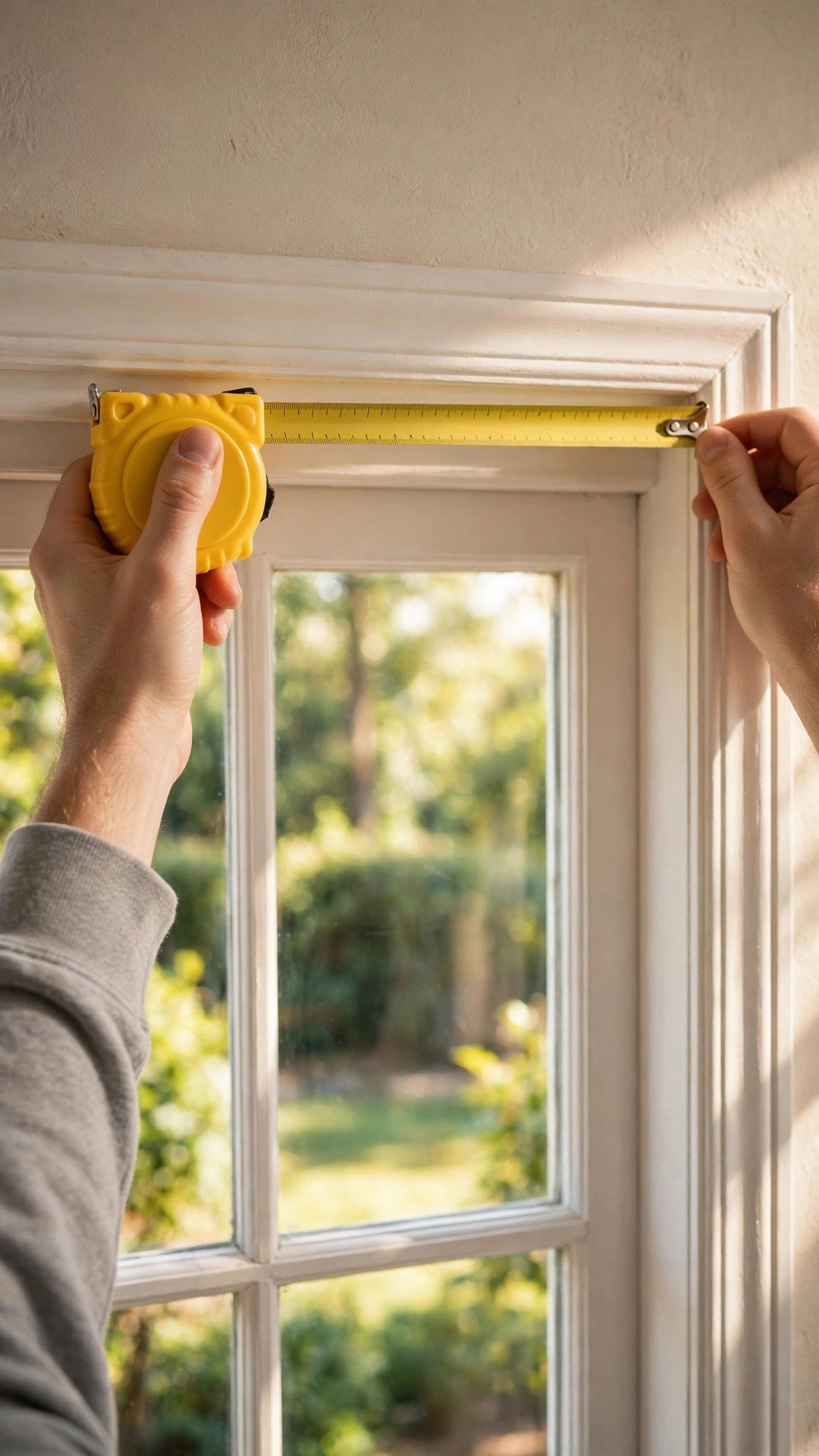
Measure the width of the window, including the frame, and measure the rod as well. A valance looks best with some fullness, so cut the fabric one and a half to two times the rod width. For a window that is thirty inches wide, cut fabric forty five to sixty inches wide. More fullness gives softer gathers; less fullness gives a flatter, tidier look.
Decide the finished length. A simple valance usually hangs ten to fourteen inches from the top of the rod, covering the top of the window without blocking much light. Add three inches for the rod pocket and hem at the top, and two inches for the bottom hem, to the finished length you want. Write both numbers down before you cut.
Check the rod before you cut the pocket. A standard curtain rod needs a pocket about three inches deep, while a thicker rod needs more. Slide the rod through a test fold of fabric to check the fit. The pocket should slide easily without sagging, and the valance should gather without bunching hard at the rod.
Choosing Fabric for a Valance
Choose a medium weight woven cotton, linen, or a cotton blend that presses well and hangs nicely. Quilting cotton works for a crisp look, linen gives a relaxed drape, and a light canvas suits a kitchen or a room that needs structure. Avoid very heavy upholstery fabric, which can be hard to gather on a rod.
Think about light and privacy. A valance does not cover the whole window, so it will not give privacy on its own. If you need privacy, pair it with blinds or a cafe curtain underneath. For light, choose a fabric that looks good with daylight behind it, and check the print in daylight before you cut, because colours shift in sun.
If the valance will hang in a kitchen, choose a washable fabric, because kitchen curtains collect cooking smells and splashes. Prewash the fabric before cutting, so the finished valance does not shrink after its first wash. My guide to how to prewash cotton and linen explains the routine I use for cotton and linen alike. A valance that shrinks pulls up at the hem and looks unfinished.
Cutting and Hemming the Sides
Cut your fabric to the width and length you calculated, making sure the print runs the right way up. If you are joining two widths of fabric for a wide window, join them with a French seam or a plain seam pressed open, and match the print as closely as you can at the join. The join should sit where the gathers will hide it.
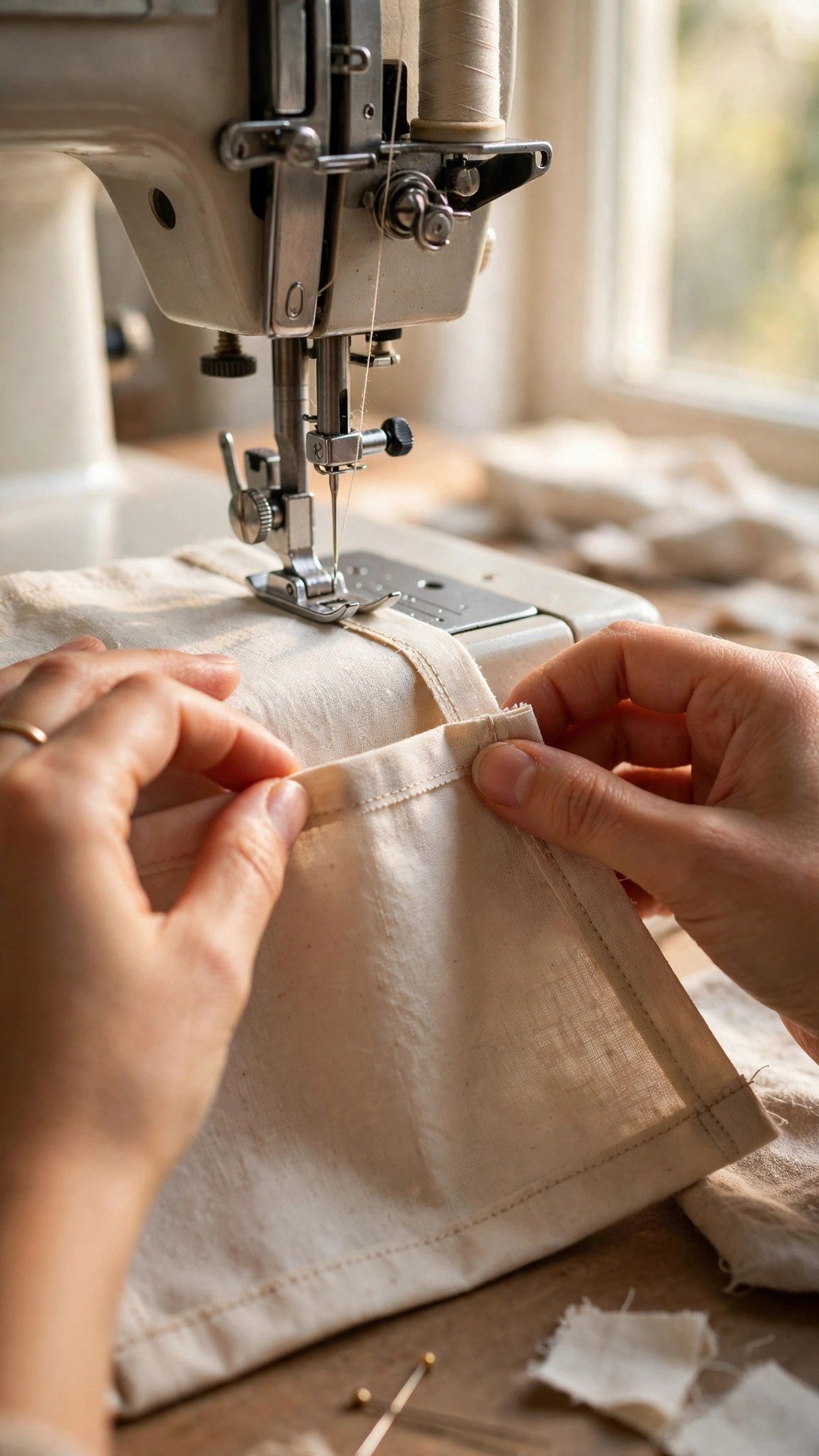
Hem the two side edges first. Fold each side edge under by half an inch, press, fold again by half an inch, and stitch close to the inner fold. These narrow double hems give a clean edge that will not fray, and they keep the sides straight when the valance hangs. Press as you go, because pressing is what makes a simple valance look finished rather than homemade.
Check the sides are even by folding the valance in half and comparing the edges. If one side is longer, trim it now. Uneven sides show when the valance hangs, especially on a wide window, and a quick trim now saves a crooked hem later.
How to Sew a Simple Valance for a Window
Start with the side hems done and the fabric pressed flat. Fold the top edge down by half an inch and press, then fold it down again by three inches to form the rod pocket, and press again. Stitch close to the lower folded edge to close the pocket, leaving the ends open so the rod can slide through. Backstitch at both ends of the pocket stitching.
Next, hem the bottom edge. Fold it up by half an inch, press, fold again by one inch, and stitch close to the inner fold. This gives a neat, weighted hem that hangs straight. If you want a decorative touch, add a row of topstitching along the bottom hem, or a simple trim, but keep it simple for your first valance.
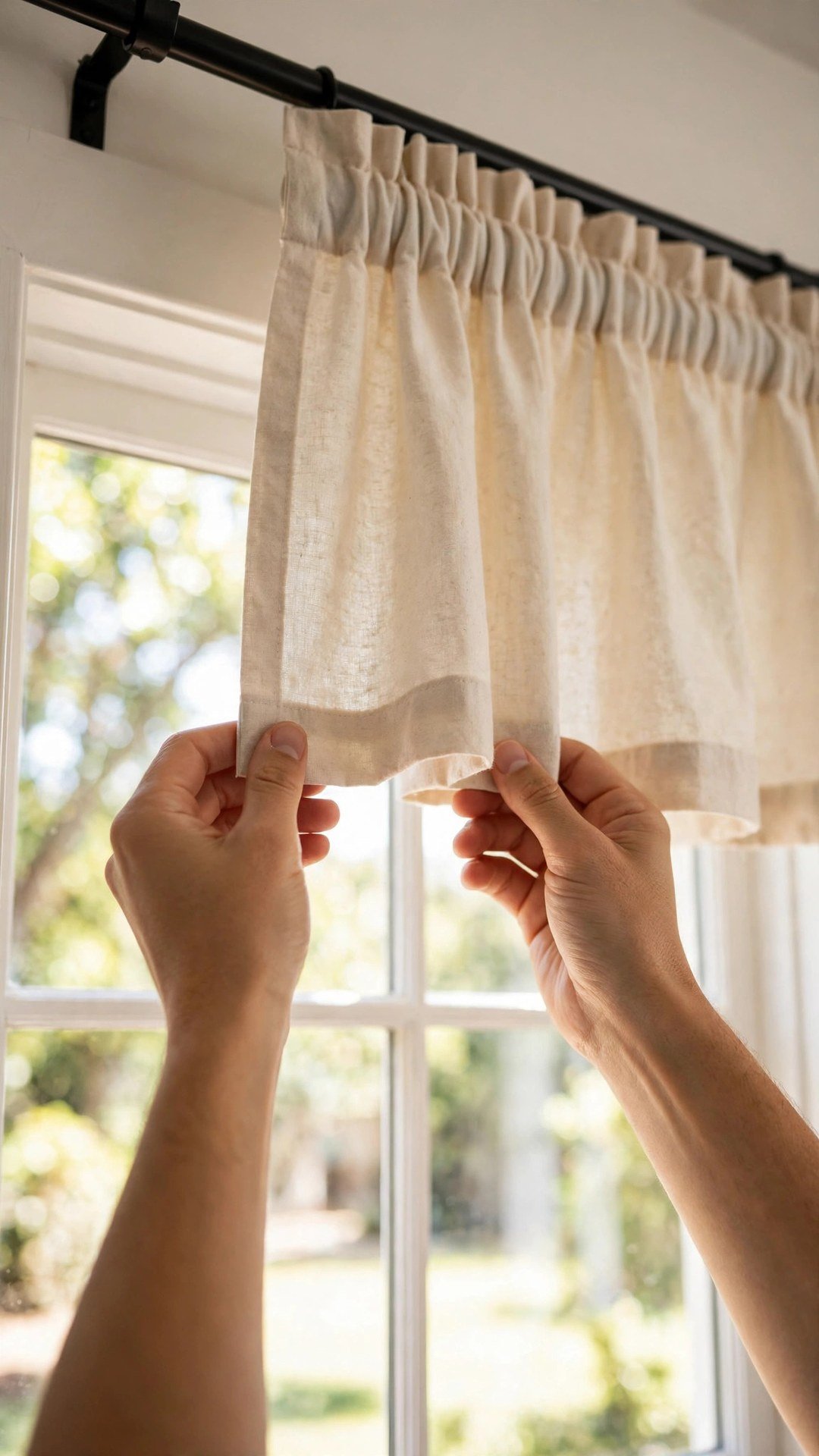
Slide the rod through the pocket, gather the fabric evenly along the rod, and hang it. Step back and check the gathers, the length, and the hem. Adjust the gathers so they are even across the window, and let the valance settle for a day before you judge the drape. Fabric relaxes as it hangs, and the gathers will soften.
Hanging and Styling Your Valance
Hang the valance so the top of the pocket sits just above the window frame, or at the height you measured. A valance that sits too low blocks light; one that sits too high looks lost. Use a rod that fits the window, with finials or end caps that suit the room, and check the rod is level before you hang the valance.
Style the valance with the room, not against it. In a kitchen, a cheerful print works well. In a bedroom, a calmer colour or a soft linen suits the mood. If you have more than one window in a room, make the valances the same length and the same fullness, so the room looks planned rather than patched together.
A valance is easy to change, and that is part of its charm. Make one for each season if you like, or make a spare in a different print for a quick change. They store flat, they wash well, and they are a friendly first curtain project for a beginner sewist.
Frequently Asked Questions
How much fabric do I need for a valance?
Cut the fabric one and a half to two times the rod width for fullness, plus extra length for the rod pocket and hems. Add three inches at the top for the pocket and two inches at the bottom for the hem.
What is a rod pocket?
A rod pocket is a channel sewn at the top of a curtain or valance that the curtain rod slides through. For a simple valance, fold the top edge down about three inches and stitch across to form the channel.
What fabric is best for a valance?
Medium weight woven cotton, linen, or a cotton blend works well. It should press nicely, hang well, and wash easily. Avoid very heavy fabric, which gathers poorly on a rod.
How long should a valance be?
Most simple valances hang ten to fourteen inches from the top of the rod. Measure from the rod to the length you want, then add extra for the pocket and the hem.
Can a beginner sew a valance?
Yes. A simple valance is one of the best first curtain projects. It needs straight seams, a rod pocket, and two hems, and it can be finished in an afternoon.
One Afternoon, a Softer Window
A simple valance is a small project with a big effect on a room. Measure carefully, choose a fabric you love, sew a neat rod pocket and clean hems, and hang it with even gathers. The window will look softer, the room will feel warmer, and you will have a finished curtain project to be proud of.
Written by June Carter
I am June, a sewing enthusiast who loves turning simple fabric into things people actually use. I test every technique and product I write about at my own machine before it lands here.